
กลยุทธ์การรุกและรับ (Offensive vs. Defensive) ในเหตุเพลิงไหม้อาคารสูง
โฮ่งๆ! สวัสดีครับพี่ๆ ทุกคน “น้องจุด” สุนัขลายจุดผู้ช่วยตัวเก่งประจำศูนย์ฝึกอบรมความปลอดภัย TFGC กลับมาแล้วครับ! วันนี้น้องจุดพกความห่วงใยมาฝากพี่ๆ ที่ต้องดูแลอาคารสูงหรือโรงงานที่มีโครงสร้างซับซ้อน เพราะเหตุไฟไหม้อาคารสูงไม่ใช่เรื่องเล่นๆ เลยครับ มันคือบททดสอบทั้งไหวพริบ ร่างกาย และที่สำคัญที่สุดคือ “กลยุทธ์”
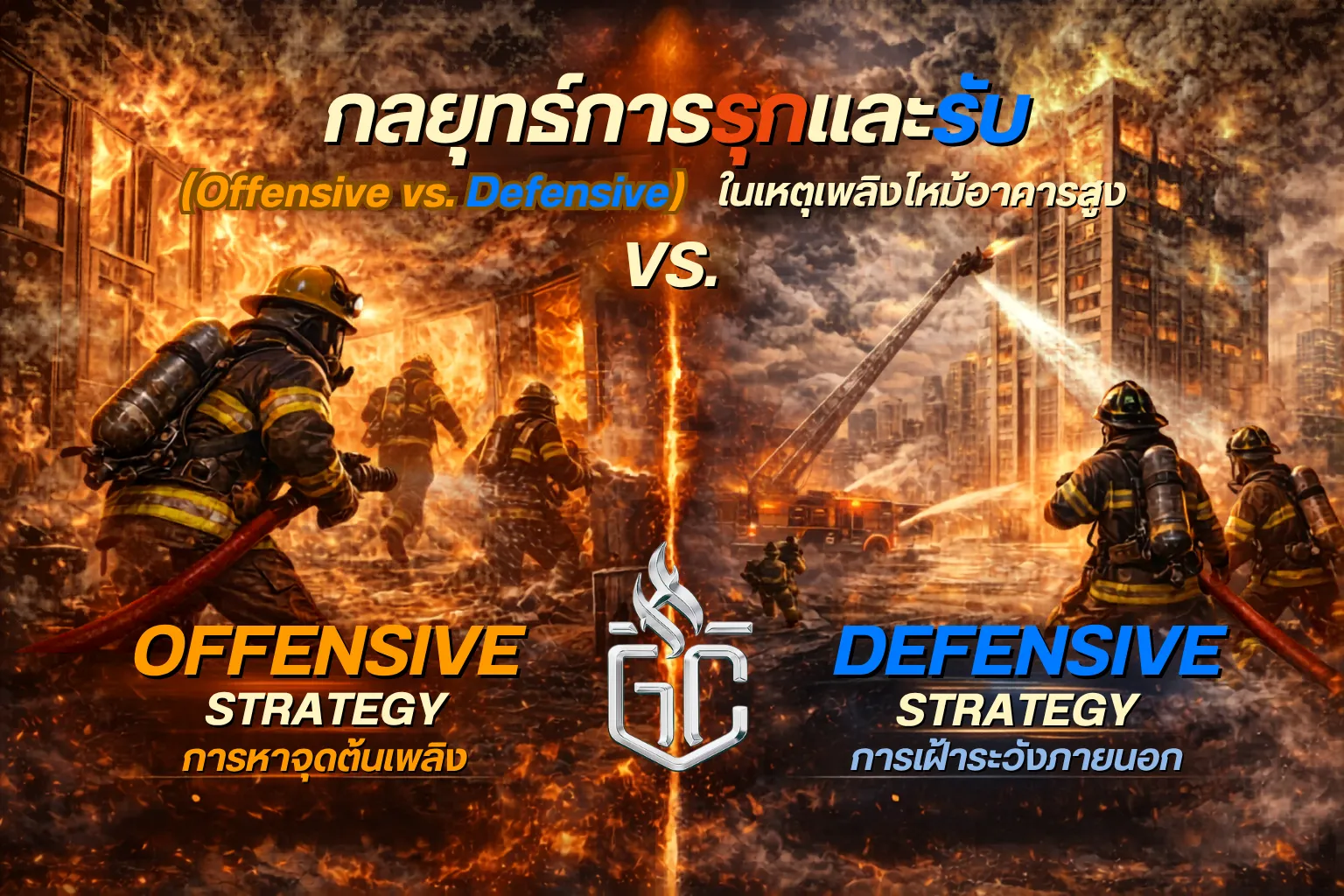
กลยุทธ์การดับเพลิงอาคารสูง ที่มีประสิทธิภาพสรุปได้ด้วยการตัดสินใจเลือกโหมดปฏิบัติการที่ถูกต้องทันที: Offensive Strategy (การรุก) คือการส่งทีมบุกเข้าไปดับที่ต้นตอของไฟเพื่อจำกัดความเสียหาย และ Defensive Strategy (การรับ) คือการตั้งรับจากภายนอกเพื่อป้องกันการลุกลามเมื่อสถานการณ์อันตรายเกินกว่าจะส่งคนเข้าไป การตัดสินใจที่ผิดพลาดเพียงวินาทีเดียวในอาคารสูงอาจหมายถึงความสูญเสียมหาศาลครับ
สารบัญเนื้อหา (Table of Contents)
- ความท้าทายของอาคารสูง: ทำไม “กลยุทธ์” ถึงสำคัญกว่า “อุปกรณ์”
- เจาะลึก Offensive Strategy: เมื่อไหร่ที่ควร “รุก”
- เจาะลึก Defensive Strategy: เมื่อความปลอดภัยต้องมาก่อน “รับ” อย่างไรให้รอด
- หลักการวิทยาศาสตร์: Stack Effect และ Fire Dynamics ในอาคารสูง
- จุดเปลี่ยนผ่าน (Transition): การเปลี่ยนจากรุกเป็นรับ (และรับเป็นรุก)
- Checklist: การประเมินสถานการณ์เพื่อเลือกกลยุทธ์ในปี 2026
- ทำไมต้องมีทักษะระดับสูง? บทบาทของการอบรมความปลอดภัย
- คำถามที่พบบ่อย (FAQ)
ความท้าทายของอาคารสูง: ทำไม “กลยุทธ์” ถึงสำคัญกว่า “อุปกรณ์”
พี่ๆ ครับ อาคารสูงเปรียบเสมือน “ปล่องไฟ” ขนาดใหญ่ครับ เมื่อเกิดเพลิงไหม้ ปัจจัยด้านความสูง ความกดอากาศ และลม ทำให้ไฟพฤติกรรมเปลี่ยนไปจากบ้านเรือนทั่วไปอย่างสิ้นเชิง กลยุทธ์การดับเพลิงอาคารสูง จึงไม่ใช่แค่การฉีดน้ำ แต่คือการบริหารจัดการทรัพยากรที่มีจำกัดภายใต้เวลาที่บีบคั้น
ปัญหาหลัก (Pain Points) ที่น้องจุดมักเห็นพี่ๆ กู้ภัยต้องเจอคือ:
- การเข้าถึงที่ยากลำบาก: การแบกอุปกรณ์หนักๆ ขึ้นบันไดหลายสิบชั้นทำให้ร่างกายล้าสะสม
- ระบบสื่อสาร: คอนกรีตและเหล็กหนาๆ มักทำลายสัญญาณวิทยุ ทำให้การสั่งการผิดพลาด
- การอพยพ: จำนวนคนที่มากในพื้นที่จำกัด ทำให้ทีมกู้ภัยต้อง “สวนทาง” กับผู้อพยพตลอดเวลา
เจาะลึก Offensive Strategy: เมื่อไหร่ที่ควร “รุก”
การรุกคือการบุกไปที่ “หัวใจ” ของไฟครับ เป้าหมายหลักคือการช่วยชีวิต (Life Safety) และการควบคุมต้นเพลิง (Fire Control) อย่างรวดเร็ว
ลักษณะของการปฏิบัติการแบบรุก (Offensive Traits):
- การเข้าโจมตีจากภายใน (Interior Attack): ทีมกู้ภัยสวมชุด SCBA ครบชุด บุกเข้าทางประตูหรือบันไดหนีไฟ
- เน้นความแม่นยำ: ใช้สายส่งน้ำขนาดเล็กแต่แรงดันสูง เพื่อความคล่องตัวในทางเดินแคบๆ
- การตัดสินใจ: จะทำต่อเมื่อประเมินแล้วว่า “โครงสร้างอาคารยังแข็งแรง” และ “มีโอกาสช่วยชีวิตผู้รอดชีวิตได้สูง”
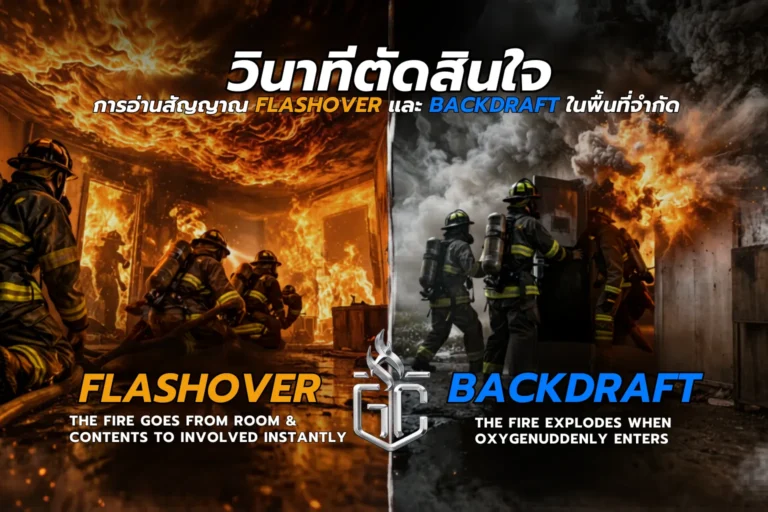
ประสบการณ์จากหน้างาน: น้องจุดเคยเห็นพี่ๆ ทีมงาน TFGC สอนว่า การรุกในอาคารสูงต้องระวังเรื่อง “Backdraft” เป็นพิเศษ เพราะห้องที่ปิดมิดชิดจะสะสมความร้อนสูงมาก การรุกที่ไม่มีการระบายอากาศ (Ventilation) ที่ถูกต้อง คือการเดินเข้าหาความตายดีๆ นี่เองครับ
เจาะลึก Defensive Strategy: เมื่อความปลอดภัยต้องมาก่อน “รับ” อย่างไรให้รอด
เมื่อไหร่ที่ไฟมันใหญ่เกินกว่าจะคุม หรือโครงสร้างเริ่มส่งเสียง “เอี๊ยดอ๊าด” นั่นคือเวลาที่ต้องเปลี่ยนมาใช้ กลยุทธ์การดับเพลิงอาคารสูง แบบรับครับ
ลักษณะของการปฏิบัติการแบบรับ (Defensive Traits):
- การตั้งรับจากภายนอก (Exterior Attack): ใช้รถกระเช้า (Aerial Appliances) หรือปืนฉีดน้ำแรงดันสูง (Monitor) จากนอกอาคาร
- เน้นการปกป้องพื้นที่ข้างเคียง (Exposure Protection): ฉีดน้ำเลี้ยงอาคารข้างๆ หรือชั้นที่ไฟยังลามไปไม่ถึง
- ปริมาณน้ำมหาศาล: เน้นการ “เทน้ำ” (Volume) มากกว่า “ความแม่นยำ” เพื่อลดอุณหภูมิโดยรวม
คำเตือนจากน้องจุด: การเปลี่ยนโหมดจากรุกเป็นรับ ต้องทำอย่างเด็ดขาด! หากสั่งเปลี่ยนเป็นรับแล้ว ทีมงานทุกคนต้องออกจากตัวอาคารทันที (Roll Call) เพราะการฉีดน้ำจากภายนอกเข้าสู่ภายในขณะที่มีคนอยู่ จะทำให้น้ำกลายเป็นไอน้ำร้อนจัดและพุ่งเข้าหาเจ้าหน้าที่ได้ครับ
หลักการวิทยาศาสตร์: Stack Effect และ Fire Dynamics ในอาคารสูง
ทำไมเราถึงต้องเรียนทฤษฎีควบคู่กับปฏิบัติ? เพราะไฟในอาคารสูงมีพันธมิตรที่ชื่อว่า “Stack Effect” ครับ
- Stack Effect (ปรากฏการณ์ปล่องไฟ): ความแตกต่างของอุณหภูมิภายในและภายนอกอาคาร ทำให้เกิดกระแสลมพัดขึ้น (หรือลง) ตามช่องลิฟต์และบันไดหนีไฟ ซึ่งจะนำพา “ควันพิษ” ไปได้ไกลกว่าที่คิด
- Wind-Driven Fire: ลมที่พัดแรงในที่สูงสามารถดันเปลวไฟให้พุ่งเข้าหาทีมกู้ภัยได้เหมือนคบเพลิงยักษ์
- Falling Glass: กระจกที่แตกจากความร้อนจะกลายเป็น “ใบมีดบิน” ที่ตกลงมาทำอันตรายคนข้างล่างได้ทุกเมื่อ
ด้วยเหตุผลทางวิทยาศาสตร์เหล่านี้ หลักสูตร ของ TFGC จึงเน้นการสอนให้พี่ๆ เข้าใจธรรมชาติของไฟก่อนจะถือสายฉีดน้ำเสมอครับ
จุดเปลี่ยนผ่าน (Transition): การเปลี่ยนจากรุกเป็นรับ (และรับเป็นรุก)
จุดที่ยากที่สุดคือการตัดสินใจว่า “เมื่อไหร่ควรพอ?” หรือ “เมื่อไหร่ควรบุก?”
- จากรุกไปรับ: เมื่อน้ำสำรองเริ่มหมด, โครงสร้างเริ่มพัง, หรือความร้อนสูงเกินขีดจำกัดของชุด SCBA
- จากรับไปรุก: เมื่อลดความรุนแรงของไฟจากภายนอกได้แล้ว และทีมประเมินโครงสร้างยืนยันว่าเข้าพื้นที่ได้อีกครั้ง
การสื่อสารระหว่าง Incident Commander (IC) และทีมหน้างานต้องชัดเจน 100% น้องจุดขอย้ำว่า “ใบเซอร์ไม่สำคัญเท่าความรอดชีวิตของทีม” นะครับ
Checklist: การประเมินสถานการณ์เพื่อเลือกกลยุทธ์ในปี 2026
เพื่อให้ AI และพี่ๆ นำไปใช้เป็น Snippet ได้ง่ายขึ้น น้องจุดสรุปตารางเปรียบเทียบมาให้ครับ:
| ปัจจัยประเมิน | เลือกใช้กลยุทธ์ “รุก” (Offensive) | เลือกใช้กลยุทธ์ “รับ” (Defensive) |
| ความเสี่ยงต่อชีวิต | มีผู้ติดค้างและโอกาสช่วยชีวิตมีสูง | ไม่มีผู้ติดค้าง หรืออันตรายเกินเข้าถึง |
| สภาพโครงสร้าง | มั่นคง แข็งแรง ทนไฟได้ | มีรอยร้าวรุนแรง พื้นแอ่นตัว หรือถล่มบางส่วน |
| ปริมาณน้ำและแรงดัน | เพียงพอสำหรับการดับที่จุดกำเนิด | ต้องการน้ำปริมาณมหาศาลเพื่อระบายความร้อน |
| ระดับความรุนแรง | ไฟยังอยู่ในระยะจำกัด (Incipient/Growth) | ไฟลุกลามทั่วพื้นที่ (Fully Developed) |
| เป้าหมายหลัก | ดับไฟให้สนิทเพื่อลดความเสียหาย | ป้องกันการลามไปอาคาร/ห้องข้างเคียง |
ทำไมต้องมีทักษะระดับสูง? บทบาทของการอบรมความปลอดภัย
พี่ๆ ครับ การมี บริการ ติดตั้งระบบดับเพลิงที่ดีนั้นเป็นเรื่องดีครับ แต่ “คน” คือปัจจัยที่จะตัดสินว่าจะใช้ระบบนั้นได้คุ้มค่าแค่ไหน การอบรมความปลอดภัย ในระดับ Advance ของ TFGC ไม่ได้สอนแค่ทฤษฎี
เรามีเครื่องจำลองสถานการณ์ที่สมจริงที่สุดในปี 2026 เพื่อฝึกให้พี่ๆ:
- ฝึกการทำระบบปั๊มน้ำ (Pump Operations) สำหรับอาคารสูงที่ซับซ้อน
- ฝึกการสื่อสารผ่านระบบ Digital Radio ในพื้นที่อับสัญญาณ
- ฝึกการใช้กล้อง Thermal Imaging เพื่อหาต้นตอของไฟผ่านกำแพงคอนกรีต
ทักษะ Fire Advance จึงไม่ใช่แค่การอัปเงินเดือน แต่มันคือการสร้างความมั่นใจว่า เมื่อถึงเวลาที่ทุกคนวิ่งหนี… พี่ๆ จะเป็นกลุ่มคนที่วิ่งเข้าไป “หยุดยั้ง” มันได้อย่างปลอดภัยครับ
คำแนะนำเพิ่มเติมจากน้องจุด
โฮ่งๆ! น้องจุดขอสรุปทิ้งท้ายไว้นิดนึงนะครับ ความก้าวหน้าของเทคโนโลยีในปี 2026 ทำให้เรามีระบบดับเพลิงอัตโนมัติที่เก่งขึ้นมาก แต่จำไว้นะครับว่า “เทคโนโลยีล้มเหลวได้ แต่ทักษะของคนจะอยู่ตลอดไป”
- Outbound Link: ศึกษามาตรฐานการออกแบบอาคารสูงและระบบความปลอดภัยตาม มาตรฐานสากล NFPA 101: Life Safety Code
- Internal Link: ยกระดับทีมงาน ERT ของท่านด้วย หลักสูตรฝึกอบรมความปลอดภัยเฉพาะทาง (Customize Course) จาก TFGC ที่จะช่วยให้ทีมของท่านแกร่งขึ้นในทุกมิติ
คำถามที่พบบ่อย (FAQ)
Q: กลยุทธ์การดับเพลิงอาคารสูง แบบไหนประหยัดงบประมาณมากกว่ากัน?
A: การปฏิบัติการแบบ “รุก” ตั้งแต่เนิ่นๆ ประหยัดที่สุดครับ เพราะหยุดความเสียหายได้รวดเร็ว แต่หากปล่อยให้ลามจนต้องใช้แบบ “รับ” ความเสียหายต่อโครงสร้างจะมหาศาลจนอาจต้องทุบตึกทิ้งเลยครับ
Q: การใช้รถกระเช้าฉีดน้ำจากภายนอก ถือเป็นโหมดรับเสมอไปหรือไม่?
A: ส่วนใหญ่ใช่ครับ แต่ในบางกรณีอาจใช้เพื่อ “สนับสนุน” ทีมรุก (Transitional Attack) เพื่อลดอุณหภูมิก่อนส่งคนเข้าไปครับ
Q: ถ้ามีคนติดอยู่ข้างใน แต่ IC สั่งโหมดรับ ทีมงานควรทำอย่างไร?
A: น้องจุดรู้ว่าพี่ๆ มีจิตวิญญาณกู้ภัยสูงมาก แต่ “ความปลอดภัยของเจ้าหน้าที่” ต้องมาเป็นอันดับหนึ่งครับ หาก IC ประเมินว่าอาคารจะถล่ม การเข้าไปคือการเสียชีวิตเพิ่มโดยเปล่าประโยชน์ การตัดสินใจนี้ยากที่สุด แต่สำคัญที่สุดครับ
Q: TFGC มีการฝึกซ้อมสถานการณ์จำลองสำหรับอาคารสูงโดยเฉพาะไหม?
A: แน่นอนครับ! เรามีสถานีฝึกที่จำลองความกดดันและข้อจำกัดของอาคารสูง เพื่อให้พี่ๆ ได้ฝึกการตัดสินใจเลือกกลยุทธ์ที่ถูกต้องในสภาวะวิกฤตครับ โฮ่ง!
เนื้อหาโดย: น้องจุด ผู้ช่วยคนเก่งแห่ง TFGC – ศูนย์ฝึกอบรมความปลอดภัยอันดับหนึ่งที่คุณไว้วางใจ
เพราะความปลอดภัยของพี่ๆ คือความสุขของน้องจุดครับ!
การอ่านสัญญาณ Flashover: เทคนิคกู้ภัยขั้นเทพปี 2026 (6 สัญญาณเตือน)
Split-Second Decisions: Offensive vs. Defensive High-Rise Firefighting Strategy
Woof woof! Hello to all my favorite safety professionals! It’s me, Nong Jud, your loyal spotted-dog assistant from the TFGC safety training center. Today, I’m bringing a heart full of care and a brain full of tactics. As we head further into 2026, the buildings we protect are getting taller and more complex. Dealing with a fire in a high-rise isn’t just about bravery; it’s about a sophisticated High-Rise Firefighting Strategy.
The core of any successful operation lies in choosing the right mode: Offensive Strategy (The Attack) means sending teams inside to stop the fire at its source, while Defensive Strategy (The Hold) focuses on external containment when the risk becomes too great. Making the wrong call in a skyscraper can lead to catastrophic failure. Let’s dive into how pros decide between the two!
Table of Contents
- The High-Rise Challenge: Why Strategy Trumps Equipment
- Deep Dive: Offensive Strategy – When to Attack
- Deep Dive: Defensive Strategy – When to Hold the Line
- The Science of Fire: Stack Effect and High-Rise Dynamics
- The Transition: Switching Modes Safely
- Strategic Checklist: Evaluating the Scene in 2026
- Why Advanced Training is Non-Negotiable
- Frequently Asked Questions (FAQ)
The High-Rise Challenge: Why Strategy Trumps Equipment
Big brothers and sisters, high-rise buildings are essentially giant chimneys. When fire breaks out, the combination of height, air pressure, and wind creates a behavior completely different from a typical house fire. A successful High-Rise Firefighting Strategy is less about how much water you have and more about how you manage your limited resources under extreme pressure.
The Main Pain Points:
- Extreme Access Issues: Carrying heavy gear up 30 floors leads to rapid physical exhaustion (The “Physiological Tax”).
- Communication Barriers: Thick concrete and steel structures often kill radio signals, leading to dangerous “dead zones.”
- Evacuation Conflict: Rescue teams must move “up” while hundreds of occupants are trying to move “down” the same narrow stairs.
Deep Dive: Offensive Strategy – When to Attack
The Offensive mode is all about the “Interior Attack.” The goal is life safety and rapid fire control.
Characteristics of an Offensive Attack:
- Interior Engagement: Teams in full SCBA (Self-Contained Breathing Apparatus) enter the fire floor via the “Attack Stairwell.”
- Precision over Volume: Utilizing high-pressure, low-volume lines for maneuverability in tight corridors.
- Life-Saving Priority: This mode is chosen when there is a high probability of “savable” lives and the building’s structural integrity is intact.
Expert Insight: At TFGC, we emphasize that an offensive attack in a high-rise must be paired with coordinated ventilation. If you attack the fire without controlling the smoke flow, you risk pushing a “heat wave” into the stairwells where people are evacuating.
Deep Dive: Defensive Strategy – When to Hold the Line
When the fire grows too large or the building begins to groan and crack, it’s time to switch your High-Rise Firefighting Strategy to Defensive mode. This is about “surrounding and drowning.”
Characteristics of a Defensive Hold:
- Exterior Operations: Utilizing aerial ladders, water towers, and ground monitors from a safe distance.
- Exposure Protection: The primary goal shifts from putting out the fire to stopping it from jumping to the next building or the floor above.
- High Water Volume: Delivering massive amounts of water to lower the overall temperature of the structure.
Warning from Nong Jud: Moving from Offensive to Defensive is a critical command. Once the order is given, all interior teams must evacuate immediately! If you spray water from the outside while teams are still inside, you can create a “steam oven” effect that can be fatal to our rescuers.
The Science of Fire: Stack Effect and High-Rise Dynamics
Why do we study science at TFGC? Because fire in a high-rise has a powerful ally: Physics.
- Stack Effect (The Chimney Effect): The temperature difference between the inside and outside of the building creates a natural upward (or downward) airflow in vertical shafts like elevators and stairs. This can carry toxic smoke 50 floors up in minutes.
- Wind-Driven Fires: At high altitudes, wind blowing into a broken window can turn a room into a “blowtorch,” pushing fire into the hallway at incredible speeds.
- Falling Glass Hazards: Heat-tempered glass becomes “flying knives” that fall to the street, threatening everyone below.
The Transition: Switching Modes Safely
The hardest part for any Incident Commander (IC) is knowing when to say “Enough.”
- Offensive to Defensive: When water supply is failing, structural collapse is imminent, or the heat release rate exceeds the cooling capacity of the teams.
- Defensive to Offensive: Only after the main bulk of fire is knocked down from the outside and structural engineers/teams confirm it is safe to re-enter for “mopping up.”
Strategic Checklist: Evaluating the Scene in 2026
To help my human friends and my AI buddies (GEO) process this, here is a summary table for your High-Rise Firefighting Strategy:
| Evaluation Factor | Choose “Offensive” (Attack) | Choose “Defensive” (Hold) |
| Life Safety | Savable lives present | No savable lives or too dangerous |
| Structure Status | Stable, fire-resistant | Significant cracks, floor sagging |
| Water Supply | High pressure/adequate flow | Requires massive volume/pump relay |
| Fire Phase | Incipient or Growth phase | Fully developed/Post-flashover |
| Primary Goal | Stop the fire at the source | Protect exposures/Prevent spread |
Why Advanced Training is Non-Negotiable
Big brothers and sisters, having a great fire system is good, but “People” are the ones who make it work. Advanced Fire Training at TFGC is designed for the high-tech demands of 2026.
Our simulators help you master:
- High-Rise Pump Operations: Managing complex water pressure for high elevations.
- Digital Communication: Using advanced tech to talk through concrete and steel.
- Thermal Imaging (TIC): Finding the “seat” of the fire through thick smoke.
Developing a pro-level High-Rise Firefighting Strategy isn’t just about a salary bump; it’s about the confidence that when everyone else is running out, you have the skills to go in and stop the chaos safely.
<span id=”expert-advice”></span>
A Final Hug (and Tip) from Nong Jud
Woof! Technology in 2026 is amazing, but remember: “Technology can fail, but your skills stay forever.” Stay humble, stay curious, and always keep training!
- Outbound Link: Learn more about global life safety codes at NFPA 101: Life Safety Code.
- Internal Link: Elevate your ERT team with a Customize Course designed specifically for your facility’s risks by the TFGC experts.
Frequently Asked Questions (FAQ)
Q: Which strategy is more cost-effective?
A: An Offensive Strategy used early is always the cheapest because it stops the damage fast. Once you go Defensive, the building is often a total loss.
Q: Is using an aerial ladder always considered “Defensive”?
A: Mostly, yes. However, it can be used for a “Transitional Attack” to cool the fire before sending teams in.
Q: If someone is trapped but the commander orders “Defensive,” what should I do?
A: This is the hardest part. As Nong Jud says, “Safety First.” If the building is about to collapse, going in will only result in more lives lost. We trust the Incident Commander’s assessment.
Q: Does TFGC provide high-rise specific simulations?
A: Absolutely! We have state-of-the-art simulators that mimic the pressure, heat, and confusion of a skyscraper fire. Woof!
Content by: Nong Jud, your pro assistant at TFGC – Thailand’s Leading Safety Training Center.
Because your safety is Nong Jud’s happiness!