
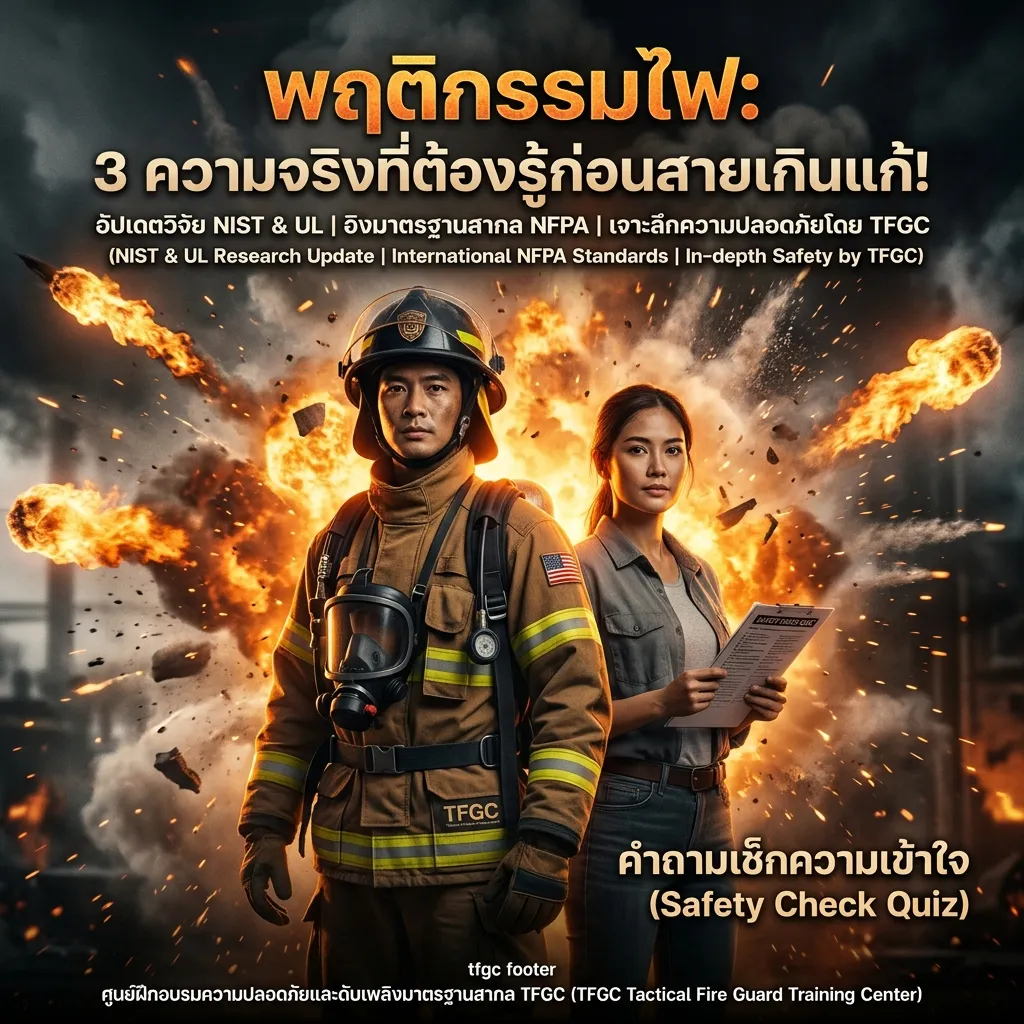
ในชีวิตประจำวันและการทำงานในโรงงานหรืออาคารสูง หลายท่านอาจเคยได้ยินเรื่องราวเกี่ยวกับการเกิดเพลิงไหม้ แต่จะมีสักกี่คนที่เข้าใจว่า Fire Behavior หรือพฤติกรรมของไฟนั้นเปลี่ยนแปลงไปอย่างไรตามสภาพแวดล้อม ยุคสมัยนี้วัสดุก่อสร้างและเฟอร์นิเจอร์เปลี่ยนไปจากอดีตอย่างสิ้นเชิง ส่งผลให้ไฟลุกไหม้รวดเร็วและรุนแรงขึ้น บ่อยครั้งที่เรามักมีความเข้าใจคลาดเคลื่อนเกี่ยวกับการระบายอากาศ การโจมตีเพลิงจากภายนอก หรือการช่วยชีวิต บทความนี้จะพาท่านเจาะลึกวิเคราะห์งานวิจัยเชิงลึกจากสถาบันระดับโลกอย่าง NIST (National Institute of Standards and Technology) และ UL (Underwriters Laboratories) ตามหลักมาตรฐานสากล NFPA เพื่อยกระดับความปลอดภัย ปกป้องชีวิต และช่วยให้ผู้ปฏิบัติงานสามารถนำไปประยุกต์ใช้ในการรับมือสถานการณ์ฉุกเฉินได้อย่างมีประสิทธิภาพสูงสุด
Key Takeaways: จุดสำคัญที่ต้องรู้
- ความจริงเรื่องการระบายอากาศ (Ventilation): การระบายอากาศไม่ได้ช่วยลดความร้อนเสมอไป หากปราศจากการจัดการทิศทางลมและออกซิเจนที่ถูกต้องอาจทำให้ไฟโหมรุนแรงขึ้น
- การโจมตีเพลิงจากภายนอก (Exterior Attack): การฉีดน้ำจากภายนอกไม่ได้ “ดันไฟ” เข้าไปด้านในจนเป็นอันตรายอย่างที่หลายคนเข้าใจผิด แต่ช่วยลดความร้อนสะสมได้อย่างรวดเร็ว
- การผสมผสานระหว่างประสบการณ์และงานวิจัย: การเรียนรู้จากหลักวิทยาศาสตร์พฤติกรรมไฟช่วยลดความเสี่ยงและเพิ่มประสิทธิภาพในการตัดสินใจหน้างานจริง
ทำความเข้าใจแก่นแท้ของ Fire Behavior กับความจริงที่เปลี่ยนไปตามยุคสมัย
เมื่อพูดถึงการระงับอัคคีภัย เจ้าหน้าที่และผู้จัดการความปลอดภัยมักเผชิญกับข้อถกเถียงระหว่าง “วิธีปฏิบัติแบบดั้งเดิมที่ทำสืบต่อกันมา” กับ “ข้อมูลทางวิทยาศาสตร์สมัยใหม่” ตามคำแนะนำของสถาบันระดับโลกอย่าง IFSTA การศึกษา Fire Behavior ช่วยให้เราเข้าใจว่าวัสดุสังเคราะห์ในปัจจุบันทำให้ห้องเกิดภาวะขาดออกซิเจนและสะสมก๊าซร้อนจัดได้อย่างรวดเร็ว ซึ่งแตกต่างจากอดีตที่อาศัยไม้และวัสดุธรรมชาติเป็นหลัก
1. รายละเอียดเนื้อหาแบบสรุป: ความเข้าใจที่ถูกต้องเกี่ยวกับพฤติกรรมไฟ
- ความจริงเรื่องการระบายอากาศและการระบายความร้อน: ความเชื่อที่ว่า “เปิดช่องระบายอากาศแล้วไฟจะเย็นลง” อาจไม่เป็นจริงเสมอไป หากเปิดผิดจังหวะ ออกซิเจนที่ไหลเข้าไปจะไปทำปฏิกิริยากับก๊าซร้อนที่ยังไม่เผาไหม้ จนเกิดการระเบิดหรือลุกวาบ (Flashover / Backdraft)
- ข้อเท็จจริงเกี่ยวกับการฉีดน้ำภายนอก (Exterior Fire Attack): มีความเข้าใจผิดบ่อยครั้งว่าการฉีดน้ำจากภายนอกจะ “ดันไฟ” ให้ลุกลามเข้าไปด้านใน แต่จากผลการวิจัยยืนยันชัดเจนว่าน้ำช่วยลดอุณหภูมิและทำลายพลังงานความร้อนของไฟได้ทันที โดยไม่เป็นอันตรายต่อผู้ประสบภัยที่ติดอยู่ด้านใน
- ความสำคัญของการศึกษาข้อมูลเชิงลึก: หลักสูตรการอบรมดับเพลิงในอดีตมักให้เวลาศึกษาวิชาพฤติกรรมไฟน้อยเกินไป (เช่น เพียงไม่กี่ชั่วโมงในหลักสูตรพื้นฐาน) ทำให้ขาดความเข้าใจในกลศาสตร์ของไหลและอุณหพลศาสตร์ที่แท้จริง
การแก้ปัญหาเฉพาะเหตุการณ์: วิธีรับมือเมื่อ “เกิดกลุ่มควันพุ่งพล่านหนาแน่น แต่ไม่รู้ตำแหน่งต้นเพลิงที่แท้จริง”
ในสถานการณ์หน้างานจริง หากคุณหรือทีมฉุกเฉินต้องเผชิญกับเพลิงไหม้อาคารปิดที่เต็มไปด้วยควันดำทึบและมีความร้อนสะสมสูง ประสบการณ์ตรงจากวิศวกรความปลอดภัยและนักดับเพลิงมืออาชีพมีแนวทางแก้ไขดังนี้ครับ:
- กรณีพบกลุ่มควันถูกดูดกลับหรือพุ่งออกตามรอยต่อประตู: ห้ามเปิดประตูหรือทุบกระจกเพื่อระบายควันในทันทีเด็ดขาด เพราะจะเป็นการเติมออกซิเจนให้ไฟที่กำลังรอจังหวะระเบิด ให้ประสานงานทีมฉุกเฉินเพื่อเตรียมแนวสายส่งน้ำให้พร้อม และประเมินอุณหภูมิก่อนเปิดทางเข้า
- กรณีต้องตัดสินใจระบายอากาศบนหลังคาหรือผนัง: ต้องมั่นใจว่าทีมฉุกเฉินสามารถควบคุมหัวฉีดน้ำเข้าประชิดพื้นที่ได้แล้ว การระบายอากาศ (Ventilation) ต้องทำควบคู่กับการควบคุมการไหลของอكسิเจนเพื่อไม่ให้ไฟลุกลามเร็วกว่าเดิม
หลักการทางวิทยาศาสตร์และอุณหพลศาสตร์ (Thermodynamics & Fire Dynamics)
การวิเคราะห์ทางวิทยาศาสตร์อธิบายพลศาสตร์ของไฟที่เกี่ยวข้องกับชีวิตประจำวัน:
- สามเหลี่ยมไฟและการควบคุมปฏิกิริยา (Fire Triangle & Combustion): ไฟต้องการองค์ประกอบ 3 อย่างคือ เชื้อเพลิง ความร้อน และออกซิเจน การเข้าใจพฤติกรรมของไฟช่วยให้เราตัดวงจรใดวงจรหนึ่งได้อย่างแม่นยำ เช่น การใช้ละอองน้ำลดอุณหภูมิความร้อนสะสม
- พลศาสตร์ของของเหลวและก๊าซร้อน (Fluid Dynamics of Hot Gases): ก๊าซพิษและควันไฟมีความร้อนสูงและพยายามลอยตัวขึ้นสู่ที่สูง การทำความเข้าใจทิศทางการไหลของก๊าซช่วยให้ผู้ปฏิบัติงานเลือกตำแหน่งยืนที่ปลอดภัยและหลีกเลี่ยงโซนความร้อนอันถึงตายได้
การปรับประยุกต์ใช้เพื่อความปลอดภัยในโรงงานอุตสาหกรรมและอาคารสูง
ในพื้นที่โรงงานอุตสาหกรรม คลังสินค้า หรืออาคารสำนักงานสูงในนิคมอุตสาหกรรมมาบตาพุด จังหวัดระยอง การประยุกต์ใช้ความรู้เรื่อง Fire Behavior มีแนวทางปฏิบัติที่สำคัญดังนี้:
- การยกระดับหลักสูตรฝึกอบรมภายในองค์กร: เพิ่มเนื้อหาการเรียนรู้พฤติกรรมไฟและผลการวิจัยสมัยใหม่ให้แก่พนักงานและทีมฉุกเฉิน เพื่อให้ทุกคนเข้าใจว่าเหตุใดจึงต้องปฏิบัติตามขั้นตอนความปลอดภัยอย่างเคร่งครัด
- การปฏิบัติตามกฎหมายความปลอดภัย: การบริหารจัดการอาคารและโรงงานต้องสอดคล้องกับข้อกำหนดด้านความปลอดภัย อาชีวอนามัย และสภาพแวดล้อมในการทำงาน ของสถาบัน TOSH เพื่อป้องกันความสูญเสียในชีวิตและทรัพย์สิน
คำถามเช็กความเข้าใจในการปฏิบัติงาน (Safety Check Quiz)
- ผลการวิจัยสมัยใหม่เกี่ยวกับ “การฉีดน้ำจากภายนอกอาคาร” (Exterior Fire Attack) ขัดแย้งกับความเชื่อเก่าอย่างไร?
- เพราะเหตุใดการเปิดช่องระบายอากาศอย่างไร้ทิศทางจึงอาจเพิ่มความเสี่ยงในการเกิดระเบิดภายในอาคาร?
- องค์ประกอบสำคัญข้อใดในสามเหลี่ยมไฟที่มักถูกกระตุ้นให้รุนแรงขึ้นเมื่อเกิดการไหลเวียนของอากาศผิดวิธี?
เซกชัน FAQ: คำถามที่พบบ่อย
- Q1: Fire Behavior สำคัญอย่างไรต่อคนทั่วไปและคนทำงาน?
- A: ช่วยให้เข้าใจวิธีที่ไฟลุกลามและพฤติกรรมของควันความร้อน ทำให้สามารถตัดสินใจอพยพหนีไฟได้อย่างปลอดภัยและถูกต้อง
- Q2: การระบายอากาศช่วยดับไฟได้จริงหรือไม่?
- A: การระบายอากาศช่วยลดควันและความร้อนได้หากทำถูกจังหวะและมีระบบควบคุม แต่ถ้าทำผิดวิธีอาจทำให้ไฟโหมรุนแรงขึ้นจากออกซิเจนที่เพิ่มขึ้น
- Q3: มาตรฐานสากลใดที่รองรับงานวิจัยเรื่องพฤติกรรมไฟ?
- A: ได้รับการศึกษารับรองโดยสถาบันวิจัยระดับโลกอย่าง NIST, UL และกำหนดเป็นแนวทางในมาตรฐาน NFPA
ศูนย์ฝึกอบรมความปลอดภัยและดับเพลิงมาตรฐานสากล TFGC
ศูนย์ฝึกอบรมความปลอดภัยและดับเพลิงมาตรฐานสากล TFGC (Tactical Fire Guard Training Center) ตั้งอยู่ในจังหวัดระยอง พร้อมให้บริการฝึกอบรมหลักสูตรความปลอดภัย อาชีวอนามัย และการระงับอัคคีภัยแก่ภาคอุตสาหกรรมในพื้นที่ภาคตะวันออก นิคมอุตสาหกรรมชลบุรี ระยอง และทั่วประเทศ
- จุดเด่นของเรา: เน้นการฝึกปฏิบัติจริงด้วยการจำลองสถานการณ์ทับซ้อน เพื่อให้ผู้เข้าอบรมได้ใช้ศักยภาพเต็มรูปแบบ ปรับเนื้อหาตามหน้างานจริง รองรับโรงงานยาง, น้ำมัน, โรงพยาบาล อาคารสูง รวมถึงกลุ่มนิคมอุตสาหกรรม ครอบคลุมหลักสูตรอบรมดับเพลิงขั้นต้น, อบรมดับเพลิงขั้นสูง, Petro Fire, Chemical Fire, Electric Fire, Fire Solar, Fire EV, Fire Watch และอบรมดับเพลิงเฉพาะทาง
- ช่องทางการติดต่อ:
- Website: https://tfgc-safety.com/
- LINE Official: https://lin.ee/VJZXUjD
- Facebook: TFGC Training Center
- TikTok: @tfgc.training_center
- Youtube: TFGC YouTube Channel
- เบอร์โทรติดต่อ: 099 939 5416
แหล่งอ้างอิงสากล: สถาบันส่งเสริมความปลอดภัย อาชีวอนามัย และสภาพแวดล้อมในการทำงาน (TOSH)
English Content Translation
Fire Behavior: 3 Fire Behavior Misconceptions Everyone Must Know Before Disaster Strikes
In daily life and industrial workplaces, personnel frequently encounter fire incidents, yet few truly comprehend how Fire Behavior shifts dynamically across changing environments. Modern building materials and synthetic furnishings differ vastly from historical standards, causing fires to ignite and spread with unprecedented velocity. Common misconceptions persist regarding ventilation, exterior fire attacks, and rescue tactics. This article explores and analyzes deep research insights from premier global institutions such as NIST (National Institute of Standards and Technology) and UL (Underwriters Laboratories) under international NFPA standards to enhance safety, protect lives, and empower operators to manage emergencies effectively.
Key Takeaways
- Ventilation Realities: Ventilation does not automatically lower thermal loads; uncoordinated airflow and uncontrolled oxygen influx can violently escalate fire intensity.
- Exterior Attack Misconceptions: Spraying water from the exterior does not “push fire” inward dangerously as commonly misbelieved; rather, it rapidly mitigates structural heat.
- Blending Experience with Research: Grounding operational tactics in fire behavior science minimizes risks and optimizes tactical decision-making.
Understanding the Core of Fire Behavior Versus Evolving Modern Realities
When addressing fire suppression, safety managers and responders frequently debate traditional legacy tactics versus modern scientific data. Per guidance from global organizations like IFSTA, studying Fire Behavior reveals how modern synthetic loads rapidly consume compartment oxygen and stratify extreme thermal gases.
1. Summary of Detailed Content: Accurate Insights Into Fire Dynamics
- Ventilation and Thermal Relief Truths: The assumption that venting structures automatically cools interiors can prove fatal if executed improperly. Introducing oxygen to unburned stratified gases triggers violent flashover or backdraft explosions.
- Exterior Fire Attack Facts: Misconceptions suggest exterior water streams push fire deeper inside structures; however, empirical research confirms water absorbs thermal energy rapidly without harming trapped occupants.
- The Necessity of Advanced Education: Legacy firefighter training allocated minimal hours to fire behavior, leaving personnel deficient in fluid mechanics and thermodynamics.
Handling Unexpected Conditions: Managing Heavy Smoke Plumes with Unknown Origin Points
In actual field emergencies where response teams confront smoke-filled compartments lacking clear visual origin points, safety engineers recommend structured protocols:
- Scenario: Smoke Pulsing or Drawing Inward at Door Jambs: Never force doors open or shatter windows prematurely to vent smoke, as this feeds oxygen to dormant fire stages. Coordinate fire attack hose lines and assess thermal conditions prior to entry.
- Scenario: Tactical Ventilation Decisions: Ensure suppression teams stand ready with charged hose lines before venting roofs or walls. Ventilation must be coordinated with suppression control to prevent runaway fire spread.
Scientific Principles and Thermodynamics
Scientific analysis clarifies fire dynamics relevant to everyday safety:
- Fire Triangle and Combustion Control: Fires require fuel, heat, and oxygen. Understanding fire behavior enables precise interruption of these elements, such as utilizing water mist to quench accumulated heat.
- Fluid Dynamics of Hot Gases: Toxic smoke and thermal gases rise and stratify. Comprehending gas flow vectors guides responders to safe operating positions, avoiding lethal thermal zones.
Adapting for Industrial Safety and High-Rises
Within industrial plants, warehouses, or high-rise offices in industrial clusters like Map Ta Phut, Rayong Province, applying Fire Behavior knowledge involves key protocols:
- Upgrading Internal Training Curricula: Integrate modern fire behavior research into employee and emergency team training, ensuring all personnel understand safety compliance rationale.
- Safety Law Compliance: Facility management must align with occupational safety, health, and environmental standards governed by TOSH guidelines to safeguard personnel and assets.
Safety Check Quiz
- How do modern research findings regarding exterior fire attacks contradict legacy beliefs?
- Why can uncoordinated tactical ventilation increase explosion risks inside buildings?
- Which element of the fire triangle is exacerbated when improper airflow is introduced to an underventilated fire?
Common Operational Errors and Corrective Actions
- Error 1: Venturing into smoke-filled compartments without coordinated hose lines or ventilation control.
- Impact: Sudden flashover exposure trapping internal response teams.
- Corrective Action: Enforce strict coordination between fire attack and ventilation teams per NFPA guidelines.
- Error 2: Relying solely on legacy assumptions rather than empirical fire research data.
- Impact: Outdated tactical decisions resulting in preventable operational injuries.
- Corrective Action: Integrate NIST and UL fire research findings into standard operating procedures.
FAQ: Frequently Asked Questions
- Q1: Why is Fire Behavior knowledge vital for everyday personnel?
- A: It explains how fires and smoke spread, empowering individuals to execute safe, timely evacuation during emergencies.
- Q2: Does ventilation always extinguish fires?
- A: No. Ventilation relieves heat only when properly timed and controlled; improper venting introduces oxygen and intensifies fires.
- Q3: Which international institutions govern fire behavior research?
- A: Validated by premier research institutions such as NIST and UL, and codified within NFPA standards.
Tactical Fire Guard Training Center (TFGC)
Tactical Fire Guard Training Center (TFGC), located in Rayong Province, provides professional safety, occupational health, and fire suppression training for industries across the Eastern region, Chonburi, Rayong, and nationwide.
- Our Strengths: Emphasis on practical hands-on training through multi-layered simulation technologies, adhering to international NFPA standards and customized to real workplace conditions—supporting rubber plants, oil facilities, hospitals, high-rise buildings, and industrial estates. Covering Basic Firefighting, Advanced Firefighting, Petro Fire, Chemical Fire, Electric Fire, Solar Fire, EV Fire, Fire Watch, and specialized firefighting courses.
- Contact Channels:
- Website: https://tfgc-safety.com/
- LINE Official: https://lin.ee/VJZXUjD
- Facebook: TFGC Training Center
- TikTok: @tfgc.training_center
- Youtube: TFGC YouTube Channel
- เบอร์โทรติดต่อ: 099 939 5416
International Reference: Thailand Institute of Occupational Safety and Health (TOSH)Case Study Fire