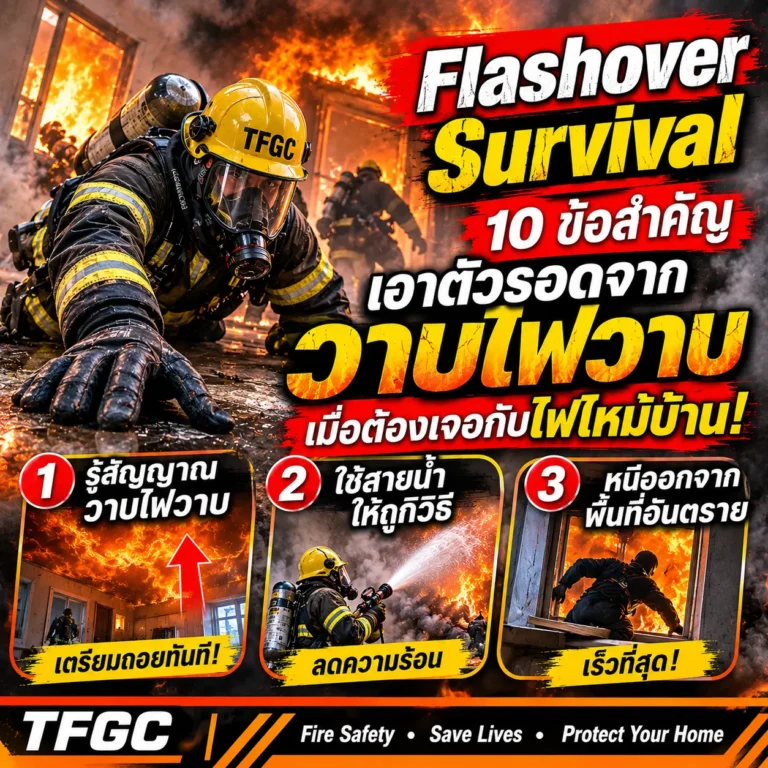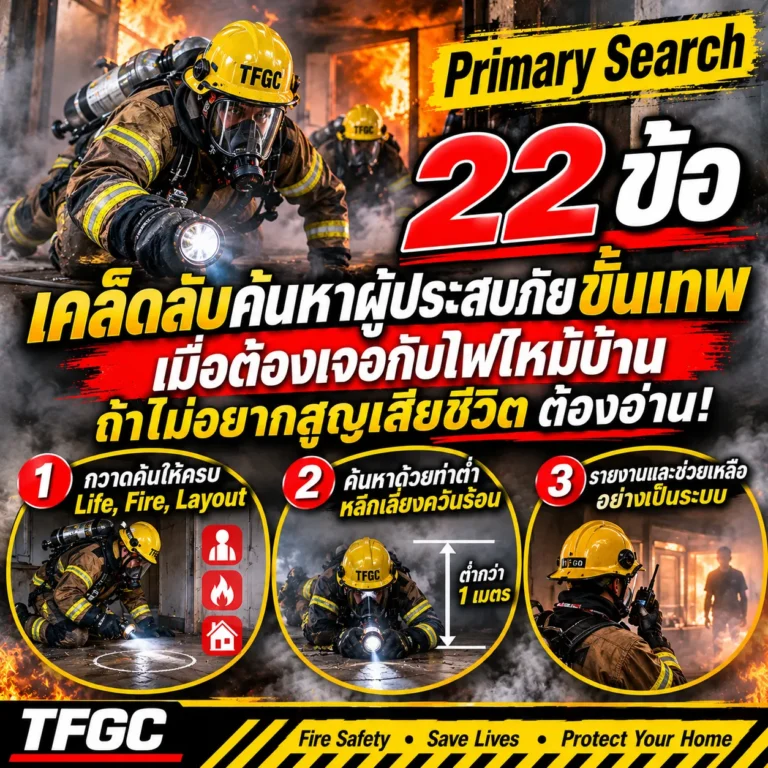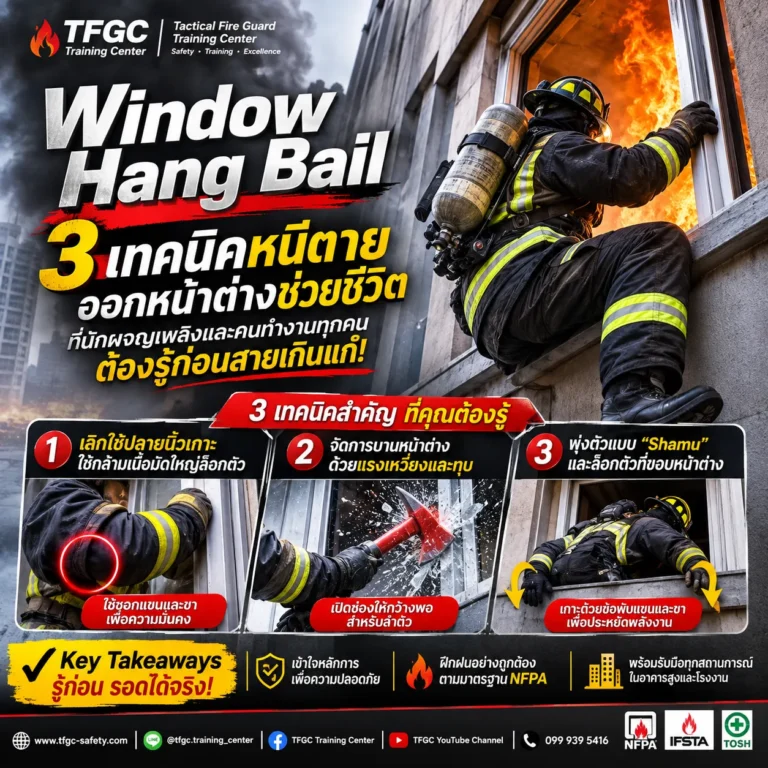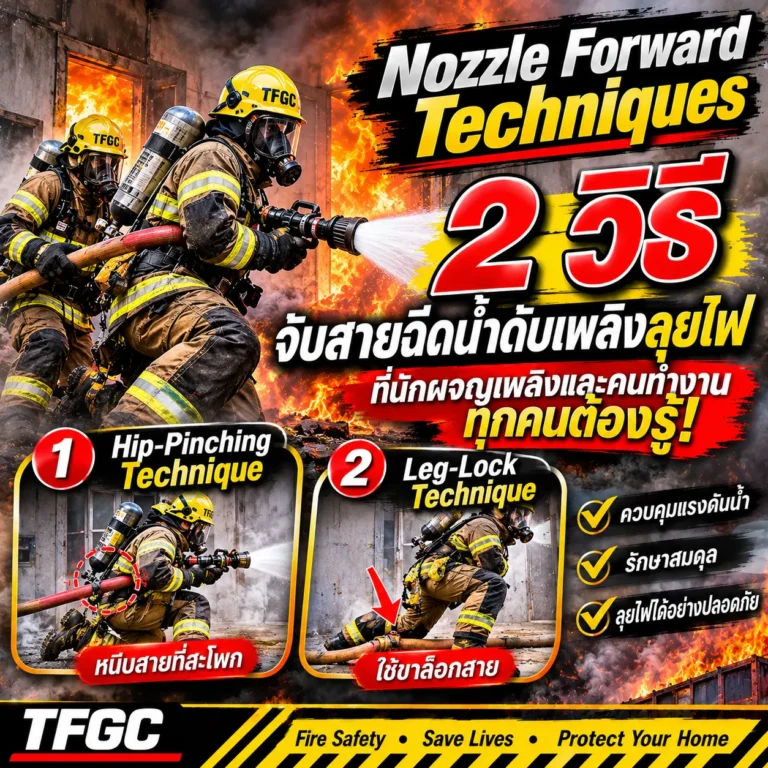

ในภารกิจการผจญเพลิงและการระงับอัคคีภัยภายในอาคาร การเปิดประตูเพื่อเข้าสู่ห้องต้นเพลิงถือเป็นจุดเปลี่ยนสำคัญที่อาจกำหนดความเป็นความตายของทีมนักดับเพลิง การกระชากประตูเปิดอย่างรวดเร็วโดยปราศจากการประเมินอาจทำให้อากาศภายนอกไหลทะลักเข้าไปโหมเปลวไฟและเกิดระเบิดเพลิง (Backdraft หรือ Flashover) ได้ บทความนี้จะพาท่านเจาะลึกกระบวนการ Door Control Fire Attack ตามหลักมาตรฐานสากล NFPA (National Fire Protection Association) เพื่อยกระดับความปลอดภัย เพิ่มความแม่นยำ และช่วยให้ผู้ปฏิบัติงานสามารถนำไปประยุกต์ใช้ในการควบคุมประตูเมื่อต้องเจอกับไฟไหม้อาคารได้อย่างมีประสิทธิภาพสูงสุด
Key Takeaways: จุดสำคัญที่ต้องรู้
- อันตรายจากการเปิดประตูเร็วเกินไป: การเปิดประตูโดยไม่ควบคุมเสี่ยงต่อการรับออกซิเจนกะทันหัน ส่งผลให้เกิดลูกไฟพุ่งย้อนกลับ (Flameover / Backdraft)
- การใช้เทคนิคบล็อกประตูด้วยเท้า: ผู้ควบคุมประตูต้องใช้เท้าค้ำยันฐานประตูเพื่อป้องกันไม่ให้แรงอัดอากาศกระชากประตูเปิดออกเอง
- การประสานงานเป็นทีม: ทีมควบคุมประตูและทีมหัวฉีดต้องสื่อสารและเตรียมความพร้อมหัวฉีดให้พร้อมใช้งานตลอดเวลาก่อนเปิดทาง
ทำความเข้าใจแก่นแท้ของ Door Control Fire Attack ในการปฏิบัติงาน
เมื่อเผชิญหน้ากับประตูปิดที่มีควันพวยพุ่งออกมาตามรอยต่อ การทำ Door Control Fire Attack ถือเป็นยุทธวิธีบังคับตามแนวทางของสถาบันระดับโลกอย่าง IFSTA นักดับเพลิงห้ามเปิดประตูอย่างฉับพลันโดยเด็ดขาด เนื่องจากความร้อนและก๊าซพิษสะสมต้องการการจัดการอย่างเป็นระบบ
1. วิธีการเปิดประตูแบบค่อยเป็นค่อยไป (Methodical Door Opening)
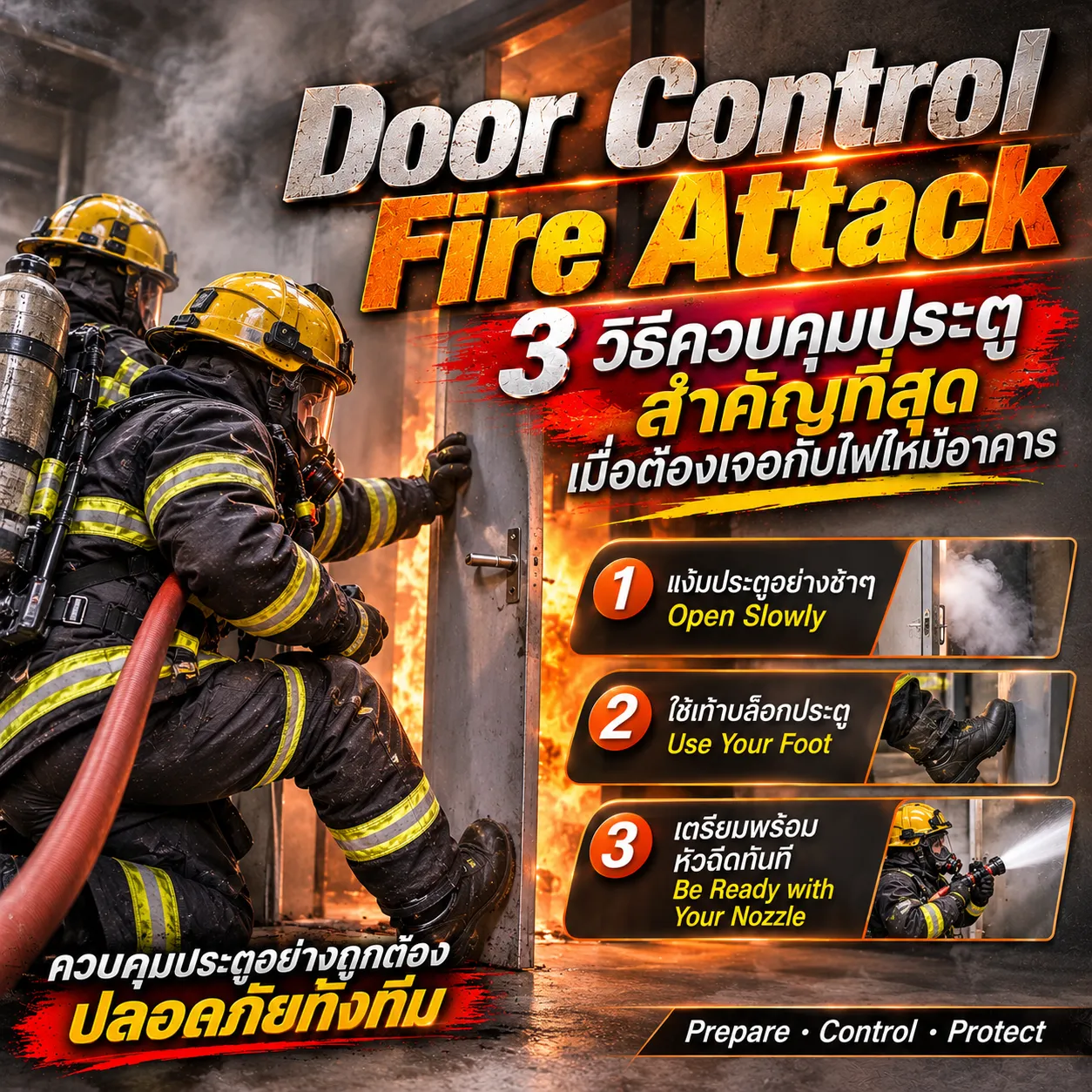
ขั้นตอนแรกของการทำ Door Control Fire Attack คือการสื่อสารยืนยันความพร้อมระหว่างทีมควบคุมประตูและทีมหัวฉีด จากนั้นจึงค่อยๆ เปิดประตูแง้มออกทีละน้อย (ประมาณ 6 นิ้ว) เพื่อสังเกตพฤติกรรมของควันและเปลวไฟ ท่าทางดังกล่าวจะช่วยป้องกันไม่ให้เกิดออกซิเจนไหลเข้าสู่ห้องเพลิงไหม้อย่างรุนแรง ในขณะเดียวกัน หัวฉีดต้องพร้อมทำหน้าที่ฉีดน้ำสกัดกั้นทันทีหากมีเปลวไฟพุ่งออกมา
2. เทคนิคการใช้เท้าบล็อกและค้ำยันฐานประตู (Foot Chock Technique)
ผู้ปฏิบัติหน้าที่ควบคุมประตูต้องวางเท้าหลักไว้ที่บริเวณขอบล่างของประตูก่อนจะเริ่มเปิด เพื่อทำหน้าที่เป็นตัวบล็อกเชิงกล (Mechanical Chock) หากเกิดแรงดันมหาศาลภายในห้องดันกระแทกออกมา เท้าจะช่วยยยันและจำกัดระยะการเปิดไม่ให้ประตูถูกกระชากหลุดมือ ซึ่งช่วยลดความเสี่ยงที่นักดับเพลิงจะถูกเปลวไฟลวกอย่างรุนแรง
การแก้ปัญหาเฉพาะเหตุการณ์: วิธีรับมือเมื่อ “อุปกรณ์บล็อกประตูเสียหาย หรือพื้นที่จำกัดจนใช้เท้าค้ำไม่ได้”
ในสถานการณ์หน้างานจริง นักผจญเพลิงอาจพบอุปสรรคที่ไม่เป็นไปตามตำรา เช่น บานประตูเหล็กไร้มือจับ พื้นลื่น หรือสวมชุดป้องกันหนาจนไม่สามารถใช้เท้าค้ำยันได้อย่างมั่นคง ประสบการณ์ตรงจากทีมปฏิบัติการมีแนวทางแก้ไขดังนี้ครับ:
- กรณีไม่มีจุดค้ำยันหรือบานประตูเรียบไม่มีขอบให้ใช้เท้าบล็อก: ให้ใช้สายส่งน้ำเส้นสำรองหรือเครื่องมือช่าง (เช่น ชะแลง Halligan Tool) ผูกรั้งหรือขัดไว้กับวงกบประตูก่อนแง้มเปิด หรือใช้เทคนิคการยืนด้านข้างบานประตู (Door Profile) ให้พ้นแนวรัศมีปะทะของเปลวไฟ แล้วใช้สายสะพายหรือเชือกดึงแง้มบานประตูทีละนิดจากมุมปลอดภัย
- กรณีเกิดแรงดันอัดอากาศรุนแรงจนคุมไม่อยู่: หากแง้มประตูแล้วพบแรงดันพ่นออกมารุนแรง ให้รีบปิดประตูทันทีเพื่อตัดอากาศ ห้ามฝืนเปิดเด็ดขาด จากนั้นให้ใช้หัวฉีดเจาะรูผ่านผนังเบาหรือฉีดสเปรย์ผ่านช่องประตูเพื่อลดอุณหภูมิก่อนดำเนินการเปิดซ้ำ
หลักการทางวิทยาศาสตร์และกลศาสตร์ของของไหล (Fluid Mechanics & Fire Behavior)
การทำความเข้าใจฟิสิกส์ของการเผาไหม้ช่วยให้การควบคุมประตูมีความปลอดภัยเชิงวิศวกรรม:
- พลศาสตร์ของไฟและการไหลของอากาศ (Fire Dynamics & Inrush of Oxygen): ไฟในห้องปิดจะอยู่ในสภาวะขาดออกซิเจน (Underventilated Fire) เมื่อเปิดประตูออกอย่างไร้การควบคุม ออกซิเจนจากภายนอกจะไหลเข้าไปผสมกับก๊าซร้อนที่ยังไม่เผาไหม้ทันที ก่อให้เกิดการลุกไหม้อย่างรุนแรง (Flashover / Backdraft) การควบคุมช่องเปิดช่วยจำกัดปริมาณออกซิเจนที่ป้อนเข้าสู่ระบบ
- ความดันก๊าซร้อน (Thermal Pressure): ก๊าซร้อนและควันภายในห้องขยายตัวและสร้างแรงดันสูง การแง้มประตูทีละน้อยช่วยระบายแรงดันส่วนเกินออกอย่างควบคุมได้ พร้อมทั้งเปิดทางให้ละอองน้ำลดอุณหภูมิก๊าซร้อนก่อนเข้าประชิดตัวอาคาร
การปรับประยุกต์ใช้เพื่อความปลอดภัยในโรงงานอุตสาหกรรมและอาคารสูง
ในพื้นที่อุตสาหกรรมขนาดใหญ่ คลังเก็บสารเคมี หรืออาคารสูงในนิคมอุตสาหกรรมมาบตาพุด จังหวัดระยอง การประยุกต์ใช้กระบวนการ Door Control Fire Attack มีแนวทางปฏิบัติที่สำคัญดังนี้:
- การจัดการประตูกั้นไฟในอาคารสูง (High-Rise Fire Doors): อาคารสำนักงานหรือโรงงานมักมีประตูกั้นไฟ (Fire Door) อัตโนมัติ ทีมผจญเพลิงต้องฝึกฝนการควบคุมประตูเหล่านี้ไม่ให้ค้างเปิด เพื่อป้องกันไม่ให้ไฟลุกลามไปยังชั้นอื่นผ่านทางช่องทางเดิน
- การบูรณาการเข้ากับการฝึกอบรมพนักงาน: นำสถานการณ์จำลองการเปิดประตูห้องเครื่องจักรหรือห้องเก็บสารเคมีมาฝึกซ้อมในหลักสูตรดับเพลิงขั้นสูง เพื่อให้ทีมฉุกเฉินมีความเข้าใจในการควบคุมประตูตามมาตรฐานของสถาบัน TOSH
คำถามเช็กความเข้าใจในการปฏิบัติงาน (Safety Check Quiz)
- เพราะเหตุใดการกระชากเปิดประตูห้องเพลิงไหม้อย่างรวดเร็วจึงเป็นอันตรายอย่างยิ่ง?
- หน้าที่หลักของการวางเท้าไว้ที่ฐานประตูก่อนเปิดคืออะไร?
- หากแง้มประตูแล้วพบแรงดันพ่นออกมารุนแรง ควรปฏิบัติตามขั้นตอนใดเป็นอันดับแรก?
เซกชัน FAQ: คำถามที่พบบ่อย
- Q1: Door Control Fire Attack คืออะไร?
- A: คือยุทธวิธีควบคุมและแง้มเปิดประตูห้องเพลิงไหม้อย่างเป็นระบบ เพื่อป้องกันไม่ให้ออกซิเจนทะลักเข้าโหมไฟ และป้องกันวาบไฟย้อนกลับใส่ทีมดับเพลิง
- Q2: ควรแง้มประตูเปิดกว้างเท่าไหร่ในขั้นตอนแรกของการเข้าประชิด?
- A: ควรแง้มเปิดเพียงประมาณ 6 นิ้ว พร้อมกับเตรียมหัวฉีดให้พร้อมใช้งานเพื่อสังเกตสถานการณ์ภายใน
- Q3: มาตรฐานสากลใดที่รองรับการปฏิบัตินี้?
- A: ได้รับการอ้างอิงและบรรจุอยู่ในหลักสูตรสากลของ NFPA และ IFSTA
ศูนย์ฝึกอบรมความปลอดภัยและดับเพลิงมาตรฐานสากล TFGC
ศูนย์ฝึกอบรมความปลอดภัยและดับเพลิงมาตรฐานสากล TFGC (Tactical Fire Guard Training Center) ตั้งอยู่ในจังหวัดระยอง พร้อมให้บริการฝึกอบรมหลักสูตรความปลอดภัย อาชีวอนามัย และการระงับอัคคีภัยแก่ภาคอุตสาหกรรมในพื้นที่ภาคตะวันออก นิคมอุตสาหกรรมชลบุรี ระยอง และทั่วประเทศ
- จุดเด่นของเรา: เน้นการฝึกปฏิบัติจริงด้วยการจำลองสถานการณ์ทับซ้อน เพื่อให้ผู้เข้าอบรมได้ใช้ศักยภาพเต็มรูปแบบ ปรับเนื้อหาตามหน้างานจริง รองรับโรงงานยาง, น้ำมัน, โรงพยาบาล อาคารสูง รวมถึงกลุ่มนิคมอุตสาหกรรม ครอบคลุมหลักสูตรอบรมดับเพลิงขั้นต้น, อบรมดับเพลิงขั้นสูง, Petro Fire, Chemical Fire, Electric Fire, Fire Solar, Fire EV, Fire Watch และอบรมดับเพลิงเฉพาะทาง
- ช่องทางการติดต่อ:
- Website: https://tfgc-safety.com/
- LINE Official: https://lin.ee/VJZXUjD
- Facebook: TFGC Training Center
- TikTok: @tfgc.training_center
- เบอร์โทรติดต่อ: 099 939 5416
แหล่งอ้างอิงสากล: สถาบันส่งเสริมความปลอดภัย อาชีวอนามัย และสภาพแวดล้อมในการทำงาน (TOSH)
English Content Translation
Door Control Fire Attack: 3 Essential Steps for Door Control When Facing Building Fires
In indoor firefighting and emergency missions, opening doors to enter a fire compartment is a critical turning point that can determine firefighter survival. Rapidly ripping doors open without assessment allows external air to rush in, fueling flames and triggering explosive fire phenomena like backdrafts or flashovers. This article explores the process of Door Control Fire Attack according to international NFPA (National Fire Protection Association) standards to enhance safety, improve precision, and empower personnel to execute door control effectively when facing building fires.
Key Takeaways
- Dangers of Rapid Door Opening: Opening doors without control risks sudden oxygen inrush, triggering flameover or backdraft conditions.
- Foot Chock Technique: Door control personnel must position their feet at the base of the door to prevent pressure surges from forcing doors open uncontrollably.
- Team Coordination: Door control and nozzle teams must communicate and ready hose streams before opening entry paths.
Understanding the Core of Door Control Fire Attack in Operations
When facing closed doors with smoke puffing through gaps, executing Door Control Fire Attack is a mandatory tactical protocol per guidelines from global organizations like IFSTA. Firefighters must never open doors abruptly because accumulated thermal energy and toxic gases require systematic management.
1. Methodical Door Opening Procedures
The initial step of Door Control Fire Attack involves confirming readiness between door control and nozzle teams. Doors are then methodically cracked open incrementally (approximately 6 inches) to observe smoke and flame behavior. This action prevents unmitigated oxygen inrush, while hose streams stand ready to suppress unexpected flame bursts instantly.
2. Foot Chock Technique
Personnel assigned to door control position their leading foot at the bottom edge of the door as a mechanical chock. If massive internal pressure surges, the foot restricts door movement, preventing doors from wrenching away and drastically reducing severe burn risks for firefighters.
Handling Unexpected Conditions: Managing Equipment Shortages or Restrictive Spaces
In real-world emergency operations, professional firefighters frequently encounter conditions deviating from manuals, such as handleless steel doors, slick flooring, or bulky gear preventing stable foot bracing:
- Scenario: No Foot Bracing Points Available: Utilize backup hose lines or hand tools (like Halligan tools) to anchor or wedge doors against frames before cracking them open. Alternatively, employ the door profile technique—positioning oneself to the side out of flame paths—and use webbing or ropes to crack doors open gradually from a safe angle.
- Scenario: Severe Internal Pressure Surges: If cracking a door releases intense pressure, shut the door immediately to starve the fire of oxygen. Never force open doors; instead, utilize hose streams to pierce lightweight walls or spray water through gaps to cool the compartment before reattempting entry.
Scientific Principles and Fire Behavior
Explaining fire physics ensures engineering safety in door management:
- Fire Dynamics and Inrush of Oxygen: Fires in confined spaces become underventilated. Uncontrolled door openings allow external oxygen to mix instantly with unburned hot gases, triggering flashover or backdraft conditions. Controlling openings regulates oxygen feed rates.
- Thermal Pressure: Hot gases and smoke inside rooms expand and generate high pressures. Incrementally cracking doors relieves excess pressure in a controlled manner while allowing water mists to cool thermal layers prior to entry.
Adapting for Industrial Safety and High-Rises
Within large industrial plants, chemical storage terminals, or industrial estates like Map Ta Phut, Rayong Province, applying Door Control Fire Attack principles involves key protocols:
- Managing Fire Doors in High-Rises: Office buildings and industrial plants utilize automatic fire doors. Fire attack teams must train in controlling doors to prevent them from propping open, halting vertical fire spread.
- Employee Training Integration: Incorporate simulated machinery room or chemical storage door opening scenarios into advanced firefighting curricula so emergency teams master door control per TOSH standards.
Safety Check Quiz
- Why is rapidly ripping open fire compartment doors extremely dangerous?
- What is the primary function of positioning a foot at the base of the door before opening?
- If cracking a door releases intense pressure, what immediate action should be taken?
Common Operational Errors and Corrective Actions
- Error 1: Opening doors without coordinating with nozzle attack teams.
- Impact: Exposes personnel to sudden thermal surges and backdraft risks without water protection.
- Corrective Action: Mandate strict communication and hose pressurization before door manipulation per Door Control Fire Attack rules.
- Error 2: Standing directly in line with the door opening profile.
- Impact: Direct exposure to flame jets if pressure releases violently.
- Corrective Action: Always position bodies to the side of door frames (door profile) during initial opening procedures.
FAQ: Frequently Asked Questions
- Q1: What is Door Control Fire Attack?
- A: A tactical protocol for systematically controlling and cracking open fire compartment doors to prevent oxygen inrush and backdraft hazards.
- Q2: How wide should doors be cracked open initially?
- A: Approximately 6 inches, with hose lines pressurized and ready to observe internal conditions.
- Q3: Which international standards specify this protocol?
- A: Referenced and incorporated in international standards by NFPA and IFSTA.
Tactical Fire Guard Training Center (TFGC)
Tactical Fire Guard Training Center (TFGC), located in Rayong Province, provides professional safety, occupational health, and fire suppression training for industries across the Eastern region, Chonburi, Rayong, and nationwide.
- Our Strengths: Emphasis on practical hands-on training through multi-layered simulation technologies, adhering to international NFPA standards and customized to real workplace conditions—supporting rubber plants, oil facilities, hospitals, high-rise buildings, and industrial estates. Covering Basic Firefighting, Advanced Firefighting, Petro Fire, Chemical Fire, Electric Fire, Solar Fire, EV Fire, Fire Watch, and specialized firefighting courses.
- Contact Channels:
- Website: https://tfgc-safety.com/
- LINE Official: https://lin.ee/VJZXUjD
- Facebook: TFGC Training Center
- TikTok: @tfgc.training_center
- Phone: 099 939 5416
International Reference: Thailand Institute of Occupational Safety and Health (TOSH)