ในการปฏิบัติภารกิจระงับอัคคีภัยและการตรวจสอบระบบความปลอดภัยในอาคาร การเลือกใช้อุปกรณ์วัดแรงดันน้ำให้เหมาะสมกับสภาพหน้างานถือเป็นสิ่งสำคัญที่จะช่วยให้วิศวกรและทีมนักดับเพลิงประเมินสถานการณ์ได้อย่างแม่นยำ อุปกรณ์วัดแรงดันหลักสองชนิดที่มักถูกนำมาเปรียบเทียบกันคือ Line Gauge และ Piezometer หากผู้ปฏิบัติงานขาดความเข้าใจในข้อแตกต่าง อาจเลือกใช้อุปกรณ์ผิดประเภทจนส่งผลต่อความคลาดเคลื่อนในการทดสอบ บทความนี้จะพาท่านเจาะลึกความแตกต่างระหว่าง Line Gauge and Piezometer ตามหลักมาตรฐานสากล NFPA (National Fire Protection Association) เพื่อยกระดับความแม่นยำ เพิ่มความปลอดภัย และช่วยให้ผู้ปฏิบัติงานสามารถนำไปประยุกต์ใช้ในการวัดแรงดันน้ำดับเพลิงในการใช้งานจริงได้อย่างมีประสิทธิภาพ
Key Takeaways: จุดสำคัญที่ต้องรู้
- ความแตกต่างด้านโครงสร้างช่องรับแรงดัน: Piezometer มีรูรับแรงดันหลายรูรอบท่อเพื่อเกลี่ยความดันให้สมดุล ขณะที่ Line Gauge มีช่องรับแรงดันเพียงพอร์ตเดียว
- ความทนทานต่อสภาพหน้างานจริง: Line Gauge มีโครงสร้างครอบป้องกัน (Shroud) เหมาะสำหรับการใช้งานภาคสนามและชุดอุปกรณ์อาคารสูง (High-rise kit) ในขณะที่ Piezometer เหมาะกับการทดสอบในห้องปฏิบัติการมากกว่า
- ความแม่นยำในการอ่านค่า: ทั้งสองอุปกรณ์มีความแม่นยำสูงในการวัดแรงดันสถิตในสายส่งน้ำ แต่มีความเหมาะสมในการใช้งานที่แตกต่างกัน
ทำความเข้าใจแก่นแท้ของ Line Gauge and Piezometer ในการปฏิบัติงาน
เมื่อทีมนักดับเพลิงหรือวิศวกรความปลอดภัยต้องทำการทดสอบระบบส่งน้ำ การทำความเข้าใจเกี่ยวกับคุณลักษณะของ Line Gauge and Piezometer จะช่วยให้เลือกเครื่องมือได้อย่างถูกต้องตามคำแนะนำของสถาบันระดับโลกอย่าง IFSTA แม้ว่าอุปกรณ์ทั้งสองชนิดจะมีเป้าหมายเดียวกันในการวัดแรงดันภายในสายส่งน้ำ (Wall Pressure) แต่กลไกการออกแบบภายในมีความแตกต่างกันอย่างสิ้นเชิง
1. ความแตกต่างด้านกลไกการรับแรงดันน้ำ
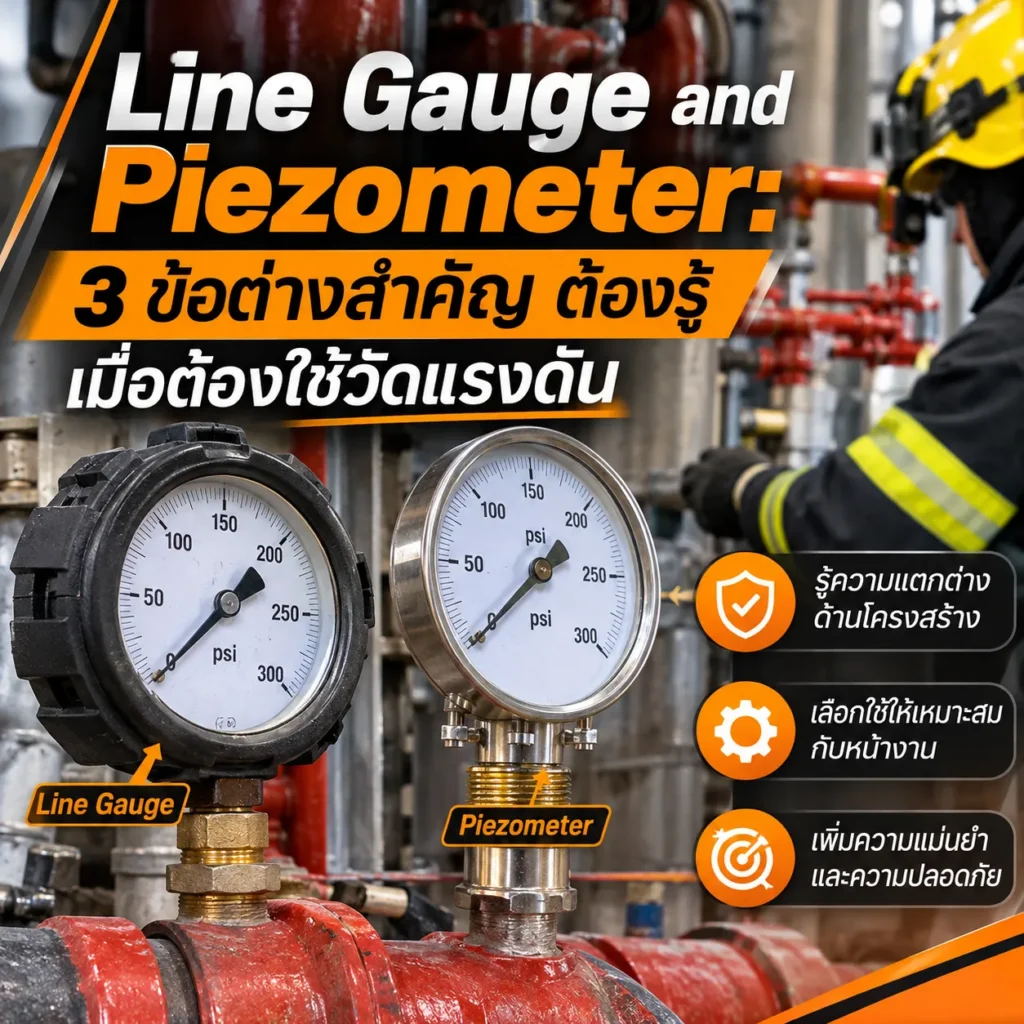
- Piezometer: ภายในท่อจะมีรูรับแรงดันหลายรู (Multiple Ports) เรียงอยู่รอบเส้นผ่านศูนย์กลางภายใน น้ำจะไหลผ่านรูเหล่านี้ แรงดันจะถูกเกลี่ยให้สมดุลก่อนจะถูกส่งขึ้นมาแสดงผลเป็นหน่วยปอนด์ต่อตารางนิ้ว (PSI) บนเกจวัด ทำให้การอ่านค่ามีความเสถียรสูง เหมาะกับการทดสอบเชิงวิศวกรรมและการทดสอบในห้องปฏิบัติการ (Laboratory Testing) เนื่องจากตัวเกจและข้อต่อมีความเปิดโล่ง แต่อาจเสี่ยงต่อการชำรุดเสียหายได้ง่ายหากนำไปใช้งานภาคสนามที่รุนแรง
- Line Gauge: ออกแบบมาโดยมีช่องรับแรงดันเพียงพอร์ตเดียว (Single Port) แต่ถูกสร้างขึ้นมาพร้อมกับโครงสร้างครอบป้องกัน (Gauge Shroud) ที่แข็งแกร่ง นิยมพบเห็นได้ทั่วไปในชุดอุปกรณ์ดับเพลิงอาคารสูง (High-rise kit) โครงสร้างที่มีเกราะป้องกันนี้ช่วยลดโอกาสที่หน้าปัดเกจจะกระแทกกับพื้นผิวหรือเศษหินในพื้นที่ปฏิบัติการจริง ทำให้มีความทนทานสูงและเชื่อถือได้ในการทดสอบหน้างาน
2. เกณฑ์การพิจารณาเลือกใช้ตามสภาพแวดล้อม
การเลือกใช้เครื่องมือระหว่างอุปกรณ์ทั้งสองชนิดต้องพิจารณาจากสภาพแวดล้อมการทำงาน หากเป็นการทดสอบระบบท่อภายในอาคารหรือพื้นที่อุตสาหกรรมที่มีการเคลื่อนย้ายอุปกรณ์บ่อยครั้ง Line Gauge จะตอบโจทย์มากกว่าในแง่ของความทนทาน ในขณะที่งานที่ต้องการความละเอียดระดับห้องปฏิบัติการควรเลือกใช้ Piezometer
การแก้ปัญหาเฉพาะเหตุการณ์: วิธีรับมือเมื่อ “ไม่มีอุปกรณ์วัดแรงดันมาตรฐาน” ในหน้างานจริง
ในสถานการณ์ฉุกเฉินหรือการเข้าตรวจสอบพื้นที่ห่างไกล วิศวกรความปลอดภัยอาจพบปัญหาเครื่องมือวัดชำรุด สูญหาย หรือไม่มี Line Gauge และ Piezometer สำรอง ประสบการณ์ตรงจากทีมนักดับเพลิงมืออาชีพมีแนวทางแก้ไขเฉพาะหน้าดังนี้ครับ:
- กรณีไม่มีเกจวัดแรงดันมาตรฐานหน้างาน: ให้ใช้การประเมินทางกายภาพโดยการสังเกต “ความตึงของสายส่งน้ำ” และ “ลักษณะการพุ่งของลำน้ำ” ร่วมกับการประสานงานวิทยุสื่อสารกับพลขับรถปั๊มน้ำเพื่อตรวจสอบค่าแรงดันหน้าปัดที่รถ (Pump Panel Pressure) แทนการวัดที่ปลายทางชั่วคราว
- กรณีเกจวัดแรงดันเกิดค้างหรือเข็มตีรุนแรงจากแรงดันกระชาก (Water Hammer): ให้รีบปิดวาล์วต้นทางเพื่อลดแรงดันทันที ห้ามฝืนใช้งานเกจที่ชำรุดเด็ดขาด เพราะอาจแสดงค่าความดันที่ผิดพลาดจนนำไปสู่การคำนวณอัตราการไหล (GPM) ที่คลาดเคลื่อนและเป็นอันตรายต่อทีมผจญเพลิง
หลักการทางวิทยาศาสตร์และกลศาสตร์ของของไหล (Fluid Mechanics)
การวิเคราะห์ทางวิทยาศาสตร์ช่วยให้เข้าใจกลไกการทำงานของเครื่องมือวัดแรงดัน:
- พลศาสตร์ของของไหลและความดันผนังท่อ (Fluid Dynamics & Wall Pressure): แรงดันที่กระทำต่อผนังภายในของสายส่งน้ำเกิดจากพลังงานจลย์และพลังงานศักย์ของมวลน้ำ อุปกรณ์อย่าง Piezometer อาศัยหลักการเฉลี่ยแรงดันผ่านรูรอบทิศทางเพื่อลดความผิดเพี้ยนจากการไหลปั่นป่วน (Turbulence)
- ความต้านทานแรงกระแทกทางกล (Mechanical Impact Resistance): การออกแบบเกราะป้องกัน (Shroud) ของ Line Gauge ช่วยปกป้องกลไกภายในของบูร์ดองท่อ (Bourdon Tube) ซึ่งเป็นชิ้นส่วนสำคัญในการแปลงแรงดันน้ำให้เป็นการเคลื่อนที่ของเข็มนาฬิกาบนหน้าปัด
การปรับประยุกต์ใช้เพื่อความปลอดภัยในโรงงานอุตสาหกรรมและอาคารสูง
ในพื้นที่อุตสาหกรรมขนาดใหญ่ คลังเก็บสารเคมี หรือนิคมอุตสาหกรรมมาบตาพุด จังหวัดระยอง การประยุกต์ใช้ความรู้เรื่อง Line Gauge and Piezometer มีแนวทางปฏิบัติที่สำคัญดังนี้:
- การจัดเตรียมชุดอุปกรณ์อาคารสูง (High-Rise Kit Standardization): โรงงานอุตสาหกรรมหรืออาคารสูงควรจัดเตรียม Line Gauge ไว้ในตู้ดับเพลิงประจำชั้น เพื่อให้ทีมฉุกเฉินสามารถตรวจสอบแรงดันน้ำจากระบบท่อยืน (Standpipe System) ได้ทันทีเมื่อเกิดเหตุเพลิงไหม้
- การบูรณาการเข้ากับการฝึกอบรมประจำปี: นำอุปกรณ์วัดแรงดันทั้งสองชนิดมาให้พนักงานได้สัมผัสและเรียนรู้ข้อแตกต่างในการใช้งานจริง เพื่อให้เกิดความเข้าใจและสามารถเลือกใช้เครื่องมือได้อย่างถูกต้องตามมาตรฐานของสถาบัน TOSH
คำถามเช็กความเข้าใจในการปฏิบัติงาน (Safety Check Quiz)
- ข้อแตกต่างทางโครงสร้างที่สำคัญที่สุดระหว่าง Piezometer และ Line Gauge คืออะไร?
- เพราะเหตุใด Line Gauge จึงมีความเหมาะสมในการใช้งานภาคสนามมากกว่า Piezometer?
- หากเกิดปัญหาอุปกรณ์วัดแรงดันชำรุดเสียหายในสถานการณ์จริง นักดับเพลิงจะมีแนวทางแก้ไขเบื้องต้นอย่างไร?
เซกชัน FAQ: คำถามที่พบบ่อย
- Q1: Line Gauge และ Piezometer แตกต่างกันอย่างไร?
- A: แตกต่างกันที่ช่องรับแรงดันภายใน โดย Piezometer มีหลายรูรอบท่อเพื่อเกลี่ยความดันเหมาะกับงานห้องปฏิบัติการ ส่วน Line Gauge มีพอร์ตเดี่ยวพร้อมเกราะป้องกันเหมาะกับงานภาคสนาม
- Q2: ทำไม Piezometer จึงไม่ค่อยนิยมนำมาใช้ลุยหน้างานจริง?
- A: เพราะตัวเกจและข้อต่องัดแหว่งไม่มีเกราะป้องกัน ทำให้เสี่ยงต่อการกระแทกและชำรุดเสียหายได้ง่ายในพื้นที่ปฏิบัติการรุนแรง
- Q3: มาตรฐานสากลใดที่ระบุแนวทางการตรวจสอบแรงดันนี้?
- A: ได้รับการอ้างอิงและบรรจุอยู่ในหลักสูตรสากลของ NFPA และ IFSTA
ศูนย์ฝึกอบรมความปลอดภัยและดับเพลิงมาตรฐานสากล TFGC
ศูนย์ฝึกอบรมความปลอดภัยและดับเพลิงมาตรฐานสากล TFGC (Tactical Fire Guard Training Center) ตั้งอยู่ในจังหวัดระยอง พร้อมให้บริการฝึกอบรมหลักสูตรความปลอดภัย อาชีวอนามัย และการระงับอัคคีภัยแก่ภาคอุตสาหกรรมในพื้นที่ภาคตะวันออก นิคมอุตสาหกรรมชลบุรี ระยอง และทั่วประเทศ
- จุดเด่นของเรา: เน้นการฝึกปฏิบัติจริงด้วยการจำลองสถานการณ์ทับซ้อน เพื่อให้ผู้เข้าอบรมได้ใช้ศักยภาพเต็มรูปแบบ ปรับเนื้อหาตามหน้างานจริง รองรับโรงงานยาง, น้ำมัน, โรงพยาบาล อาคารสูง รวมถึงกลุ่มนิคมอุตสาหกรรม ครอบคลุมหลักสูตรอบรมดับเพลิงขั้นต้น, อบรมดับเพลิงขั้นสูง, Petro Fire, Chemical Fire, Electric Fire, Fire Solar, Fire EV, Fire Watch และอบรมดับเพลิงเฉพาะทาง
- ช่องทางการติดต่อ:
- Website: https://tfgc-safety.com/
- LINE Official: https://lin.ee/VJZXUjD
- Facebook: TFGC Training Center
- TikTok: @tfgc.training_center
- เบอร์โทรติดต่อ: 099 939 5416
แหล่งอ้างอิงสากล: สถาบันส่งเสริมความปลอดภัย อาชีวอนามัย และสภาพแวดล้อมในการทำงาน (TOSH)
English Content Translation
Line Gauge and Piezometer: 3 Key Differences to Know When Measuring Pressure
In fire suppression missions and building safety audits, selecting appropriate water pressure measuring equipment for site conditions is vital to helping engineers and firefighting teams assess situations accurately. Two primary pressure measuring devices frequently compared are the line gauge and the piezometer. Lacking an understanding of their differences can lead operators to select incorrect equipment, resulting in testing inaccuracies. This article explores the differences between Line Gauge and Piezometer according to international NFPA (National Fire Protection Association) standards to enhance precision, improve safety, and empower personnel to apply water pressure measurement tools effectively in actual operations.
Key Takeaways
- Internal Pressure Port Differences: Piezometers feature multiple pressure ports around internal pipe circumferences to balance pressures, whereas line gauges utilize a single port.
- Field Durability: Line gauges feature protective shrouds making them ideal for field deployment and high-rise kits, whereas piezometers are better suited for laboratory testing.
- Measurement Accuracy: Both devices offer high accuracy in measuring static pressures within hose lines, though their operational suitability differs.
Understanding the Core of Line Gauge and Piezometer in Operations
When firefighting teams or safety engineers prepare to test water delivery systems, understanding Line Gauge and Piezometer characteristics ensures correct tool selection per guidance from global organizations like IFSTA. Although both devices share the same objective of measuring wall pressure inside hose lines, their internal design mechanics differ fundamentally.
1. Mechanical Differences in Pressure Reception
- Piezometer: Features multiple pressure-sensing holes arranged around its internal diameter. Water flows through these holes, balancing pressure before displaying readings in pounds per square inch (PSI) on gauges. This provides high stability, making it ideal for engineering evaluations and laboratory testing. However, because gauges and fittings are exposed, they carry higher breakage risks in rigorous field environments.
- Line Gauge: Designed with a single pressure port but constructed with a robust protective shroud surrounding the gauge. Commonly utilized in high-rise kits, this protective armor shields gauge dials from impacts against surfaces or debris in field operations, ensuring high reliability and durability.
2. Environmental Selection Criteria
Tool selection between these devices depends on operational environments. For building interior piping tests or industrial sites requiring frequent equipment relocation, Line Gauge proves superior in durability, whereas laboratory-grade precision demands piezometers.
Handling Unexpected Conditions: Managing Missing Standard Pressure Tools in the Field
In emergency situations or remote site inspections, safety engineers may encounter damaged, lost, or unavailable line gauges and piezometers. Experienced firefighting teams apply practical troubleshooting approaches:
- Scenario: No Standard Pressure Gauge Available: Rely on physical assessments of “hose line rigidity” and “stream projection characteristics” combined with radio communication with pump operators to cross-verify pump panel pressures temporarily.
- Scenario: Gauges Sticking or Needle Whipping Due to Water Hammer: Immediately shut off upstream valves to relieve pressure. Never operate damaged gauges, as they may display false readings leading to distorted flow rate (GPM) calculations hazardous to fire attack teams.
Scientific Principles and Fluid Mechanics
Scientific analysis clarifies pressure measuring tool mechanics:
- Fluid Dynamics and Wall Pressure: Pressure exerted against internal hose walls stems from kinetic and potential water energy. Devices like piezometers utilize multi-port pressure averaging to minimize distortions caused by flow turbulence.
- Mechanical Impact Resistance: The protective shroud design of line gauges shields internal Bourdon tube mechanisms—vital components converting water pressure into mechanical gauge needle deflection.
Adapting for Industrial Safety and High-Rises
Within large industrial plants, chemical storage terminals, or industrial estates like Map Ta Phut, Rayong Province, applying Line Gauge and Piezometer knowledge involves key protocols:
- High-Rise Kit Standardization: Industrial plants or high-rise buildings should stock line gauges within floor hose cabinets to enable emergency teams to verify standpipe water pressure immediately during fire incidents.
- Annual Training Integration: Introduce both pressure measuring devices into employee training to build familiarity and ensure correct equipment selection per TOSH standards.
Safety Check Quiz
- What is the most critical structural difference between a piezometer and a line gauge?
- Why are line gauges better suited for field operations than piezometers?
- What immediate corrective action should be taken if pressure measuring tools fail during actual operations?
Common Operational Errors and Corrective Actions
- Error 1: Utilizing laboratory-grade piezometers in rigorous field operations without protective handling.
- Impact: Gauge exposure leads to fitting breakage or dial damage under harsh field conditions.
- Corrective Action: Standardize rugged Line Gauge equipment equipped with protective shrouds for field deployment.
- Error 2: Neglecting periodic equipment calibration.
- Impact: Gradual gauge spring fatigue results in inaccurate pressure readings, compromising fire flow calculations.
- Corrective Action: Establish routine gauge inspection and calibration schedules per international standards.
FAQ: Frequently Asked Questions
- Q1: What are the differences between a Line Gauge and a Piezometer?
- A: Piezometers utilize multiple ports around pipes for laboratory balancing, whereas line gauges feature single ports with protective shrouds built for field durability.
- Q2: Why are piezometers rarely deployed in the field?
- A: Because exposed gauges and fittings risk impact damage during aggressive operational activities.
- Q3: Which international standards specify pressure testing guidelines?
- A: Referenced and incorporated in international standards by NFPA and IFSTA.
Tactical Fire Guard Training Center (TFGC)
Tactical Fire Guard Training Center (TFGC), located in Rayong Province, provides professional safety, occupational health, and fire suppression training for industries across the Eastern region, Chonburi, Rayong, and nationwide.
- Our Strengths: Emphasis on practical hands-on training through multi-layered simulation technologies, adhering to international NFPA standards and customized to real workplace conditions—supporting rubber plants, oil facilities, hospitals, high-rise buildings, and industrial estates. Covering Basic Firefighting, Advanced Firefighting, Petro Fire, Chemical Fire, Electric Fire, Solar Fire, EV Fire, Fire Watch, and specialized firefighting courses.
- Contact Channels:
- Website: https://tfgc-safety.com/
- LINE Official: https://lin.ee/VJZXUjD
- Facebook: TFGC Training Center
- TikTok: @tfgc.training_center
- Phone: 099 939 5416
International Reference: Thailand Institute of Occupational Safety and Health (TOSH)