
ในปัจจุบัน การปฏิบัติงานซ่อมแซม บำรุงรักษา หรือตรวจสอบถังเก็บสารเคมี ท่อระบายน้ำ หรือถังหมักอุตสาหกรรม มักบังคับให้พนักงานหรือผู้รับเหมาต้องเข้าไปปฏิบัติงานในพื้นที่ปิดทึบ ซึ่งหลายคนอาจยังไม่ตระหนักว่าการเข้าไปในพื้นที่ดังกล่าวมีความเสี่ยงสูงถึงชีวิต บ่อยครั้งที่เรามักได้ยินข่าวสลดเกี่ยวกับอุบัติเหตุในพื้นที่จำกัด บทความนี้จะพาท่านเจาะลึกกระบวนการ Confined Space Entry ตามหลักมาตรฐานสากล NFPA และ OSHA เพื่อยกระดับความปลอดภัย เพิ่มความตระหนักรู้ และช่วยให้ผู้ปฏิบัติงานสามารถนำไปประยุกต์ใช้ในการทำงานในที่อับอากาศได้อย่างปลอดภัยสูงสุด
Key Takeaways: จุดสำคัญที่ต้องรู้
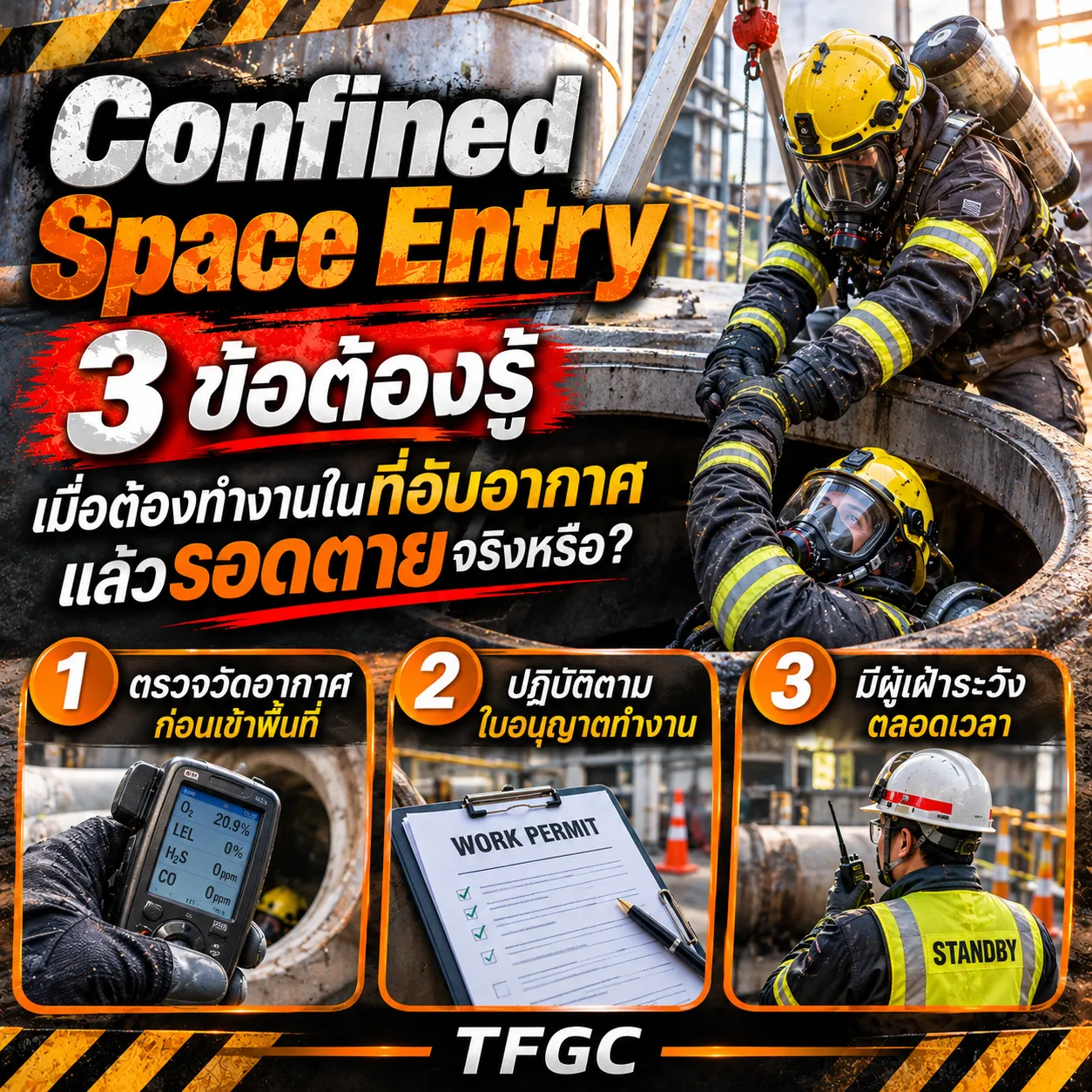
- อันตรายที่มองไม่เห็น: บรรยากาศภายในที่อับอากาศอาจขาดออกซิเจนหรือเต็มไปด้วยก๊าซพิษสะสม ซึ่งไม่สามารถสังเกตได้ด้วยตาเปล่า
- ระบบใบอนุญาตทำงาน (Work Permit): ห้ามเข้าไปเด็ดขาดหากยังไม่ผ่านกระบวนการออกใบอนุญาต ตรวจวัดแก๊ส และทำระบบตัดแยกพลังงาน (Lockout/Tagout)
- เจ้าหน้าที่เฝ้าระวัง (Sentry/Standby Person): ต้องมีผู้เฝ้าระวังประจำจุดเข้า-ออกคอยติดต่อสื่อสารและเตรียมอุปกรณ์กู้ภัยตลอดเวลา
ทำความเข้าใจแก่นแท้ของ Confined Space Entry กับความเป็นจริงภาคสนาม
เมื่อผู้ปฏิบัติงานทั่วไปต้องเผชิญกับภารกิจที่ต้องมุดหรือหย่อนตัวลงไปในพื้นที่จำกัด การทำความเข้าใจเกี่ยวกับ Confined Space Entry ถือเป็นสิ่งชี้วัดความเป็นความตาย ตามคำแนะนำของสถาบันระดับโลกอย่าง IFSTA พื้นที่อับอากาศไม่ใช่สถานที่ที่ใครจะสามารถเดินเข้าไปสุ่มสี่สุ่มห้าได้ เนื่องจากสภาพแวดล้อมภายในมีความเปลี่ยนแปลงและอันตรายแฝงอยู่ตลอดเวลา
1. รายละเอียดเนื้อหาแบบสรุป: ขั้นตอนและสาระสำคัญก่อนปฏิบัติงาน
- การประเมินความเสี่ยงและออกใบอนุญาต (Work Permit Issuance): ก่อนเริ่มงาน ผู้ควบคุมงานและผู้เกี่ยวข้องต้องตรวจสอบทะเบียนที่อับอากาศ (Confined Space Register) และออกใบอนุญาตทำงานโดยบุคคลผู้ได้รับมอบหมายอย่างเป็นทางการ
- การทดสอบบรรยากาศและการระบายอากาศ (Atmospheric Testing & Ventilation): ใช้เครื่องมือตรวจวัดก๊าซ (Gas Detector) ตรวจสอบระดับออกซิเจนและก๊าซพิษ พร้อมทั้งติดตั้งระบบระบายอากาศให้หมุนเวียนอย่างต่อเนื่อง
- การติดตั้งระบบตัดแยกพลังงาน (Isolation & Lockout/Tagout): ปิดกั้นและติดป้ายเตือนทุกระบบท่อ วาล์ว หรือกระแสไฟฟ้าที่อาจรั่วไหลเข้ามาในพื้นที่ทำงานระหว่างปฏิบัติงาน
การแก้ปัญหาเฉพาะเหตุการณ์: วิธีรับมือเมื่อ “เครื่องตรวจวัดแก๊สเสีย หรือพบเพื่อนร่วมงานหมดสติในหลุมอับอากาศ”
ในสถานการณ์หน้างานจริง พนักงานทั่วไปหรือทีมช่างอาจพบเหตุการณ์ไม่คาดฝัน เช่น เพื่อนร่วมงานหมดสติล้มลงในถังอับอากาศ ประสบการณ์ตรงจากทีมกู้ภัยมืออาชีพมีแนวทางปฏิบัติและข้อห้ามเด็ดขาดดังนี้ครับ:
- กรณีพบเพื่อนร่วมงานหมดสติในพื้นที่อับอากาศ: “ห้ามกระโดดลงไปช่วยโดยไม่มีอุปกรณ์ป้องกันเด็ดขาด” เพราะสถิติชี้ว่ากว่า 60% ของผู้เสียชีวิตในที่อับอากาศคือผู้ที่พยายามเข้าไปช่วยชีวิตคนอื่นโดยไม่สวมชุดป้องกัน (SCBA) ให้รีบกดสัญญาณเตือนภัย แจ้งทีมฉุกเฉิน และใช้ระบบรอกกู้ภัยดึงขึ้นมาจากภายนอกเท่านั้น
- กรณีเครื่องตรวจวัดแก๊สเกิดขัดข้องหรือแบตเตอรี่หมดระหว่างหน้างาน: ให้หยุดปฏิบัติงานทันที ห้ามคาดเดาว่าอากาศปลอดภัยเด็ดขาด ต้องนำเครื่องสำรองมาตรวจสอบซ้ำจนกว่าจะได้ค่าความปลอดภัยที่แน่นอนตามมาตรฐาน
หลักการทางวิทยาศาสตร์และกลศาสตร์ของของไหล (Fluid Mechanics & Gas Behavior)
การวิเคราะห์ทางวิทยาศาสตร์ช่วยให้เข้าใจพฤติกรรมของก๊าซและอากาศในพื้นที่ปิด:
- ความหนาแน่นของก๊าซและการสะสมตัว (Gas Stratification): ก๊าซพิษบางชนิด (เช่น ไฮโดรเจนซัลไฟด์ หรือ คาร์บอนมอนอกไซด์) หรือก๊าซที่มีความหนาแน่นสูงกว่าอากาศจะสะสมอยู่บริเวณก้นถังหรือพื้นที่ต่ำ ส่วนออกซิเจนอาจถูกแทนที่ การทดสอบบรรยากาศจึงต้องวัดทั้งระดับบน กลาง และล่าง
- ชีวกลศาสตร์ของการกู้ภัยในที่จำกัด (Biomechanics of Confined Space Rescue): การดึงผู้ประสบภัยออกจากช่องเปิดขนาดเล็กต้องอาศัยอุปกรณ์ช่วยยก (Tripod and Winch) เพื่อลดภาระทางกายภาพของผู้ช่วยเหลือและป้องกันการบาดเจ็บกระดูกสันหลัง
การปรับประยุกต์ใช้เพื่อความปลอดภัยในโรงงานอุตสาหกรรมและอาคารสูง
ในพื้นที่โรงงานอุตสาหกรรม คลังน้ำมัน หรือนิคมอุตสาหกรรมมาบตาพุด จังหวัดระยอง การประยุกต์ใช้แนวทาง Confined Space Entry มีแนวทางปฏิบัติที่สำคัญดังนี้:
- การฝึกอบรมสร้างความตระหนักรู้ให้พนักงานทั่วไป: หากท่านเป็นบุคคลทั่วไปที่ต้องทำงานใกล้เคียงพื้นที่อับอากาศ ต้องผ่านการอบรมหลักสูตรความปลอดภัยพื้นฐาน ห้ามเปิดฝาถังหรือเข้าไปหยิบของโดยพลการ
- การจัดทำแผนฉุกเฉินร่วมกับทีมกู้ภัย (Emergency Response Plan): สถานประกอบการต้องซ้อมแผนกู้ภัยในที่อับอากาศร่วมกับทีมฉุกเฉินภายในตามข้อกำหนดด้านความปลอดภัย อาชีวอนามัย และสภาพแวดล้อมในการทำงาน ของสถาบัน TOSH อย่างน้อยปีละครั้ง
คำถามเช็กความเข้าใจในการปฏิบัติงาน (Safety Check Quiz)
- ข้อผิดพลาดที่อันตรายที่สุดเมื่อพบเพื่อนร่วมงานหมดสติในพื้นที่อับอากาศคืออะไร?
- เพราะเหตุใดจึงต้องทำการทดสอบบรรยากาศ (Atmospheric Testing) ในหลายระดับความลึกก่อนอนุญาตให้คนงานเข้าไป?
- หน้าที่หลักของเจ้าหน้าที่เฝ้าระวัง (Sentry) ที่ปากทางเข้า-ออกคืออะไร?
เซกชัน FAQ: คำถามที่พบบ่อย
- Q1: Confined Space Entry คืออะไร?
- A: คือกระบวนการและขั้นตอนการเข้าไปปฏิบัติงานในพื้นที่อับอากาศอย่างปลอดภัยภายใต้การควบคุมและมีใบอนุญาตทำงาน
- Q2: ทำไมเราจึงไม่ควรเข้าไปช่วยคนหมดสติในถังอับอากาศด้วยมือเปล่า?
- A: เพราะพื้นที่ดังกล่าวอาจยังมีก๊าซพิษหรือขาดออกซิเจน ซึ่งจะทำให้ผู้เข้าไปช่วยหมดสติและเสียชีวิตตามไปด้วยทันที
- Q3: มาตรฐานสากลใดที่ใช้ควบคุมความปลอดภัยในการทำงานในที่อับอากาศ?
- A: ได้รับการอ้างอิงและบรรจุอยู่ในข้อกำหนดของ OSHA, NFPA และกฎหมายความปลอดภัยของไทย
ศูนย์ฝึกอบรมความปลอดภัยและดับเพลิงมาตรฐานสากล TFGC
ศูนย์ฝึกอบรมความปลอดภัยและดับเพลิงมาตรฐานสากล TFGC (Tactical Fire Guard Training Center) ตั้งอยู่ในจังหวัดระยอง พร้อมให้บริการฝึกอบรมหลักสูตรความปลอดภัย อาชีวอนามัย และการระงับอัคคีภัยแก่ภาคอุตสาหกรรมในพื้นที่ภาคตะวันออก นิคมอุตสาหกรรมชลบุรี ระยอง และทั่วประเทศ
- จุดเด่นของเรา: เน้นการฝึกปฏิบัติจริงด้วยการจำลองสถานการณ์ทับซ้อน เพื่อให้ผู้เข้าอบรมได้ใช้ศักยภาพเต็มรูปแบบ ปรับเนื้อหาตามหน้างานจริง รองรับโรงงานยาง, น้ำมัน, โรงพยาบาล อาคารสูง รวมถึงกลุ่มนิคมอุตสาหกรรม ครอบคลุมหลักสูตรอบรมดับเพลิงขั้นต้น, อบรมดับเพลิงขั้นสูง, Petro Fire, Chemical Fire, Electric Fire, Fire Solar, Fire EV, Fire Watch และอบรมดับเพลิงเฉพาะทาง
- ช่องทางการติดต่อ:
- Website: https://tfgc-safety.com/
- LINE Official: https://lin.ee/VJZXUjD
- Facebook: TFGC Training Center
- TikTok: @tfgc.training_center
- Youtube: TFGC YouTube Channel
- เบอร์โทรติดต่อ: 099 939 5416
แหล่งอ้างอิงสากล: สถาบันส่งเสริมความปลอดภัย อาชีวอนามัย และสภาพแวดล้อมในการทำงาน (TOSH)
English Content Translation
Confined Space Entry: 3 Essential Things to Know When Working in Confined Spaces for Absolute Survival
In modern industrial maintenance, repairs, and inspections of chemical storage tanks, drainage pipes, or industrial vats, workers and contractors are frequently required to enter enclosed spaces. Many individuals fail to realize the life-threatening risks associated with restricted environments, leading to tragic industrial accidents. This article explores the process of Confined Space Entry according to international NFPA and OSHA standards to enhance safety, improve situational awareness, and empower personnel to execute confined space operations securely.
Key Takeaways
- Unseen Hazards: Atmospherically hazardous enclosed spaces may lack oxygen or contain toxic gas accumulations undetectable by human senses.
- Work Permit Systems: Enrty is strictly prohibited prior to formal permit issuance, gas testing, and Lockout/Tagout energy isolation.
- Standby Sentry Duties: Trained sentries must remain stationed at entry points to maintain communication and ready retrieval equipment.
Understanding the Core of Confined Space Entry Versus Field Realities
When workers face tasks requiring entry into restricted environments, mastering Confined Space Entry dictates survival. Per guidance from global organizations like IFSTA, confined spaces are hazardous environments where unauthorized entry introduces fatal risks due to shifting atmospheric conditions.
1. Summary of Detailed Content: Pre-Entry Procedures and Essentials
- Risk Assessment and Permit Issuance: Supervisors and workers must consult confined space registers and obtain authorized work permits prior to commencement.
- Atmospheric Testing and Ventilation: Utilize calibrated gas detectors to verify oxygen levels and toxic vapors while deploying continuous mechanical ventilation.
- Energy Isolation (Lockout/Tagout): Secure and tag out all piping, valves, and electrical feeds capable of discharging hazardous energy into work zones.
Handling Unexpected Conditions: Managing Gas Detector Failures or Unconscious Coworkers
In real-world field operations, workers may encounter unexpected emergencies, such as coworkers collapsing inside restricted vats:
- Scenario: Coworker Collapses Inside Confined Spaces: “Never enter without proper respiratory protection and retrieval gear.” Statistics show over 60% of fatalities stem from untrained rescuers attempting unassisted entries. Immediately sound alarms, notify emergency response teams, and utilize exterior winch retrieval systems.
- Scenario: Gas Detector Malfunctions or Battery Depletion: Halt operations immediately. Never assume atmospheric safety; replace equipment and re-verify gas concentrations before proceeding.
Scientific Principles and Gas Behavior
Scientific analysis clarifies gas behavior inside restricted compartments:
- Gas Stratification: Certain toxic or heavy gases accumulate at lower levels or displace oxygen. Atmospheric testing must sample top, middle, and bottom elevations.
- Biomechanics of Confined Space Rescue: Extracting victims through small access hatches requires mechanical tripod and winch systems to minimize physical strain on rescuers and prevent spinal injuries.
Adapting for Industrial Safety and High-Rises
Within industrial plants, tank terminals, or industrial estates like Map Ta Phut, Rayong Province, applying Confined Space Entry principles involves key protocols:
- Safety Awareness Training for General Personnel: Personnel operating near confined spaces must undergo basic safety training, strictly prohibiting unauthorized access or vat lid tampering.
- Emergency Response Integration: Facilities must conduct annual confined space rescue drills in collaboration with internal emergency teams per occupational safety, health, and environmental regulations governed by TOSH standards.
Safety Check Quiz
- What is the most fatal mistake when discovering an unconscious coworker inside a confined space?
- Why must atmospheric testing be conducted across multiple depth levels prior to entry?
- What is the primary operational responsibility of a standby sentry stationed at an entry hatch?
Common Operational Errors and Corrective Actions
- Error 1: Entering restricted spaces without verifying continuous mechanical ventilation and gas testing.
- Impact: Sudden asphyxiation or toxic exposure due to unnoticed atmospheric shifts.
- Corrective Action: Mandate continuous gas monitoring and ventilation per Confined Space Entry protocols.
- Error 2: Neglecting energy isolation (Lockout/Tagout) on connected pipelines.
- Impact: Accidental chemical or steam discharge into occupied work zones.
- Corrective Action: Enforce strict energy isolation verification before permit sign-off.
FAQ: Frequently Asked Questions
- Q1: What is Confined Space Entry?
- A: The procedural process of entering and working within restricted spaces safely under authorized permit control.
- Q2: Why should rescuers avoid entering vats unassisted to save collapsed coworkers?
- A: Because hazardous atmospheres or oxygen deficiencies will incapacitate and kill the untrained rescuer as well.
- Q3: Which international standards govern confined space safety?
- A: Referenced and incorporated in international standards by OSHA, NFPA, and national safety laws.
Tactical Fire Guard Training Center (TFGC)
Tactical Fire Guard Training Center (TFGC), located in Rayong Province, provides professional safety, occupational health, and fire suppression training for industries across the Eastern region, Chonburi, Rayong, and nationwide.
- Our Strengths: Emphasis on practical hands-on training through multi-layered simulation technologies, adhering to international NFPA standards and customized to real workplace conditions—supporting rubber plants, oil facilities, hospitals, high-rise buildings, and industrial estates. Covering Basic Firefighting, Advanced Firefighting, Petro Fire, Chemical Fire, Electric Fire, Solar Fire, EV Fire, Fire Watch, and specialized firefighting courses.
- Contact Channels:
- Website: https://tfgc-safety.com/
- LINE Official: https://lin.ee/VJZXUjD
- Facebook: TFGC Training Center
- TikTok: @tfgc.training_center
- Youtube: TFGC YouTube Channel
- เบอร์โทรติดต่อ: 099 939 5416
International Reference: Thailand Institute of Occupational Safety and Health (TOSH)กู้ภัยในพื้นที่อับอากาศ confined space rescue