
ในงานระงับอัคคีภัยและความปลอดภัยในโรงงาน อุปกรณ์ดับเพลิงปลายทางอย่างหัวฉีดน้ำถือเป็นเครื่องมือชิ้นสำคัญที่ต้องพร้อมใช้งานตลอด 24 ชั่วโมง การละเลยการดูแลรักษาอาจส่งผลให้อุปกรณ์ขัดข้องในนาทีวิกฤต บทความนี้จะพาท่านเจาะลึกกระบวนการ Inspecting and Maintaining Nozzles ตามหลักมาตรฐานสากล NFPA (National Fire Protection Association) เพื่อยกระดับความพร้อมของอุปกรณ์ ลดความเสี่ยงจากความขัดข้อง และเพิ่มความปลอดภัยสูงสุดในการปฏิบัติงานจริง
Key Takeaways: จุดสำคัญที่ต้องรู้
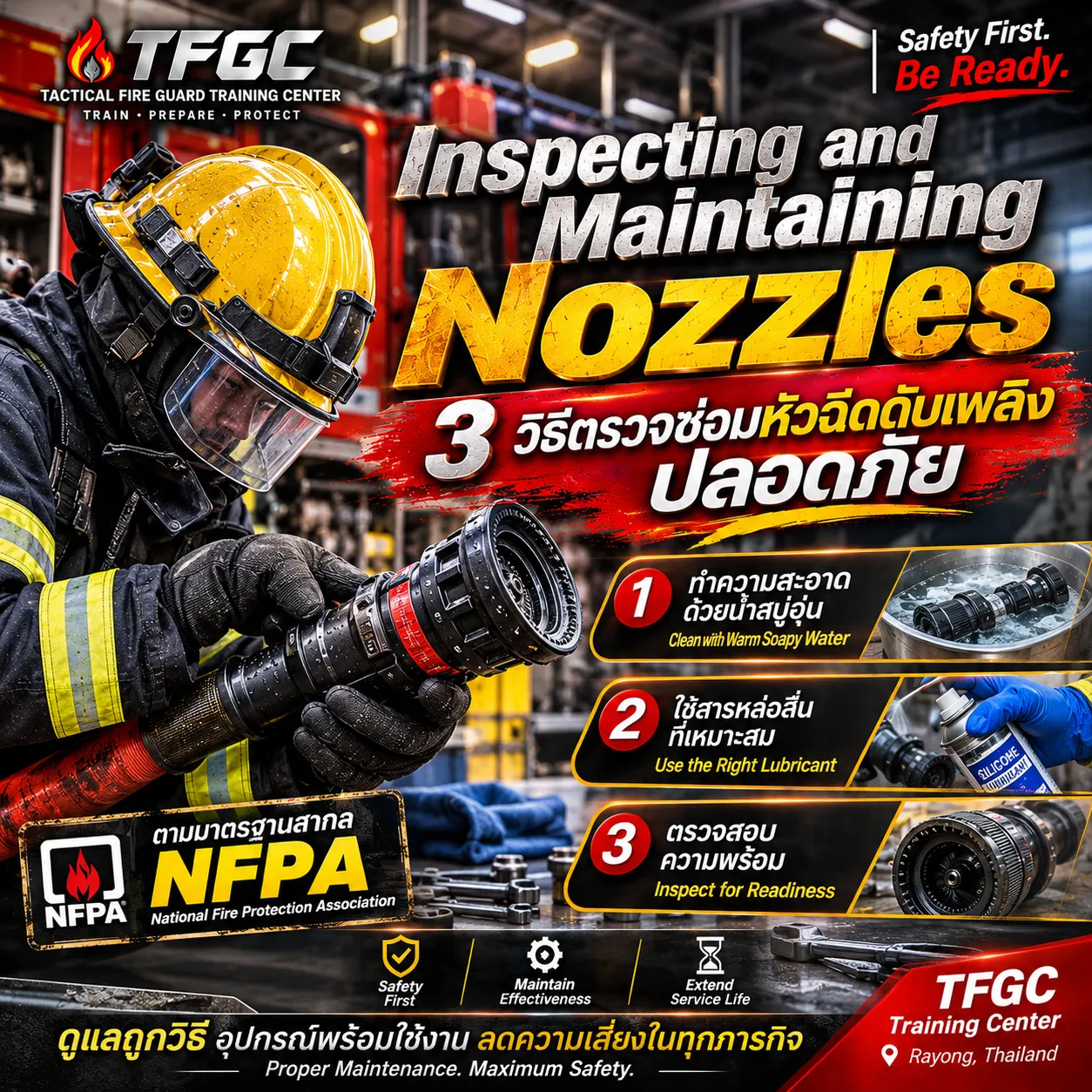
- การทำความสะอาดเบื้องต้น: การแช่น้ำสบู่อุ่นช่วยขจัดคราบสกปรกและเศษวัสดุที่ตกค้างในกลไกเคลื่อนไหวได้อย่างมีประสิทธิภาพ
- การเลือกใช้น้ำยาหล่อลื่นที่ถูกต้อง: ห้ามใช้สารเคมีประเภทปิโตรเลียมเด็ดขาดเนื่องจากจะทำลายยางโอริง (O-rings)
- การตรวจสอบสภาพความพร้อม: การตรวจเช็กเขี้ยวปรับละอองน้ำ (Spinning Teeth) และวาล์วเปิด-ปิดช่วยให้มั่นใจได้ว่าอุปกรณ์พร้อมใช้งานเสมอ
ทำความเข้าใจแก่นแท้ของ Inspecting and Maintaining Nozzles
เมื่อผ่านการใช้งานในสถานการณ์จริงหรือการฝึกซ้อม หัวฉีดมักสะสมคราบเขม่า เศษดิน หรือตะกอนสนิม หากไม่มีกระบวนการ Inspecting and Maintaining Nozzles ที่สม่ำเสมอ อาจทำให้กลไกภายในติดขัด การบำรุงรักษาตามคำแนะนำของสถาบันระดับโลกอย่าง IFSTA จึงเป็นหัวใจสำคัญที่ช่วยยืดอายุการใช้งานและรักษาประสิทธิภาพของแรงดันน้ำ
1. ขั้นตอนการล้างทำความสะอาดด้วยน้ำสบู่อุ่น
ขั้นตอนแรกเริ่มของการทำความสะอาดคือการนำหัวฉีดไปแช่ในน้ำสบู่อุ่นประมาณ 15 นาที กระบวนการนี้ช่วยสลายคราบสกปรกและเศษผงที่ติดอยู่ตามชิ้นส่วนเคลื่อนไหวได้อย่างหมดจด ทั้งนี้ การตรวจสอบเขี้ยวปรับละอองน้ำ (Spinning Teeth) ว่าหมุนได้อย่างอิสระและไม่มีรอยแตกร้าวถือเป็นสิ่งสำคัญ หากพบความเสียหายสามารถถอดเปลี่ยนได้โดยใช้ประแจหกเหลี่ยมขันสกรูออกอย่างระมัดระวัง โดยห้ามใช้น้ำมันหล่อลื่นบริเวณนี้เด็ดขาดเพราะจะดึงดูดฝุ่นละอองจนทำให้กลไกติดขัด
2. การดูแลรักษาวาล์วและซีลยางด้วยสารหล่อลื่นที่เหมาะสม
ในการปรับรูปแบบการฉีดน้ำจากลำตรงเป็นม่านน้ำ (Fog Stream) ชิ้นส่วนขอบยางและวงแหวนซีลต้องการการหล่อลื่นที่ถูกต้อง โดยต้องใช้สารหล่อลื่นที่มีส่วนผสมของซิลิโคน (Silicone-based lubricant) ฉีดพ่นบางๆ และขยับปรับไปมา การฝ่าฝืนคำแนะนำโดยการใช้ผลิตภัณฑ์ปิโตรเลียมเช่น WD-40 จะส่งผลให้โอริงบวม แตกกรอบ และเกิดการรั่วไหลในที่สุด
หลักการทางวิทยาศาสตร์และกลศาสตร์ของของไหล (Fluid Mechanics)
การเข้าใจกลศาสตร์ของอุปกรณ์ช่วยให้วิเคราะห์ปัญหาหน้างานได้เฉียบคมขึ้น:
- พลศาสตร์ของซีลยางและความดัน (Sealing Dynamics & Pressure): ยางโอริงทำหน้าที่กั้นแรงดันน้ำระดับสูง (เช่น 5.2 ถึง 6.9 บาร์) การที่ยางเสื่อมสภาพจากสารเคมีผิดประเภทจะทำให้สูญเสียแรงดันสถิต ส่งผลให้ละอองน้ำกระจายตัวผิดรูปและลดประสิทธิภาพการดับเพลิง
- แรงเสียดทานและสิ่งแปลกปลอม (Friction & Debris): เศษตะกอนที่ติดค้างในร่องเกลียวหรือวาล์วเปิด-ปิดจะเพิ่มแรงเสียดทานทางกล ทำให้ผู้ปฏิบัติงานต้องใช้แรงมากขึ้นในการเปิด-ปิดหัวฉีด และอาจทำให้ระบบควบคุมการไหลเสียหาย
การปรับประยุกต์ใช้เพื่อความปลอดภัยในโรงงานอุตสาหกรรมและอาคารสูง
ในพื้นที่อุตสาหกรรมปิโตรเคมี คลังน้ำมัน หรือนิคมอุตสาหกรรมมาบตาพุด จังหวัดระยอง การประยุกต์ใช้กระบวนการ Inspecting and Maintaining Nozzles มีแนวทางปฏิบัติที่ชัดเจน:
- รอบการตรวจสอบประจำสัปดาห์ (Weekly Inspection Schedule): ทีมความปลอดภัยควรจัดทำแผนบำรุงรักษาเชิงป้องกัน (Preventive Maintenance) โดยการถอดล้างหัวฉีดตู้สายส่งน้ำดับเพลิง (Fire Hose Cabinet) ทุกสัปดาห์ เพื่อป้องกันคราบเกลือหรือฝุ่นละอองอุดตันจากสภาพแวดล้อมทางทะเลหรือโรงงานเคมี
- การตรวจสอบอุปกรณ์เสริม (Gated Wyes & Valves): อุปกรณ์แยกทางน้ำหรือวาล์วสามทางก็ต้องได้รับการแช่น้ำสบู่อุ่นและตรวจเช็กปะเก็นยาง (Gasket) เช่นเดียวกัน เพื่อป้องกันปัญหาน้ำรั่วซึมระหว่างปฏิบัติการจริง
คำถามเช็กความเข้าใจในการปฏิบัติงาน (Safety Check Quiz)
- เพราะเหตุใดจึงห้ามใช้น้ำมันหล่อลื่นประเภทปิโตรเลียมกับโอริงของหัวฉีดดับเพลิง?
- การแช่หัวฉีดในน้ำสบู่อุ่นนานประมาณกี่นาทีจึงจะช่วยสลายคราบสกปรกได้ดีที่สุด?
- ส่วนประกอบใดของหัวฉีดที่ห้ามใช้น้ำมันหล่อลื่นเด็ดขาดเพื่อป้องกันฝุ่นละอองจับตัว?
ข้อผิดพลาดที่พบบ่อยและวิธีแก้ไขในการปฏิบัติงาน
- ข้อผิดพลาดที่ 1: การใช้สารหล่อลื่นผิดประเภท (เช่น สเปรย์กันสนิมทั่วไป) กับชิ้นส่วนยางซีล
- ผลกระทบ: ทำให้ยางโอริงเสื่อมสภาพ บวม แตกกรอบ และเกิดน้ำรั่วซึมรุนแรงขณะใช้งานแรงดันสูง
- วิธีแก้ไขและฝึกฝน: ตรวจสอบและเปลี่ยนมาใช้สารหล่อลื่นซิลิโคนแท้ 100% ตามคำแนะนำในคู่มือ Inspecting and Maintaining Nozzles
- ข้อผิดพลาดที่ 2: ละเลยการตรวจสอบปะเก็นยางที่ข้อต่อ (Hose Gasket)
- ผลกระทบ: น้ำรั่วซึมที่รอยต่อสูญเสียแรงดันน้ำในการส่งถึงปลายทาง
- วิธีแก้ไขและฝึกฝน: ตรวจสอบความสมบูรณ์และตำแหน่งการติดตั้งของปะเก็นยางทุกครั้งหลังการใช้งาน ตามมาตรฐานของสถาบัน TOSH
เซกชัน FAQ: คำถามที่พบบ่อย
- Q1: ทำไมจึงต้องทำความสะอาดหัวฉีดด้วยน้ำสบู่อุ่น?
- A: เพราะน้ำสบู่อุ่นช่วยละลายและขจัดคราบเศษดิน เขม่า หรือสิ่งสกปรกที่ติดค้างตามซอกกลไกเคลื่อนไหวได้อย่างปลอดภัยโดยไม่ทำลายเนื้อวัสดุ
- Q2: สารหล่อลื่นชนิดใดที่ปลอดภัยที่สุดสำหรับหัวฉีดดับเพลิง?
- A: สารหล่อลื่นที่มีส่วนผสมของซิลิโคน (Silicone-based lubricant) ซึ่งไม่ทำปฏิกิริยากับยางโอริง
- Q3: ความถี่ในการตรวจสอบอุปกรณ์ควรทำบ่อยแค่ไหน?
- A: ควรตรวจสอบสภาพภายนอกทุกครั้งหลังใช้งานจริง และทำความสะอาดใหญ่พร้อมหล่อลื่นตามรอบการบำรุงรักษาประจำเดือนหรือประจำไตรมาส
ศูนย์ฝึกอบรมความปลอดภัยและดับเพลิงมาตรฐานสากล TFGC
ศูนย์ฝึกอบรมความปลอดภัยและดับเพลิงมาตรฐานสากล TFGC (Tactical Fire Guard Training Center) ตั้งอยู่ในจังหวัดระยอง พร้อมให้บริการฝึกอบรมหลักสูตรความปลอดภัย อาชีวอนามัย และการระงับอัคคีภัยแก่ภาคอุตสาหกรรมในพื้นที่ภาคตะวันออก นิคมอุตสาหกรรมชลบุรี ระยอง และทั่วประเทศ
- จุดเด่นของเรา: เน้นการฝึกปฏิบัติจริงด้วยการจำลองสถานการณ์ทับซ้อน เพื่อให้ผู้เข้าอบรมได้ใช้ศักยภาพเต็มรูปแบบ ปรับเนื้อหาตามหน้างานจริง รองรับโรงงานยาง, น้ำมัน, โรงพยาบาล อาคารสูง รวมถึงกลุ่มนิคมอุตสาหกรรม ครอบคลุมหลักสูตรอบรมดับเพลิงขั้นต้น, อบรมดับเพลิงขั้นสูง, Petro Fire, Chemical Fire, Electric Fire, Fire Solar, Fire EV, Fire Watch และอบรมดับเพลิงเฉพาะทาง
- ช่องทางการติดต่อ:
- Website: https://tfgc-safety.com/
- LINE Official: https://lin.ee/VJZXUjD
- Facebook: TFGC Training Center
- TikTok: @tfgc.training_center
- เบอร์โทรติดต่อ: 099 939 5416
แหล่งอ้างอิงสากล: สถาบันส่งเสริมความปลอดภัย อาชีวอนามัย และสภาพแวดล้อมในการทำงาน (TOSH)
English Content Translation
Inspecting and Maintaining Nozzles: 3 Essential Steps for Safe Firefighting Equipment
In fire suppression and industrial safety operations, terminal firefighting equipment like water nozzles must remain fully operational 24/7. Neglecting maintenance can cause equipment failure during critical moments. This article explores the process of Inspecting and Maintaining Nozzles according to international NFPA (National Fire Protection Association) standards to enhance equipment readiness, reduce malfunction risks, and maximize operational safety.
Key Takeaways
- Basic Cleaning: Soaking nozzles in warm soapy water effectively removes stubborn debris and trapped dirt from moving parts.
- Correct Lubricant Selection: Petroleum-based chemicals must never be used as they degrade rubber O-rings.
- Readiness Inspection: Checking spinning teeth and shut-off valves ensures equipment remains ready for deployment.
Understanding the Core of Inspecting and Maintaining Nozzles
After field operations or training exercises, nozzles frequently accumulate soot, soil, or rust sediments. Without consistent Inspecting and Maintaining Nozzles protocols, internal mechanisms can jam. Maintenance following guidelines from global organizations like IFSTA is vital to extending equipment lifespan and preserving water pressure performance.
1. Warm Soapy Water Cleaning Procedures
The primary cleaning step involves soaking the nozzle in warm soapy water for approximately 15 minutes to break down dirt and debris in moving parts. Inspecting spinning teeth to ensure free rotation without damage is essential. Damaged teeth can be removed via Allen screws; however, no lubricants should be applied here to prevent dust attraction and jamming.
2. Valve and O-Ring Care with Proper Lubricants
When adjusting stream patterns from straight to fog, rubber seals require correct lubrication using silicone-based lubricants sprayed lightly along rims. Using petroleum products like WD-40 causes O-rings to swell, crack, and leak over time.
Scientific Principles and Fluid Mechanics
Understanding equipment mechanics sharpens field troubleshooting skills:
- Sealing Dynamics and Pressure: Rubber O-rings withstand high water pressures (5.2 to 6.9 bar). Chemical degradation from incorrect lubricants compromises static pressure, distorting water spray patterns and reducing firefighting efficiency.
- Friction and Debris: Sediment trapped in threads or shut-off valves increases mechanical friction, requiring operators to exert excessive force and risking damage to flow control systems.
Adapting for Industrial Safety and High-Rises
Within petrochemical plants, oil terminals, or industrial estates like Map Ta Phut, Rayong Province, applying Inspecting and Maintaining Nozzles protocols involves clear practices:
- Weekly Inspection Schedules: Safety teams should establish preventive maintenance plans involving weekly cleaning of fire hose cabinet nozzles to prevent salt or dust clogging from marine or chemical plant environments.
- Accessory Inspections: Gated wyes and auxiliary valves also require warm soapy water soaking and gasket insulation checks to prevent water leakage during operations.
Safety Check Quiz
- Why is it prohibited to use petroleum-based lubricants on firefighting nozzle O-rings?
- How many minutes of soaking in warm soapy water is recommended to break down grime?
- Which nozzle component must remain free of lubricants to prevent dust buildup?
Common Operational Errors and Corrective Actions
- Error 1: Using incorrect lubricants (such as general rust sprays) on rubber seals.
- Impact: Causes O-ring degradation, swelling, cracking, and severe water leakage under high pressure.
- Corrective Action: Switch to 100% pure silicone-based lubricants per Inspecting and Maintaining Nozzles guidelines.
- Error 2: Neglecting coupling gasket inspections (Hose Gasket).
- Impact: Water leakage at joints, resulting in pressure loss before reaching the target.
- Corrective Action: Verify gasket condition and proper placement after every use following TOSH standards.
FAQ: Frequently Asked Questions
- Q1: Why clean nozzles with warm soapy water?
- A: Warm soapy water safely dissolves and removes grime, soot, and dirt from moving mechanisms without damaging materials.
- Q2: What is the safest lubricant for firefighting nozzles?
- A: Silicone-based lubricants, which do not react adversely with rubber O-rings.
- Q3: How frequently should equipment be inspected?
- A: External conditions must be checked after every use, with thorough cleaning and lubrication scheduled monthly or quarterly.
Tactical Fire Guard Training Center (TFGC)
Tactical Fire Guard Training Center (TFGC), located in Rayong Province, provides professional safety, occupational health, and fire suppression training for industries across the Eastern region, Chonburi, Rayong, and nationwide.
- Our Strengths: Emphasis on practical hands-on training through multi-layered simulation technologies, adhering to international NFPA standards and customized to real workplace conditions—supporting rubber plants, oil facilities, hospitals, high-rise buildings, and industrial estates. Covering Basic Firefighting, Advanced Firefighting, Petro Fire, Chemical Fire, Electric Fire, Solar Fire, EV Fire, Fire Watch, and specialized firefighting courses.
- Contact Channels:
- Website: https://tfgc-safety.com/
- LINE Official: https://lin.ee/VJZXUjD
- Facebook: TFGC Training Center
- TikTok: @tfgc.training_center
- Phone: 099 939 5416
International Reference: Thailand Institute of Occupational Safety and Health (TOSH)