
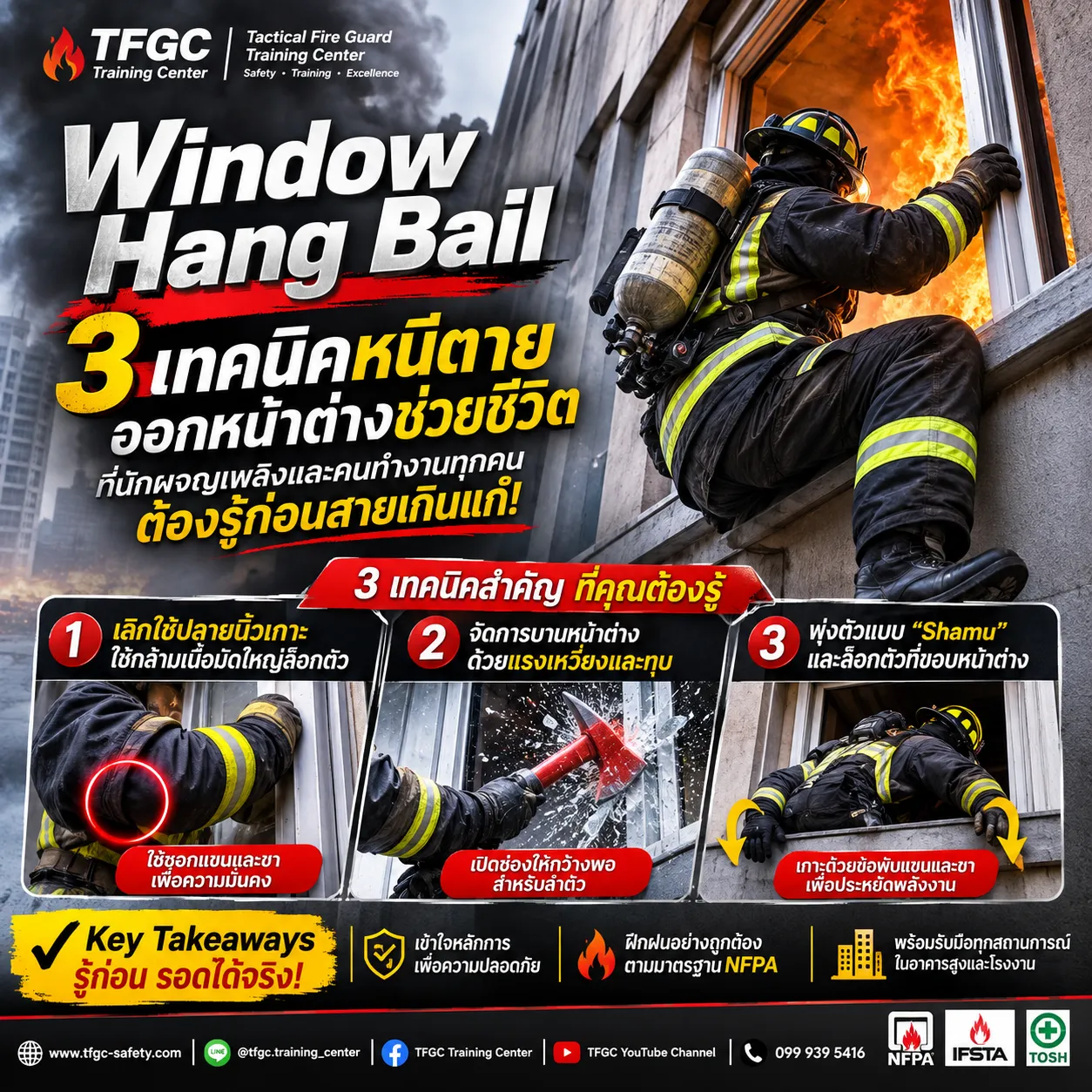
ในสถานการณ์เพลิงไหม้ขั้นวิกฤตที่อุณหภูมิภายในอาคารพุ่งสูงจนเกินขีดจำกัด และทางหนีไฟหลักถูกตัดขาด การตัดสินใจวินาทีสุดท้ายคือเรื่องความเป็นความตาย หากคุณเป็นนักผจญเพลิง เจ้าหน้าที่ความปลอดภัย หรือบุคคลทั่วไปที่ต้องทำงานในอาคารสูง คุณเคยสงสัยหรือไม่ว่าเมื่อตกอยู่ในภาวะจนมุมและต้องหนีตายออกทางหน้าต่าง ทำไมนักผจญเพลิงมืออาชีพจึงไม่ใช้ปลายนิ้วเกาะขอบหน้าต่างเหมือนในภาพยนตร์ แต่เลือกใช้เทคนิคการล็อกตัวขั้นสูงที่เรียกว่า Window Hang Bail? การทำความเข้าใจหลักการเกาะขอบหน้าต่างและการหนีตายฉุกเฉิน ตามหลักสูตรการฝึกอบรมระดับสากลจาก NFPA (National Fire Protection Association) ถือเป็นกุญแจสำคัญที่จะช่วยยกระดับความปลอดภัย บทความนี้จะพาท่านเจาะลึกวิเคราะห์การจัดการบานหน้าต่าง การใช้กล้ามเนื้อมัดใหญ่ล็อกตัว และการประสานงานรับบันได เพื่อให้คุณเข้าใจกระบวนการรอดชีวิตในสถานการณ์ฉุกเฉินได้อย่างมีประสิทธิภาพสูงสุด
Key Takeaways: จุดสำคัญที่ต้องรู้
- เลิกใช้ปลายนิ้วเกาะหน้าต่าง: ความเหนื่อยล้าสะสมทำให้การใช้ปลายนิ้วเกาะขอบหน้าต่างล้มเหลวทันที จำเป็นต้องใช้กล้ามเนื้อมัดใหญ่ เช่น ซอกแขนและขา (Crevices in Arm and Leg) ล็อกเข้ากับขอบหน้าต่าง
- การจัดการบานหน้าต่างแบบมีเป้าหมาย: สำหรับบานหน้าต่างไวนิลรุ่นใหม่ ต้องใช้แรงเหวี่ยงและทุบทำลายอย่างมีพลัง ไม่ใช่แค่เคาะเบาๆ เพื่อเปิดพื้นที่ให้กว้างพอสำหรับลำตัว
- การประหยัดพลังงานเพื่อรอความช่วยเหลือ: ท่าล็อกตัวที่ถูกต้องช่วยให้นักผจญเพลิงสามารถห้อยตัวเกาะหน้าต่างเพื่อส่งเสียงขอความช่วยเหลือหรือรอทีมกู้ภัยนำบันไดมาสอดรับได้อย่างยาวนาน
ทำความเข้าใจแก่นแท้ของ Window Hang Bail กับความเป็นจริงหน้างานวิกฤต
ในประวัติศาสตร์การผจญเพลิง เหตุการณ์ภัยพิบัติในอดีตเคยสร้างบทเรียนราคาแพงที่บังคับให้นักผจญเพลิงต้องตัดสินใจเลือกทางรอดขั้นสุดท้าย ตามคำแนะนำของสถาบันระดับโลกอย่าง IFSTA การฝึกฝนทักษะ Window Hang Bail ไม่ใช่เรื่องของการซ้อมเล่นๆ แต่เป็นทักษะเอาชีวิตรอดที่ต้องเปลี่ยนจาก “ทฤษฎีความเชื่อผิดๆ” สู่ “กลศาสตร์การใช้ร่างกายจริง” เมื่อความร้อนคุกคามและออกซิเจนหมดลง การห้อยตัวออกนอกหน้าต่างต้องอาศัยหลักชีวกลศาสตร์เพื่อพยุงน้ำหนักตัวพร้อมอุปกรณ์สะพายหลัง (SCBA) ให้ได้นานที่สุด
1. รายละเอียดเนื้อหาแบบสรุป: ขั้นตอนสำคัญของ Window Hang Bail
- การเคลียร์กระจกและกรอบหน้าต่างไวนิล (Sash and Glass Clearance): ต่างจากหน้าต่างไม้โบราณ หน้าต่างไวนิลสมัยใหม่มีความเหนียวและยืดหยุ่น การทำลายกระจกต้องใช้การเหวี่ยงทุบอย่างเด็ดขาดเพื่อเปิดช่องโล่ง ป้องกันไม่ให้เศษกระจกหรือกรอบหน้าต่างขวางกั้นช่วงลำตัวและหน้าท้องขณะพุ่งตัวออกไป
- การพุ่งตัวออกด้านนอกแบบวาฬ (The “Shamu” Belly-Up Technique): เมื่อถึงขอบหน้าต่าง ห้ามปีนออกทีละก้าวแบบเชื่องช้า แต่ต้องใช้เทคนิคพุ่งลำตัวช่วงเอวและหน้าท้องทาบลงบนขอบหน้าต่างทันที (Belly Up) เพื่อให้ส่วนที่ดีที่สุดและน้ำหนักครึ่งบนหลุดพ้นจากโซนความร้อน 50% แรกของหน้าต่างทันที
- การล็อกข้อพับแขนและขา (Arm and Leg Crevice Locking): ใช้หัวไหล่ดันล็อกกับวงกบด้านข้าง จากนั้นพับแขนเกี่ยวล็อกข้อพับเข้ากับขอบหน้าต่าง และสะบัดขาเตะส้นเท้าเข้าหาลำตัว (Kick yourself in the ass) เพื่อนำข้อพับขาเกี่ยวล็อกกับขอบหน้าต่างอีกชั้น สร้างเป็นจุดยึดเหนี่ยวด้วยกล้ามเนื้อมัดใหญ่ (Hamstrings and Biceps) ที่มั่นคง
การแก้ปัญหาเฉพาะเหตุการณ์: วิธีรับมือเมื่อ “ติดค้างในห้องอับทึบ กรอบหน้าต่างติดขัด และแรงกายใกล้หมด”
ในสถานการณ์หน้างานจริง หากคุณต้องเผชิญกับเหตุการณ์เพลิงไหม้รุนแรงในอาคารสูงและต้องตัดสินใจกระโดดหรือห้อยตัวออกหน้าต่าง ประสบการณ์จากผู้เชี่ยวชาญด้านความปลอดภัยมีแนวทางปฏิบัติเฉพาะหน้าดังนี้ครับ:
- กรณีหน้าต่างเปิดยากหรือติดกรอบไวนิลหนา: ห้ามใช้มือเปล่าแกะหรือเคาะกระจกเบาๆ เพราะจะเสียเวลาและบาดเจ็บ ให้ใช้ขวานหรือเครื่องมือประจำกายฟาดกระแทกบริเวณมุมกระจกและกรอบอย่างรวดเร็วเพื่อให้โครงสร้างหลุดร่วงทั้งชุดในครั้งเดียว
- กรณีห้อยตัวอยู่ภายนอกแล้วหมดแรงเกาะ: หากคุณใช้ปลายนิ้วเกาะ คุณจะร่วงหล่นในเวลาไม่ถึง 10 วินาที ให้รีบเปลี่ยนท่าโดยการเหวี่ยงสะโพกทาบขอบหน้าต่างแล้วใช้ข้อพับแขนและขาหนีบวงกบหน้าต่างทันที ท่านี้จะช่วยให้คุณมีมือว่างในการกดปุ่มวิทยุสื่อสารขอความช่วยเหลือ (Mayday) หรือกดสัญญาณเตือนภัย (PASS Device) โดยไม่ต้องใช้แรงแขนพยุงตลอดเวลา
หลักการทางวิทยาศาสตร์และชีวกลศาสตร์ (Biomechanics & Thermodynamics)
การอธิบายหลักการทางฟิสิกส์ช่วยให้เข้าใจเหตุผลเบื้องหลังท่าทางที่ถูกต้อง:
- พลศาสตร์ของไหลและช่องเปิด (Flow Path & Ventilation Physics): ช่องหน้าต่างเปิดโล่งจะทำหน้าที่เป็นจุดแลกเปลี่ยนอากาศ (ประมาณ 50% รับอากาศเข้า และ 50% ระบายก๊าซร้อนออก) การพุ่งตัวออกและเกาะอยู่บริเวณครึ่งล่างของหน้าต่างช่วยลดการรับความร้อนโดยตรงจากกระแสไอพิษที่พุ่งออกทางครึ่งบน
- ชีวกลศาสตร์การใช้กล้ามเนื้อมัดใหญ่ (Large Muscle Group Biomechanics): การใช้ปลายนิ้วเกาะเป็นการใช้กล้ามเนื้อมัดเล็ก (Forearm Flexors) ซึ่งล้าได้ง่ายและหมดแรงในเวลาอันสั้น ในทางตรงกันข้าม การใช้ข้อพับแขนและขาเกี่ยวล็อกกับขอบหน้าต่างเป็นการใช้งานกล้ามเนื้อมัดใหญ่ (Hamstrings, Biceps, and Core) ซึ่งสามารถรองรับน้ำหนักตัวและอุปกรณ์ชุดอัดอากาศ (SCBA) ได้ยาวนานกว่าหลายเท่าตัว
การปรับประยุกต์ใช้เพื่อความปลอดภัยในโรงงานอุตสาหกรรมและอาคารสูง
ในพื้นที่อาคารสำนักงานสูง โรงแรม หรืออาคารในนิคมอุตสาหกรรมมาบตาพุด จังหวัดระยอง การประยุกต์ใช้หลักการจาก Window Hang Bail มีแนวทางปฏิบัติที่สำคัญดังนี้:
- การฝึกอบรมการหนีภัยฉุกเฉินสำหรับพนักงานอาคารสูง: จัดให้มีการฝึกซ้อมและทำความเข้าใจเส้นทางหนีภัยสำรอง รวมถึงการสังเกตตำแหน่งหน้าต่างที่สามารถเปิดออกเพื่อขอความช่วยเหลือได้เมื่อเกิดเหตุสุดวิสัย
- การปฏิบัติตามกฎหมายความปลอดภัย: การบริหารจัดการอาคารสูงและการตรวจสอบความพร้อมของเส้นทางอพยพหนีไฟต้องสอดคล้องกับข้อกำหนดและมาตรฐานความปลอดภัยของสถาบัน TOSH อย่างเคร่งครัด
คำถามเช็กความเข้าใจในการปฏิบัติงาน (Safety Check Quiz)
- สาเหตุหลักที่ทำให้การเกาะขอบหน้าต่างด้วยปลายนิ้วล้มเหลวในสถานการณ์จริงคืออะไร?
- เทคนิคการพุ่งตัวออกนอกหน้าต่างแบบ “Shamu Belly-Up” มีประโยชน์อย่างไรต่อผู้ปฏิบัติงาน?
- กล้ามเนื้อมัดใดที่ควรนำมาใช้ในการล็อกตัวเพื่อพยุงน้ำหนักขณะห้อยตัวเกาะหน้าต่าง?
เซกชัน FAQ: คำถามที่พบบ่อย
- Q1: Window Hang Bail คืออะไร?
- A: คือเทคนิคการเกาะและห้อยตัวฉุกเฉินออกจากหน้าต่างอาคารเมื่อทางหนีไฟถูกตัดขาด โดยใช้กล้ามเนื้อมัดใหญ่ล็อกตัวเพื่อรอรับการช่วยเหลือจากทีมกู้ภัย
- Q2: ทำไมจึงห้ามใช้ปลายนิ้วเกาะขอบหน้าต่างเวลากระโดดหนีไฟ?
- A: เพราะความเหนื่อยล้าจากความร้อนและควันพิษจะทำให้กล้ามเนื้อมือหมดแรงอย่างรวดเร็ว ทำให้ร่วงหล่นลงมาได้ง่าย
- Q3: มาตรฐานสากลใดที่ใช้เป็นบรรทัดฐานในการฝึกอบรมทักษะนี้?
- A: ได้รับการรวบรวมและบรรจุเป็นแนวทางปฏิบัติสากลโดยสถาบัน NFPA และ IFSTA
ศูนย์ฝึกอบรมความปลอดภัยและดับเพลิงมาตรฐานสากล TFGC
ศูนย์ฝึกอบรมความปลอดภัยและดับเพลิงมาตรฐานสากล TFGC (Tactical Fire Guard Training Center) ตั้งอยู่ในจังหวัดระยอง พร้อมให้บริการฝึกอบรมหลักสูตรความปลอดภัย อาชีวอนามัย และการระงับอัคคีภัยแก่ภาคอุตสาหกรรมในพื้นที่ภาคตะวันออก นิคมอุตสาหกรรมชลบุรี ระยอง และทั่วประเทศ
- จุดเด่นของเรา: เน้นการฝึกปฏิบัติจริงด้วยการจำลองสถานการณ์ทับซ้อน เพื่อให้ผู้เข้าอบรมได้ใช้ศักยภาพเต็มรูปแบบ ปรับเนื้อหาตามหน้างานจริง รองรับโรงงานยาง, น้ำมัน, โรงพยาบาล อาคารสูง รวมถึงกลุ่มนิคมอุตสาหกรรม ครอบคลุมหลักสูตรอบรมดับเพลิงขั้นต้น, อบรมดับเพลิงขั้นสูง, Petro Fire, Chemical Fire, Electric Fire, Fire Solar, Fire EV, Fire Watch และอบรมดับเพลิงเฉพาะทาง
- ช่องทางการติดต่อ:
- Website: https://tfgc-safety.com/
- LINE Official: https://lin.ee/VJZXUjD
- Facebook: TFGC Training Center
- TikTok: @tfgc.training_center
- Youtube: TFGC YouTube Channel
- เบอร์โทรติดต่อ: 099 939 5416
แหล่งอ้างอิงสากล: สถาบันส่งเสริมความปลอดภัย อาชีวอนามัย และสภาพแวดล้อมในการทำงาน (TOSH)
English Content Translation
Window Hang Bail: 3 Emergency Window Hanging Survival Techniques Every Firefighter and Worker Must Know
During critical fire emergencies where interior building temperatures spike beyond tolerable limits and primary egress routes become blocked, final decisions dictate survival. Whether you are a professional firefighter, safety officer, or general citizen working in high-rise structures, have you ever wondered why professionals escaping through windows avoid gripping frames with mere fingertips, opting instead for advanced locking techniques known as Window Hang Bail? Comprehending window hanging and emergency bailout principles based on international standards from NFPA is paramount. This article explores window sash management, large muscle locking, and ladder coordination under global standards to empower readers with critical survival capabilities.
Key Takeaways
- Abandon Fingertip Gripping: Cumulative fatigue renders fingertip window gripping instantly obsolete; operators must utilize large muscle groups, such as arm and leg crevices, to lock onto windowsills.
- Purposeful Sash Clearance: Modern vinyl window sashes require energetic swinging and striking clear rather than gentle taps, opening sufficient clearance for the torso.
- Conserving Energy for Rescue: Correct locking postures enable firefighters to hang from windowsills, calling for assistance or awaiting rescue teams with ladders for extended durations.
Understanding the Core of Window Hang Bail Versus Real-World Crisis Realities
Historically, tragic fire disasters forced firefighters into critical last-resort survival decisions. Per guidance from global organizations like IFSTA, practicing Window Hang Bail skills is not merely routine training but an essential survival competency transitioning from flawed theoretical assumptions to true biomechanical execution. When thermal threats mount and oxygen depletes, exiting through windows requires applying physical mechanics to support body weight and self-contained breathing apparatus (SCBA) packs for maximum duration.
1. Summary of Detailed Content: Core Steps of Window Hang Bail
- Sash and Glass Clearance: Unlike legacy wooden windows, modern vinyl sashes possess flexibility and resilience. Clearing glass requires decisive swinging strikes to clear openings completely, preventing glass shards and frames from obstructing escaping torsos.
- The “Shamu” Belly-Up Technique: Upon reaching windowsills, operators must avoid slow, cautious climbing, executing an immediate waist-and-torso lunge across sills (Belly Up) to project the upper body and prime weight past the initial 50% thermal danger zone.
- Arm and Leg Crevice Locking: Secure shoulders against side jambs, fold and hook arms into window crevices, and snap heels backward to hook legs over sills, establishing secure anchoring via large muscle groups (Hamstrings and Biceps).
Handling Unexpected Conditions: Managing Jammed Sashes and Exhausted Physical Stamina
During actual field emergencies where occupants confront severe high-rise fires and must execute emergency bailouts, safety experts recommend structured protocols:
- Scenario: Stuck Sashes or Heavy Vinyl Frames: Avoid wasting time attempting manual dislodgement or light tapping. Deploy axes or personal tools to strike glass corners and frames rapidly, shattering and clearing entire assemblies in single passes.
- Scenario: Exhaustion While Hanging Externally: Fingertip gripping fails within 10 seconds under thermal duress. Immediately transition posture by lunging hips across sills and locking arm and leg crevices into window jambs. This frees hands to depress radio emergency buttons (Mayday) or activate PASS devices without exhausting arm strength.
Scientific Principles and Biomechanics
Scientific and biomechanical principles clarify proper operational postures:
- Flow Path and Ventilation Physics: Open window sashes serve as exchange portals (approximately 50% air intake and 50% hot gas exhaust). Projecting and hanging within the lower half of window openings minimizes direct thermal exposure from toxic gas streams exhausting aloft.
- Large Muscle Group Biomechanics: Fingertip gripping relies on forearm flexors, which fatigue and exhaust rapidly. Conversely, locking arm and leg crevices into window frames engages large muscle groups (Hamstrings, Biceps, and Core), supporting body weight and SCBA gear for significantly longer durations.
Adapting for Industrial Safety and High-Rises
Within high-rise office buildings, hotels, or facilities in industrial estates like Map Ta Phut, Rayong Province, applying Window Hang Bail principles involves key protocols:
- High-Rise Emergency Egress Training: Conduct training ensuring occupants understand secondary egress routes and identify windows operable for rescue signaling during unforeseen emergencies.
- Safety Law Compliance: High-rise building management and egress route maintenance must align with ministerial safety regulations governed by TOSH guidelines.
Safety Check Quiz
- What primary factor causes fingertip window gripping to fail during actual crisis scenarios?
- What operational advantage does the “Shamu” Belly-Up technique provide operators?
- Which muscle groups should operators engage to lock and support body weight while hanging from windowsills?
Common Operational Errors and Corrective Actions
- Error 1: Attempting to exit windows using slow climbing postures while exposed to upper thermal layers.
- Impact: Severe thermal insults and loss of grip due to prolonged exposure.
- Corrective Action: Enforce rapid Shamu belly-up lunge techniques per NFPA guidelines.
- Error 2: Relying on fingertip gripping rather than crevice locking.
- Impact: Rapid muscle fatigue leading to accidental falls from upper-story windows.
- Corrective Action: Mandate arm and leg crevice locking drills during bailout training.
FAQ: Frequently Asked Questions
- Q1: What is a Window Hang Bail?
- A: It is an emergency window hanging and bailout technique deployed when egress routes are blocked, utilizing large muscle group locking to await rescue.
- Q2: Why is fingertip gripping prohibited during fire bailout?
- A: Thermal stress and toxic smoke rapidly exhaust hand muscles, causing operators to slip and fall.
- Q3: Which international standards govern these training protocols?
- A: Compiled and published as standard operating guidelines by NFPA and IFSTA.
Tactical Fire Guard Training Center (TFGC)
Tactical Fire Guard Training Center (TFGC), located in Rayong Province, provides professional safety, occupational health, and fire suppression training for industries across the Eastern region, Chonburi, Rayong, and nationwide.
- Our Strengths: Emphasis on practical hands-on training through multi-layered simulation technologies, adhering to international NFPA standards and customized to real workplace conditions—supporting rubber plants, oil facilities, hospitals, high-rise buildings, and industrial estates. Covering Basic Firefighting, Advanced Firefighting, Petro Fire, Chemical Fire, Electric Fire, Fire Solar, Fire EV, Fire Watch, and specialized firefighting courses.
- Contact Channels:
- Website: https://tfgc-safety.com/
- LINE Official: https://lin.ee/VJZXUjD
- Facebook: TFGC Training Center
- TikTok: @tfgc.training_center
- Youtube: TFGC YouTube Channel
- เบอร์โทรติดต่อ: 099 939 5416
International Reference: Thailand Institute of Occupational Safety and Health (TOSH)Search and Rescue