
ในยุคปัจจุบันที่เทคโนโลยีและการก่อสร้างอาคารบ้านเรือนเปลี่ยนแปลงไปอย่างรวดเร็ว หลายท่านอาจคิดว่าบ้านที่สร้างด้วยวัสดุก่อสร้างสมัยใหม่ โครงสร้างโปร่งโล่ง และเฟอร์นิเจอร์สวยงามจะมีความปลอดภัยสูง แต่คุณทราบหรือไม่ว่าปัจจัยเหล่านี้กลับทำให้เกิดสถานการณ์ที่อันตรายถึงชีวิตได้ภายในพริบตาเมื่อเกิดเหตุเพลิงไหม้ หากคุณเป็นเจ้าของบ้าน ผู้ประกอบการ หรือบุคคลทั่วไปที่ต้องการปกป้องคนที่คุณรักและทรัพย์สิน การทำความเข้าใจหลักการ Fire Dynamics หรือพลวัตของเพลิงไหม้ตามผลการวิจัยระดับโลกจาก NIST และ UL ถือเป็นสิ่งสำคัญที่สุดที่ไม่ควรมองข้าม บทความนี้จะพาท่านเจาะลึกวิเคราะห์การเปลี่ยนแปลงของสภาพแวดล้อมไฟในอาคารตามมาตรฐานสากล NFPA เพื่อยกระดับความปลอดภัยและเตรียมความพร้อมในการรับมือภัยพิบัติได้อย่างรู้เท่าทัน
Key Takeaways: จุดสำคัญที่ต้องรู้
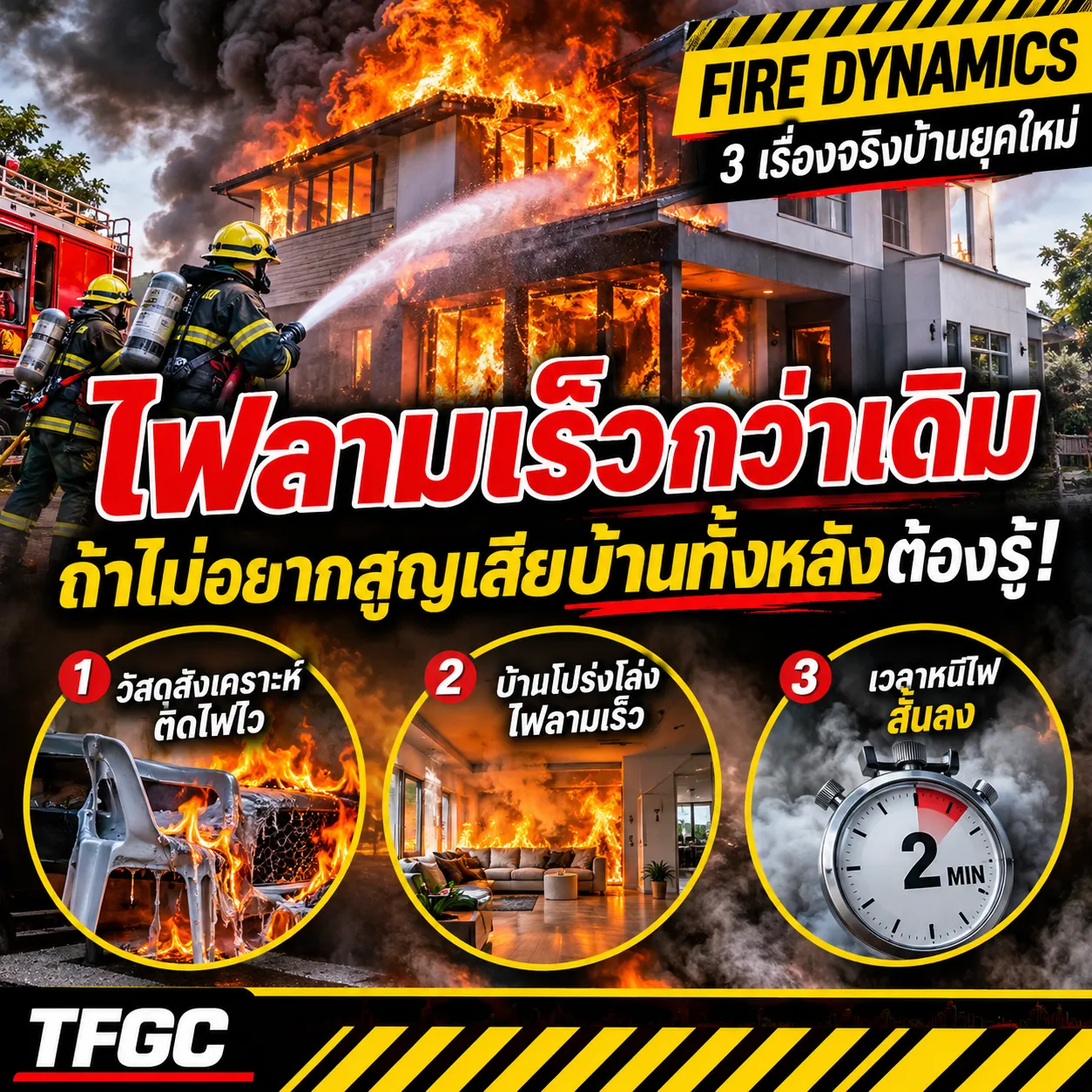
- เชื้อเพลิงสังเคราะห์อันตรายกว่าเดิม: เฟอร์นิเจอร์และวัสดุสมัยใหม่ทำจากพลาสติกและโพลียูรีเทน ซึ่งปล่อยพลังงานความร้อน (Heat Release Rate) สูงและลุกไหม้เร็วกว่าวัสดุธรรมชาติในอดีตหลายเท่า
- พื้นที่บ้านแบบเปิดโล่ง (Open Floor Plan): การรื้อผนังกันห้องออกทำให้ไฟไม่มีสิ่งกีดขวาง ออกซิเจนและเปลวไฟจึงกระจายตัวลามไปทั่วบ้านอย่างรวดเร็ว
- เวลาในการอพยพที่สั้นลง: บ้านยุคใหม่มีเวลาตัดสินใจหนีไฟลดลงเหลือเพียงไม่กี่นาทีก่อนที่บ้านจะเข้าสู่ภาวะท่วมท้นด้วยความร้อนและควันพิษ (Flashover)
ทำความเข้าใจแก่นแท้ของ Fire Dynamics กับความจริงที่เปลี่ยนไปในบ้านยุคใหม่
เมื่อพูดถึงการเกิดเพลิงไหม้ หลายคนมักติดภาพจำจากในอดีตที่ไฟค่อยๆ ลุกลามอย่างช้าๆ แต่ผลการทดลองทางวิทยาศาสตร์และวิศวกรรมความปลอดภัยจากสถาบัน NIST และ UL ได้พิสูจน์ให้เห็นแล้วว่า Fire Dynamics ในปัจจุบันมีความซับซ้อนและรุนแรงขึ้นอย่างสิ้นเชิง ตามคำแนะนำของสถาบันระดับโลกอย่าง IFSTA การทำความเข้าใจพลวัตของไฟช่วยให้เราตระหนักว่าบ้านยุคใหม่เปรียบเสมือน “กล่องเก็บพลังงานความร้อน” ที่รอเวลาปะทุ
1. รายละเอียดเนื้อหาแบบสรุป: การเปลี่ยนแปลงของสภาพแวดล้อมไฟในอาคาร
- ขนาดบ้านที่ใหญ่ขึ้นแต่วัสดุมวลน้อยลง: พื้นเฉลี่ยของบ้านพักอาศัยเพิ่มขึ้นจาก 1,600 ตารางฟุต เป็นกว่า 2,600 ตารางฟุตในปัจจุบัน แต่โครงสร้างกลับใช้ไม้แปรรูปขนาดเล็ก (Engineered Lumber) และแผ่นโครงสร้างที่ไม่มีความหนาแน่นเหมือนไม้จริงในอดีต ส่งผลให้เกิดการพังทลาย (Structural Collapse) เร็วกว่าเดิมเมื่อถูกไฟไหม้
- การเปลี่ยนผ่านจากเชื้อเพลิงธรรมชาติสู่สังเคราะห์ (Evolving Fuel Loads): ในอดีตโซฟาทำจากฝ้ายและไม้จริง (Legacy Fuel) ซึ่งใช้เวลานานมากกว่าจะลุกไหม้ลามทั่วห้อง แต่ปัจจุบันโซฟาและเครื่องเรือนทำจากโฟมพลาสติกและโพลียูรีเทน (Modern Fuel) ซึ่งเมื่อติดไฟจะปล่อยอัตราการคายความร้อนพุ่งสูงขึ้นอย่างรวดเร็ว
- ช่องว่างอาคารและแผงโซลาร์เซลล์พลังงานทางเลือก: การใช้ฉนวนกันความร้อนแบบสเปรย์โฟม (Spray Foam Insulation) และการติดตั้งระบบพลังงานแสงอาทิตย์บนหลังคา (Solar Panels) สร้างความท้าทายใหม่ให้กับทีมกู้ภัย เนื่องจากแรงดันก๊าซในห้องใต้หลังคาและการจ่ายกระแสไฟฟ้าแรงดันสูงกระแสตรง (DC 600 Volts) อาจก่อให้เกิดอันตรายถึงชีวิตหากจัดการไม่ถูกวิธี
การแก้ปัญหาเฉพาะเหตุการณ์: วิธีรับมือเมื่อ “เกิดกลุ่มควันหนาแน่นในบ้าน และคุณต้องตัดสินใจระหว่างหนีหรือรอความช่วยเหลือ”
ในสถานการณ์จริงหากเกิดเพลิงไหม้ขึ้นภายในบ้านพักอาศัยหรืออาคารสำนักงานของคุณ ประสบการณ์และความรู้จากวิศวกรความปลอดภัยมีแนวทางปฏิบัติเพื่อเอาชีวิตรอดดังนี้ครับ:
- กรณีเกิดควันไฟหนาแน่นปิดกั้นทางเดินหลัก: “ห้ามยืนขึ้นวิ่งฝ่ากลุ่มควันเด็ดขาด” เพราะก๊าซพิษและความร้อนสะสมจะลอยตัวอยู่ด้านบน ให้ใช้การคลานต่ำชิดพื้นเพื่อหาทางออก และหากพบว่าประตูห้องร้อนจัดเมื่อใช้หลังมือสัมผัส ห้ามเปิดประตูนั้นเด็ดขาด ให้หาทางหนีทางหน้าต่างหรือห้องสำรองที่ปลอดภัย
- กรณีเกิดเพลิงไหม้ลามติดแผงโซลาร์เซลล์บนหลังคา: หากพบเหตุเพลิงไหม้ในบ้านที่มีระบบพลังงานแสงอาทิตย์ ห้ามใช้น้ำฉีดเข้าใส่แผงโดยตรงด้วยลำน้ำตรง (Solid Stream) เด็ดขาด ต้องยืนให้ห่างจากตัวบ้านมากกว่า 20 ฟุต หรือใช้หัวฉีดแบบละอองน้ำฝอย (Fog Pattern) เพื่อป้องกันกระแสไฟฟ้าย้อนกลับมาทำอันตราย
หลักการทางวิทยาศาสตร์และพลวัตของของไหล (Thermodynamics & Fire Dynamics)
การอธิบายหลักการทางวิทยาศาสตร์ช่วยให้เห็นภาพความรุนแรงของไฟในเชิงฟิสิกส์:
- อัตราการคายความร้อน (Heat Release Rate – HRR): อัตราการปล่อยพลังงานความร้อนต่อวินาทีของวัสดุสังเคราะห์มีความเร็วสูงมาก เมื่ออุณหภูมิภายในห้องพุ่งถึงระดับ 600°C (1,100°F) จะเกิดปรากฏการณ์ Flashover หรือการลุกวาบพร้อมกันทั้งห้อง ซึ่งทำให้ออกซิเจนถูกเผาผลาญจนหมดและห้องตกอยู่ในสภาวะขาดอากาศ (Oxygen Starvation)
- พลศาสตร์ของแรงดันก๊าซในห้องใต้หลังคา (Attic Pressure Dynamics): การเผาไหม้ในพื้นที่ปิดทึบที่มีฉนวนกันความร้อนโฟมจะสร้างแรงดันก๊าซมหาศาล ซึ่งสามารถดันฝ้าเพดานหรือแผ่น OSB เปิดออกได้เสมือนวาล์วระบายแรงดัน หากเปิดรับออกซิเจนกะทันหันจะทำให้เกิดการระเบิดรุนแรง
การปรับประยุกต์ใช้เพื่อความปลอดภัยในโรงงานอุตสาหกรรมและอาคารสูง
ในพื้นที่โรงงานอุตสาหกรรม คลังสินค้า หรืออาคารสูงในนิคมอุตสาหกรรมมาบตาพุด จังหวัดระยอง การประยุกต์ใช้ความรู้จาก Fire Dynamics มีแนวทางปฏิบัติที่สำคัญดังนี้:
- การติดตั้งระบบตรวจจับควันและสปริงเกอร์อัตโนมัติ: เนื่องจากบ้านและโรงงานยุคใหม่มีเวลาตอบสนองสั้นมาก การพึ่งพาเพียงระบบเตือนภัยธรรมดาไม่เพียงพอ จำเป็นต้องติดตั้งระบบสปริงเกอร์ครอบคลุมทุกพื้นที่รวมถึงห้องใต้หลังคา
- การซ้อมอพยพหนีไฟตามเวลาจริง: จัดให้มีการฝึกอบรมและซ้อมแผนอพยพโดยตั้งสมมติฐานว่าเวลาในการหนีภัยลดลงเหลือเพียง 2 นาที เพื่อสร้างความตระหนักรู้และไม่ประมาท ตามมาตรฐานของสถาบัน TOSH
คำถามเช็กความเข้าใจในการปฏิบัติงาน (Safety Check Quiz)
- ปัจจัยหลักข้อใดที่ทำให้บ้านยุคใหม่เกิดภาวะ Flashover เร็วกว่าบ้านในอดีต?
- เพราะเหตุใดการรื้อผนังห้องแบบเปิดโล่ง (Open Floor Plan) จึงส่งผลกระทบต่อความเร็วในการลามของไฟ?
- หากบ้านติดตั้งระบบแผงโซลาร์เซลล์ เจ้าของบ้านหรือทีมกู้ภัยต้องระมัดระวังเรื่องใดเป็นพิเศษเมื่อใช้น้ำดับเพลิง?
เซกชัน FAQ: คำถามที่พบบ่อย
- Q1: Fire Dynamics คืออะไร และสำคัญอย่างไรกับคนทั่วไป?
- A: คือศาสตร์ที่ศึกษาพฤติกรรมและการเปลี่ยนแปลงของเพลิงไหม้ร่วมกับโครงสร้างอาคาร ช่วยให้เราเข้าใจว่าไฟลามเร็วแค่ไหนและควรปฏิบัติตัวอย่างไรเพื่อความปลอดภัย
- Q2: ทำไมเฟอร์นิเจอร์ยุคใหม่จึงอันตรายกว่าสมัยก่อน?
- A: เพราะผลิตจากวัสดุสังเคราะห์และโฟมโพลียูรีเทน ซึ่งปล่อยพลังงานความร้อนสูงและติดไฟลามเร็วกว่าวัสดุธรรมชาติในอดีตอย่างมาก
- Q3: มาตรฐานสากลใดที่รองรับงานวิจัยด้านพลวัตเพลิงไหม้?
- A: ได้รับการศึกษาวิจัยและรับรองโดยสถาบันระดับโลกอย่าง NIST, UL และกำหนดเป็นแนวทางปฏิบัติในมาตรฐาน NFPA
ศูนย์ฝึกอบรมความปลอดภัยและดับเพลิงมาตรฐานสากล TFGC
ศูนย์ฝึกอบรมความปลอดภัยและดับเพลิงมาตรฐานสากล TFGC (Tactical Fire Guard Training Center) ตั้งอยู่ในจังหวัดระยอง พร้อมให้บริการฝึกอบรมหลักสูตรความปลอดภัย อาชีวอนามัย และการระงับอัคคีภัยแก่ภาคอุตสาหกรรมในพื้นที่ภาคตะวันออก นิคมอุตสาหกรรมชลบุรี ระยอง และทั่วประเทศ
- จุดเด่นของเรา: เน้นการฝึกปฏิบัติจริงด้วยการจำลองสถานการณ์ทับซ้อน เพื่อให้ผู้เข้าอบรมได้ใช้ศักยภาพเต็มรูปแบบ ปรับเนื้อหาตามหน้างานจริง รองรับโรงงานยาง, น้ำมัน, โรงพยาบาล อาคารสูง รวมถึงกลุ่มนิคมอุตสาหกรรม ครอบคลุมหลักสูตรอบรมดับเพลิงขั้นต้น, อบรมดับเพลิงขั้นสูง, Petro Fire, Chemical Fire, Electric Fire, Fire Solar, Fire EV, Fire Watch และอบรมดับเพลิงเฉพาะทาง
- ช่องทางการติดต่อ:
- Website: https://tfgc-safety.com/
- LINE Official: https://lin.ee/VJZXUjD
- Facebook: TFGC Training Center
- TikTok: @tfgc.training_center
- Youtube: TFGC YouTube Channel
- เบอร์โทรติดต่อ: 099 939 5416
แหล่งอ้างอิงสากล: สถาบันส่งเสริมความปลอดภัย อาชีวอนามัย และสภาพแวดล้อมในการทำงาน (TOSH)
English Content Translation
Fire Dynamics: 3 Reasons Modern Homes Spread Fire Faster Than Ever If You Don’t Know This!
In an era where technology and residential construction evolve at unprecedented speeds, many individuals assume modern, open-concept homes built with contemporary materials offer superior safety. However, do you realize these exact factors can generate life-threatening hazards within moments during a fire incident? Whether you are a homeowner, facility manager, or general citizen seeking to protect your loved ones and assets, comprehending Fire Dynamics based on landmark research from NIST and UL is paramount. This article explores and analyzes modern fire environment transformations under international NFPA standards to elevate safety and equip readers with proactive disaster preparedness.
Key Takeaways
- Hazardous Synthetic Fuels: Modern furnishings built from plastics and polyurethane release massive heat release rates, igniting and spreading exponentially faster than legacy natural materials.
- Open Floor Plan Vulnerabilities: Removing interior partition walls eliminates structural barriers, allowing oxygen and flames to surge unimpeded throughout homes.
- Shrinking Egress Timelines: Modern residential fires afford critically compressed escape windows, leaving mere minutes before compartments transition into unsurvivable flashover states.
Understanding the Core of Fire Dynamics Versus Evolving Modern Residential Realities
When discussing structural fires, legacy perceptions often picture slow-moving flames. However, empirical scientific research and fire safety engineering from NIST and UL prove that modern Fire Dynamics operate with unprecedented violence. Per guidance from global organizations like IFSTA, understanding fire dynamics reveals how contemporary homes function as thermal energy storage boxes primed for rapid ignition.
1. Summary of Detailed Content: Transformations in Building Fire Environments
- Larger Homes With Lighter Structural Mass: Average residential square footage expanded from 1,600 to over 2,600 square feet over recent decades, yet construction relies on lightweight engineered lumber lacking historical solid-wood density, inducing rapid structural collapse.
- Transition From Natural to Synthetic Fuel Loads: Legacy sofas comprised cotton batting and solid wood, whereas modern furniture utilizes plastic foam and polyurethane. Modern fuel loads unleash skyrocketing heat release rates upon ignition.
- Void Spaces and Alternative Energy Systems: Spray foam insulation and rooftop photovoltaic solar arrays introduce novel tactical hazards, as trapped gas pressures and 600V DC electrical generation pose severe threats during suppression operations.
Handling Unexpected Conditions: Managing Heavy Residential Smoke and Egress Decision-Making
During actual residential fire emergencies, structured safety protocols dictate survival:
- Scenario: Heavy Smoke Blocking Primary Escape Routes: “Never stand upright and rush through dense smoke.” Toxic gases and extreme thermal layers stratify aloft. Execute low crawling along floors, and if doors feel hot to the back of the hand, never open them—seek alternative egress via windows or secondary safe rooms.
- Scenario: Fires Involving Rooftop Solar Arrays: When residential fires involve photovoltaic systems, avoid applying solid water streams directly onto panels. Maintain a distance greater than 20 feet or utilize narrow fog spray patterns to prevent electricity conduction back down water streams.
Scientific Principles and Thermodynamics
Scientific principles clarify physical fire severity:
- Heat Release Rate (HRR): Synthetic materials exhibit rapid energy release rates. When compartment temperatures reach 600°C (1,100°F), flashover occurs, consuming available oxygen and plunging spaces into oxygen starvation.
- Attic Pressure Dynamics: Fires sealed inside attics insulated with spray foam generate immense gas pressures capable of lifting drywall or OSB decking. Uncontrolled oxygen introduction triggers violent gas explosions.
Adapting for Industrial Safety and High-Rises
Within industrial plants, warehouses, or high-rise facilities in industrial clusters like Map Ta Phut, Rayong Province, applying Fire Dynamics principles involves key protocols:
- Automatic Fire Suppression Integration: Given compressed modern response windows, basic smoke detectors are insufficient; facilities must install comprehensive sprinkler coverage, including attic spaces.
- Realistic Evacuation Drills: Conduct evacuation drills predicated on compressed two-minute egress timelines to build hazard awareness per TOSH guidelines.
Safety Check Quiz
- What primary factor causes modern homes to reach flashover states significantly faster than legacy structures?
- Why do open floor plan designs accelerate fire spread rates across residential compartments?
- What specific precaution must occupants and responders observe when applying water to fires involving residential solar panels?
Common Operational Errors and Corrective Actions
- Error 1: Standing upright and attempting to escape through upper thermal smoke layers.
- Impact: Immediate inhalation of lethal toxic gases and incapacitation.
- Corrective Action: Enforce strict low-crawling evacuation protocols per NFPA educational guidelines.
- Error 2: Forcing closed doors without checking surface temperatures during active fires.
- Impact: Introducing sudden oxygen to underventilated compartments, triggering backdraft explosions.
- Corrective Action: Teach thermal door-checking techniques before opening any room door.
FAQ: Frequently Asked Questions
- Q1: What is Fire Dynamics, and why does it matter to everyday citizens?
- A: It is the scientific study of fire behavior and structural interaction, explaining how fast fires spread and guiding safe evacuation behavior.
- Q2: Why are modern furnishings more hazardous than legacy items?
- A: They utilize synthetic plastics and polyurethane foam, releasing extreme heat and igniting exponentially faster than legacy natural materials.
- Q3: Which international institutions validate fire dynamics research?
- A: Validated by premier research bodies such as NIST and UL, and codified within NFPA standards.
Tactical Fire Guard Training Center (TFGC)
Tactical Fire Guard Training Center (TFGC), located in Rayong Province, provides professional safety, occupational health, and fire suppression training for industries across the Eastern region, Chonburi, Rayong, and nationwide.
- Our Strengths: Emphasis on practical hands-on training through multi-layered simulation technologies, adhering to international NFPA standards and customized to real workplace conditions—supporting rubber plants, oil facilities, hospitals, high-rise buildings, and industrial estates. Covering Basic Firefighting, Advanced Firefighting, Petro Fire, Chemical Fire, Electric Fire, Fire Solar, Fire EV, Fire Watch, and specialized firefighting courses.
- Contact Channels:
- Website: https://tfgc-safety.com/
- LINE Official: https://lin.ee/VJZXUjD
- Facebook: TFGC Training Center
- TikTok: @tfgc.training_center
- Youtube: TFGC YouTube Channel
- เบอร์โทรติดต่อ: 099 939 5416
International Reference: Thailand Institute of Occupational Safety and Health (TOSH)Fire Behavior