
เทศกาลปีใหม่และช่วงวันหยุดยาวเป็นช่วงเวลาแห่งความสุขและการเฉลิมฉลอง แต่ในขณะเดียวกันก็เป็นช่วงเวลาที่สถิติการเกิด อุบัติภัยและเหตุเพลิงไหม้พุ่งสูงขึ้นอย่างก้าวกระโดด ทั้งในภาคครัวเรือน อาคารสำนักงาน และโรงงานอุตสาหกรรม การละเลยเพียงชั่วขณะ เช่น การเสียادเครื่องใช้ไฟฟ้าทิ้งไว้ การจุดพลุเฉลิมฉลองใกล้จุดเสี่ยง หรือการขาดการตรวจสอบระบบป้องกันอัคคีภัยก่อนปิดสถานประกอบการ อาจนำไปสู่ความสูญหายของชีวิตและทรัพย์สินมูลค่ามหาศาล บทความฉบับนี้จะพาคุณเจาะลึกถึงสิ่งที่ควรทำและไม่ควรทำอย่างละเอียด เพื่อสร้างเกราะป้องกันอัคคีภัยสูงสุดในช่วงวันหยุดยาวนี้
1. ทำไมช่วงปีใหม่และวันหยุดยาวจึงเสี่ยงต่อการเกิดเพลิงไหม้สูง
ช่วงวันหยุดยาวมีความเสี่ยงต่อการเกิดเพลิงไหม้สูงเนื่องจากอาคารและโรงงานไม่มีผู้ดูแลอย่างใกล้ชิด ประกอบกับปัจจัยเสริม เช่น ระบบไฟฟ้าทำงานสะสมความร้อน การจุดดอกไม้ไฟเฉลิมฉลอง และความประมาทในการปิดระบบพลังงานก่อนหยุดยาว
สถิติจากหน่วยงานป้องกันและบรรเทาสาธารณภัยระบุว่า สาเหตุหลักของเพลิงไหม้ในช่วงเทศกาลมักเกิดจาก “ไฟฟ้าลัดวงจร” และ “ความประมาท” เมื่อโรงงานหรือบ้านเรือนต้องปิดทำการติดต่อกันหลายวัน อุปกรณ์ไฟฟ้าบางชนิดที่ยังเสียบปลั๊กค้างไว้ (Standby Power) อาจเกิดกระแสไฟฟ้ากระชากหรือความร้อนสะสมจนฉนวนสายไฟละลาย นอกจากนี้ การเฉลิมฉลองภายนอกอาคาร เช่น การจุดประทัด พลุ หรือโคมลอย ยิ่งเพิ่มความเสี่ยงที่สะเก็ดไฟจะปลิวตกลงมายังวัสดุติดไฟได้ง่าย
องค์การมาตรฐานสากล เช่น NFPA (National Fire Protection Association) ได้เน้นย้ำถึงความสำคัญของ “Holiday Fire Safety” หรือแผนบริหารความปลอดภัยในช่วงวันหยุดยาว ซึ่งสอดคล้องกับข้อกำหนดของ กองความปลอดภัยแรงงาน กรมสวัสดิการและคุ้มครองแรงงาน (Thailand Safety Dept.) ที่กำหนดให้นายจ้างและผู้ดูแลอาคารต้องมีมาตรการควบคุมความเสี่ยงอย่างเข้มงวดก่อนหยุดยาว
2. สิ่งที่ควรทำ (DOs) เพื่อป้องกันเหตุเพลิงไหม้ช่วงปีใหม่
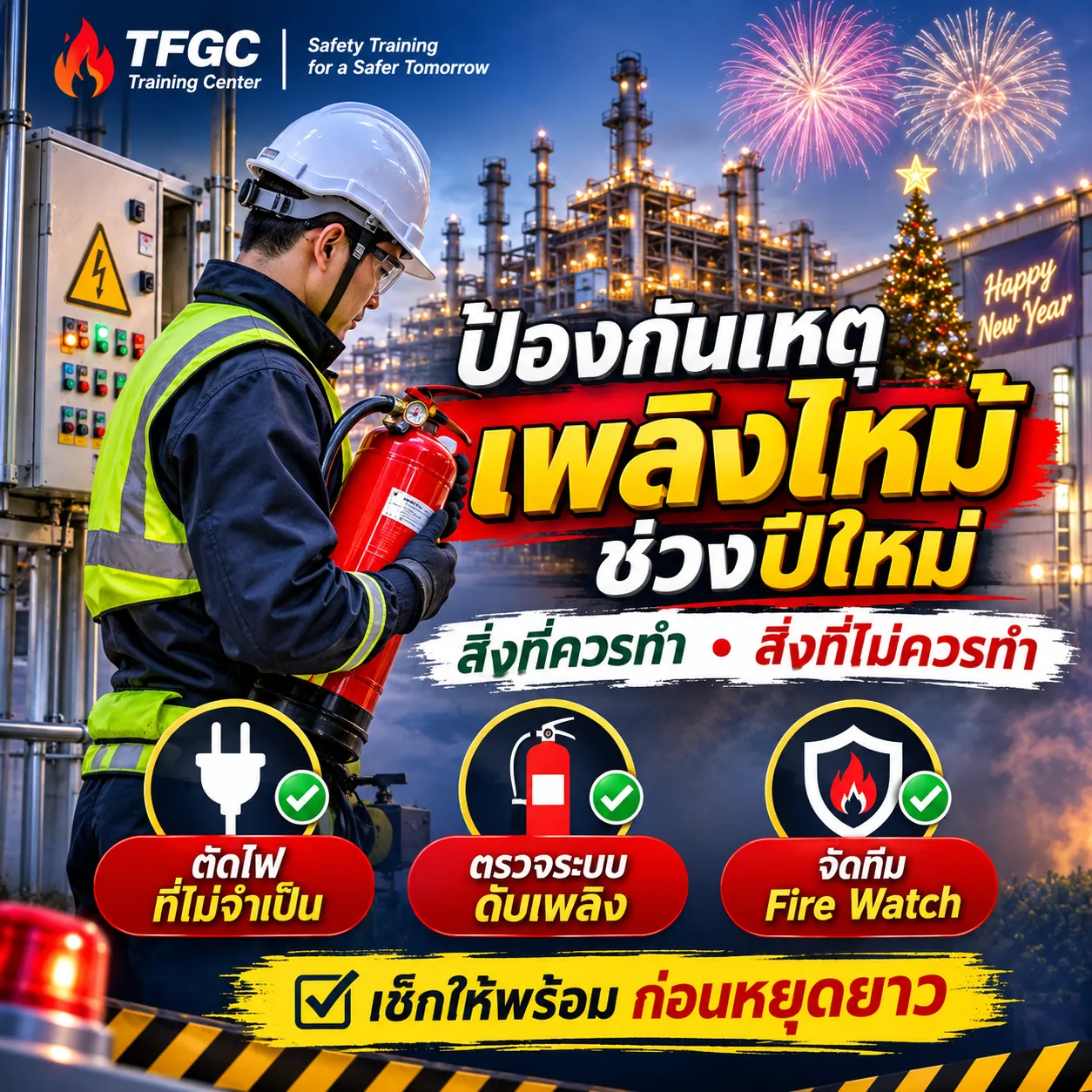
สิ่งที่ควรทำอย่างเคร่งครัดก่อนเริ่มวันหยุดยาว ได้แก่ การตัดกระแสไฟฟ้าที่ไม่จำเป็น ตรวจสอบระบบแจ้งเหตุเพลิงไหม้ กำหนดผู้รับผิดชอบตรวจตราพื้นที่ และเตรียมอุปกรณ์ดับเพลิงให้อยู่ในสภาพพร้อมใช้งานเสมอ
การเตรียมความพร้อมล่วงหน้าช่วยลดความเสี่ยงจากอุบัติภัยได้อย่างมีประสิทธิภาพ โดยมีแนวทางปฏิบัติที่สำคัญดังนี้ครับ:
- ตัดกระแสไฟฟ้าที่ไม่จำเป็น: ปิดสวิตช์และถอดปลั๊กเครื่องใช้ไฟฟ้าที่ไม่จำเป็นทั้งหมด เช่น คอมพิวเตอร์ เครื่องถ่ายเอกสาร เครื่องปรับอากาศ และเครื่องใช้สำนักงาน เพื่อป้องกันกระแสไฟฟ้าลัดวงจรจากไฟตกไฟกระชาก
- ตรวจสอบระบบป้องกันอัคคีภัยอัตโนมัติ: ตรวจสอบตู้ควบคุมระบบสัญญาณแจ้งเหตุเพลิงไหม้ (Fire Alarm Control Panel) หัวกระจายน้ำดับเพลิง (Sprinkler) และปั๊มน้ำดับเพลิง (Fire Pump) ให้ทำงานได้ปกติ
- จัดตั้งทีมตรวจตราความปลอดภัย (Security & Fire Watch Patrol): มอบหมายเจ้าหน้าที่เวรยامเดินตรวจตราความเสี่ยงรอบอาคารและโรงงานอย่างสม่ำเสมอในช่วงวันหยุดยาว
- เคลียร์พื้นที่รอบอาคาร: จัดเก็บวัสดุไวไฟ เช่น พาเลทไม้ กล่องกระดาษ หรือเศษวัสดุ ให้ห่างจากตัวอาคารและพ้นจากรัศมีสะเก็ดไฟภายนอก
| หัวข้อการปฏิบัติ (DOs) | รายละเอียดสิ่งที่ต้องดำเนินการ | ประโยชน์และความปลอดภัยที่ได้รับ |
| ตัดไฟอุปกรณ์สแตนด์บาย | ถอดปลั๊กอุปกรณ์ที่ไม่ใช้งานทั้งหมด | ตัดวงจรความร้อนสะสม ป้องกันไฟฟ้าลัดวงจร 100% |
| ตรวจเช็กถังดับเพลิง | ตรวจเกจวัดความดันและสลักนิรภัยทุกถัง | มั่นใจว่าใช้งานได้ทันทีหากเกิดประกายไฟเริ่มต้น |
| ทดสอบระบบ Fire Alarm | ตรวจสอบเซ็นเซอร์ควันและความร้อน | แจ้งเตือนภัยได้รวดเร็วก่อนไฟลุกลามวงกว้าง |
| เคลียร์ทางหนีไฟ | เคลื่อนย้ายสิ่งกีดขวางออกจากประตูหนีไฟ | เปิดทางให้เจ้าหน้าที่เข้าออกและอพยพได้อย่างปลอดภัย |
3. สิ่งที่ไม่ควรทำ (DON’Ts) ข้อห้ามเด็ดขาดในช่วงเทศกาล
สิ่งที่ไม่ควรทำอย่างเด็ดขาด ได้แก่ การเสียบปลั๊กเครื่องใช้ไฟฟ้าทิ้งไว้ ขาดการตรวจสอบระบบแก๊สและสารเคมี การจุดพลุใกล้แนวเขตโรงงาน และการล็อกทางหนีไฟระหว่างวันหยุด
ความประมาทเพียงเล็กน้อยสามารถทำลายล้างทรัพย์สินทั้งหมดได้ ข้อควรระวังที่คุณต้องหลีกเลี่ยงมีดังนี้:
- ห้ามเสียบปลั๊กเครื่องใช้ไฟฟ้าที่มีความร้อนทิ้งไว้: เช่น กาต้มน้ำร้อน ไมโครเวฟ หรือเครื่องทำน้ำอุ่น ยกเว้นตู้เย็นหรือห้อง Server ที่จำเป็นต้องมีระบบสำรองไฟและควบคุมอุณหภูมิเฉพาะ
- ห้ามปล่อยให้ระบบท่อก๊าซหรือวาล์วสารเคมีเปิดค้างไว้: โรงงานอุตสาหกรรมต้องปิดวาล์วถังแก๊ส LPG หรือระบบจ่ายก๊าซเชื้อเพลิงทั้งหมดก่อนปิดโรงงานช่วงปีใหม่
- ห้ามจุดพลุ ประทัด หรือโคมลอยใกล้พื้นที่เสี่ยง: หลีกเลี่ยงการจุดดอกไม้ไฟใกล้คลังสินค้า ปั๊มน้ำมัน หรือบริเวณที่มีหญ้าแห้งและวัสดุติดไฟง่าย
- ห้ามปิดล็อกประตูทางหนีไฟถาวร: แม้จะเป็นช่วงวันหยุดยาว ห้ามใช้โซ่ล่ามหรือล็อกประตูหนีไฟจากด้านนอกจนไม่สามารถเปิดออกได้ในกรณีฉุกเฉิน
4. มุมมองเชิงลึกที่คนอื่นมองข้าม (What Others Miss) ในช่วงวันหยุดยาว
จุดบอดที่มักถูกมองข้ามคือ “ความร้อนสะสมในระบบไฟฟ้าแรงต่ำ” และ “การละเลยการตรวจสอบระบบป้องกันฟ้าผ่าและไฟกระชาก” ในช่วงที่มีฝนหลงฤดูหรือสภาพอากาศแปรปรวนช่วงปีใหม่
ผู้บริหารและเจ้าหน้าที่ความปลอดภัยมักโฟกัสเพียงการปิดไฟทั่วไป แต่มุมมองจากวิศวกรความปลอดภัยระดับสูงพบปัจจัยเสี่ยงที่ซ่อนอยู่:
- ระบบไฟฟ้าชั่วคราวสำหรับงานประดับไฟปีใหม่: การติดตั้งไฟประดับ (Christmas Lights / LED Strips) ตามอาคารหรือรั้วโรงงาน หากใช้อุปกรณ์ที่ไม่ได้มาตรฐาน มอก. หรือต่อพ่วงปลั๊กพ่วง (Extension Cord) มากเกินไป จะเกิดความร้อนสะสมที่จุดเชื่อมต่อ (Thermal Overload) ซึ่งเป็นชนวนเหตุไฟไหม้ชั้นดี
- สารเคมีทำปฏิกิริยาเมื่อขาดการควบคุมอุณหภูมิ: ในโรงงานอุตสาหกรรมบางประเภท การปิดระบบปรับอากาศหรือระบบระบายอากาศในช่วงหยุดยาว อาจทำให้อุณหภูมิในห้องเก็บสารเคมีสูงขึ้นจนเกิดปฏิกิริยาคายความร้อนและลุกไหม้เองได้ (Spontaneous Combustion)
- การขาดการประสานงานกับหน่วยงานท้องถิ่น: หลายโรงงานปิดทำการโดยไม่ได้แจ้งเบอร์ติดต่อฉุกเฉินของผู้รับผิดชอบให้สถานีดับเพลิงท้องถิ่นทราบ ทำให้เมื่อเกิดเหตุเพลิงไหม้ภายนอก เจ้าหน้าที่ไม่สามารถติดต่อผู้ดูแลเพื่อขอแปลนอาคารหรือเปิดประตูเข้ามาระงับเหตุได้ทันท่วงที
5. ข้อผิดพลาดที่พบบ่อยและวิธีแก้ไข (Common Pitfalls & Myths)
ความเชื่อที่ว่า “ถ้าปิดเบรกเกอร์หลักแล้ว ปลอดภัย 100%” หรือ “วันหยุดยาวไม่มีคนอยู่ ไฟคงไม่ลัดวงจรเอง” เป็นความเข้าใจผิดอันตรายที่มักนำไปสู่โศกนาฏกรรมเพลิงไหม้ช่วงปีใหม่
- ความเชื่อที่ผิดที่ 1: “สับเบรกเกอร์เมนลงแล้ว ทุกอย่างปลอดภัย”
- วิธีแก้ไขที่ถูกต้อง: แม้การสับเบรกเกอร์หลักจะตัดไฟส่วนใหญ่ แต่อุปกรณ์บางตัวที่ต่อตรงจากแหล่งจ่ายไฟสำรอง (UPS) หรือระบบไฟฉุกเฉินยังคงมีกระแสไฟฟ้าวิ่งอยู่ ต้องตรวจสอบจุดเชื่อมต่อเหล่านั้นด้วย
- ความเชื่อที่ผิดที่ 2: “บ้านหรือโรงงานปิดทึบ ปลอดภัยจากสะเก็ดไฟภายนอก”
- วิธีแก้ไขที่ถูกต้อง: สะเก็ดพลุหรือโคมลอยจากการเฉลิมฉลองภายนอก สามารถปลิวมาตกบนหลังคาโกดังที่เป็นเมทัลชัดหรือฉนวนกันความร้อนติดไฟได้ นายจ้างควรตรวจเช็กช่องระบายอากาศและติดตั้งตาข่ายกันสะเก็ดไฟ
- ความเชื่อที่ผิดที่ 3: “อุปกรณ์ดับเพลิงตั้งไว้เฉยๆ ไม่ต้องตรวจก็ได้ในช่วงหยุดยาว”
- วิธีแก้ไขที่ถูกต้อง: ก่อนหยุดยาวต้องตรวจสอบว่าถังดับเพลิงทุกตัวยังอยู่ในจุดที่มองเห็นง่าย เข้าถึงสะดวก และแรงดันยังอยู่ในเกณฑ์มาตรฐานตามข้อกำหนด OSHA
6. ตัวอย่างสถานการณ์จริง / กรณีศึกษา (Real-World Scenario)
กรณีศึกษาจากเหตุเพลิงไหม้ในช่วงวันหยุดยาวในนิคมอุตสาหกรรมภาคตะวันออก สะท้อนให้เห็นว่าความประมาทเรื่องไฟประดับชั่วคราวและการขาดการตรวจตรา สามารถสร้างความเสียหายหลักร้อยล้านบาทได้ในชั่วข้ามคืน
กรณีศึกษาที่ 1: เพลิงไหม้คลังสินค้าจากระบบไฟประดับช่วงปีใหม่
- สถานการณ์: อาคารสำนักงานและคลังสินค้าแห่งหนึ่งในจังหวัดระยอง เปิดไฟประดับตกแต่งช่วงเทศกาลปีใหม่ทิ้งไว้ตลอด 24 ชั่วโมงโดยไม่มีคนดูแลในช่วงวันหยุดยาว 4 วันติดต่อกัน
- การตอบสนอง: สายไฟประดับเกิดการลัดวงจรเนื่องจากใช้งานเกินกำลังและโดนละอองน้ำค้างสะสม จนเกิดประกายไฟตกลงบนกล่องกระดาษลูกฟูกที่กองอยู่ใกล้สำนักงาน ไม่มีพนักงานอยู่เวรยام ทำให้เพลิงลุกไหม้ลามไปทั่วคลังสินค้ากว่าจะมีผู้พบเห็นคือตอนที่ไฟไหม้ลุกลามทะลุหลังคา
- ผลลัพธ์: ตัวอาคารคลังสินค้าเสียหายหนัก มูลค่าความเสียหายรวมกว่า 80 ล้านบาท บทเรียนสำคัญคือห้ามเปิดอุปกรณ์ไฟฟ้าชั่วคราวทิ้งไว้โดยไม่มีระบบตัดไฟอัตโนมัติ
กรณีศึกษาที่ 2: โรงงานอุตสาหกรรมรอดพ้นหายนะด้วยระบบ Fire Watch
- สถานการณ์: โรงงานผลิตชิ้นส่วนอิเล็กทรอนิกส์ในชลบุรี มีนโยบายเข้มงวดในการจัดตั้งทีมตรวจสอบความปลอดภัย (Fire Watch Team) เดินตรวจทุก 2 ชั่วโมงตลอดช่วงวันหยุดยาวปีใหม่
- การตอบสนอง: เจ้าหน้าที่เวรยامได้กลิ่นไหม้จางๆ บริเวณตู้ควบคุมระบบปรับอากาศส่วนกลางในวันที่สองของวันหยุด จึงรีบแจ้งหัวหน้าชุดและสับเบรกเกอร์ตัดไฟเฉพาะจุด พร้อมใช้ถังดับเพลิง CO2 ควบคุมประกายไฟที่กำลังเริ่มลุกไหม้สายไฟ
- ผลลัพธ์: ระงับเหตุได้ทันท่วงทีภายใน 5 นาที ป้องกันความเสียหายของระบบคอมพิวเตอร์และตัวอาคารได้อย่างสมบูรณ์
7. Actionable Checklist สำหรับการป้องกันอัคคีภัยช่วงวันหยุดยาว
รายการตรวจสอบ 6 ขั้นตอนที่บ้านเรือน อาคารสำนักงาน และโรงงานต้องปฏิบัติก่อนเดินทางท่องเที่ยวหรือปิดทำการในช่วงปีใหม่
- [ ] 1. ตรวจสอบและตัดกระแสไฟฟ้า: ถอดปลั๊กเครื่องใช้ไฟฟ้าที่ไม่จำเป็นทั้งหมด และตรวจสอบตู้เมนเบรกเกอร์
- [ ] 2. ปิดวาล์วระบบก๊องและสารเคมี: ปิดวาล์วถังแก๊ส LPG ระบบท่อส่งก๊าซ และล็อกห้องเก็บสารเคมีให้เรียบร้อย
- [ ] 3. เคลียร์วัสดุไวไฟรอบตัวอาคาร: เก็บกวาดใบไม้แห้ง ขยะพลาสติก และวัสดุติดไฟให้ห่างจากตัวอาคารเพื่อป้องกันสะเก็ดไฟ
- [ ] 4. ตรวจสอบอุปกรณ์ดับเพลิงและสัญญาณเตือน: เช็กถังดับเพลิง ระบบสปริงเกอร์ และทดสอบสัญญาณ Fire Alarm ให้พร้อมทำงาน
- [ ] 5. มอบหมายผู้รับผิดชอบและแจ้งเบอร์ติดต่อ: จัดทำรายชื่อผู้ดูแลช่วงวันหยุด พร้อมแจ้งเบอร์โทรศัพท์ฉุกเฉินให้ รปภ. และสถานีดับเพลิงทราบ
- [ ] 6. ล็อกประตูและหน้าต่างให้แน่นหนา: ปิดล็อกช่องทางลม ป้องกันไม่ให้โคมลอยหรือสะเก็ดไฟจากภายนอกปลิวเข้ามาภายในอาคาร
8. คำถามที่พบบ่อย (FAQ)
เครื่องใช้ไฟฟ้าใดบ้างที่จำเป็นต้องถอดปลั๊กก่อนหยุดยาวปีใหม่?
เครื่องใช้ไฟฟ้าทุกชนิดที่ไม่จำเป็นต้องทำงานต่อเนื่อง เช่น คอมพิวเตอร์ เครื่องพิมพ์ เครื่องปรับอากาศ ไมโครเวฟ และโทรทัศน์ ยกเว้นตู้เย็นหรืออุปกรณ์ที่ต้องควบคุมอุณหภูมิห้องเซิร์ฟเวอร์ซึ่งมีระบบสำรองไฟปลอดภัย
หากโรงงานปิดช่วงปีใหม่ ต้องแจ้งหน่วยงานใดเพื่อความปลอดภัย?
ควรแจ้งแผนกความปลอดภัยของนิคมอุตสาหกรรม (กรณีอยู่ในนิคมฯ) หรือสถานีดับเพลิงท้องถิ่น พร้อมมอบหมายเบอร์โทรศัพท์ของผู้จัดการฝ่ายความปลอดภัย (จป.วิชาชีพ) ให้ติดต่อได้ 24 ชั่วโมง
การจุดพลุและดอกไม้ไฟช่วงปีใหม่ มีข้อกฎหมายควบคุมอย่างไร?
การจุดพลุ ดอกไม้ไฟ หรือโคมลอย ต้องได้รับอนุญาตจากเจ้าพนักงานท้องถิ่น และห้ามจุดใกล้สถานีบริการน้ำมัน คลังสินค้า หรือพื้นที่ชุมชนหนาแน่นตามกฎหมายควบคุมอาคาร
ทำไมระบบแจ้งเหตุเพลิงไหม้อัตโนมัติจึงสำคัญมากในช่วงวันหยุดยาว?
เพราะเป็นด่านแรกในการส่งสัญญาณเตือนภัยไปยังศูนย์ควบคุมหรือเบอร์มือถือผู้ดูแล แม้ไม่มีคนอยู่ในอาคาร ระบบจะช่วยให้สามารถแจ้งดับเพลิงเข้าพื้นที่ได้เร็วที่สุด
ควรจัดทีมตรวจตรา (Fire Watch) ความถี่เท่าไหร่ในช่วงวันหยุดยาว?
ควรจัดเจ้าหน้าที่เดินตรวจตราความเสี่ยงรอบพื้นที่อย่างน้อยทุกๆ 2 ถึง 4 ชั่วโมง ตลอด 24 ชั่วโมงในช่วงที่ไม่มีพนักงานปฏิบัติงาน
มาตรฐานสากลเช่น NFPA มีคำแนะนำพิเศษอะไรสำหรับช่วงวันหยุดยาว?
NFPA แนะนำให้จัดทำ “Holiday Shutdown Checklist” ตรวจสอบทุกจุดพลังงาน และทดสอบระบบป้องกันอัคคีภัยก่อนเจ้าหน้าที่คนสุดท้ายออกจากอาคาร
9. แหล่งอ้างอิงและมาตรฐานที่เกี่ยวข้อง (References)
- NFPA (National Fire Protection Association) – มาตรฐานสากลด้านความปลอดภัยจากอัคคีภัยและการจัดการความเสี่ยงช่วงวันหยุดยาว (Holiday Fire Safety)
- OSHA (Occupational Safety and Health Administration) – ข้อกำหนดด้านการจัดการความปลอดภัยในสถานประกอบการและระบบป้องกันอัคคีภัย
- ISO (International Organization for Standardization) – มาตรฐานระบบการจัดการอาชีวอนามัยและความปลอดภัย (ISO 45001)
- กองความปลอดภัยแรงงาน กรมสวัสดิการและคุ้มครองแรงงาน (Thailand Safety Dept.) – กฎหมายและมาตรการป้องกันอุบัติภัยในสถานประกอบการของประเทศไทย
ยกระดับมาตรฐานความปลอดภัยสถานประกอบการของคุณกับ ศูนย์ฝึกอบรมความปลอดภัยและดับเพลิงมาตรฐานสากล TFGC
ศูนย์ฝึกอบรมความปลอดภัยและดับเพลิงมาตรฐานสากล TFGC (Tactical Fire Guard Training Center) ตั้งอยู่ในจังหวัดระยอง พร้อมให้บริการฝึกอบรมหลักสูตรความปลอดภัย อาชีวอนามัย และการระงับอัคคีภัยแก่ภาคอุตสาหกรรมในพื้นที่ภาคตะวันออก นิคมอุตสาหกรรมชลบุรี ระยอง และทั่วประเทศ
- จุดเด่นของเรา: เน้นการฝึกปฏิบัติจริงด้วยการจำลองสถานการณ์ทับซ้อน เพื่อให้ผู้เข้าอบรมได้ใช้ศักยภาพเต็มรูปแบบ ปรับเนื้อหาตามหน้างานจริง รองรับโรงงานยาง, น้ำมัน, โรงพยาบาล อาคารสูง รวมถึงกลุ่มนิคมอุตสาหกรรม ครอบคลุมหลักสูตรอบรมดับเพลิงขั้นต้น, อบรมดับเพลิงขั้นสูง, Petro Fire, Chemical Fire, Electric Fire, Fire Solar, Fire EV, Fire Watch และอบรมดับเพลิงเฉพาะทาง
- ช่องทางการติดต่อ:
- Website: https://tfgc-safety.com/
- LINE Official: https://lin.ee/VJZXUjD
- YouTube: https://www.youtube.com/@TFGC_TrainingCenter
- TikTok: https://www.tiktok.com/@tfgc.training_center
- Facebook: https://www.facebook.com/search/top?q=TFGC%20Training%20Center
- เบอร์โทรติดต่อ: 099 939 5416
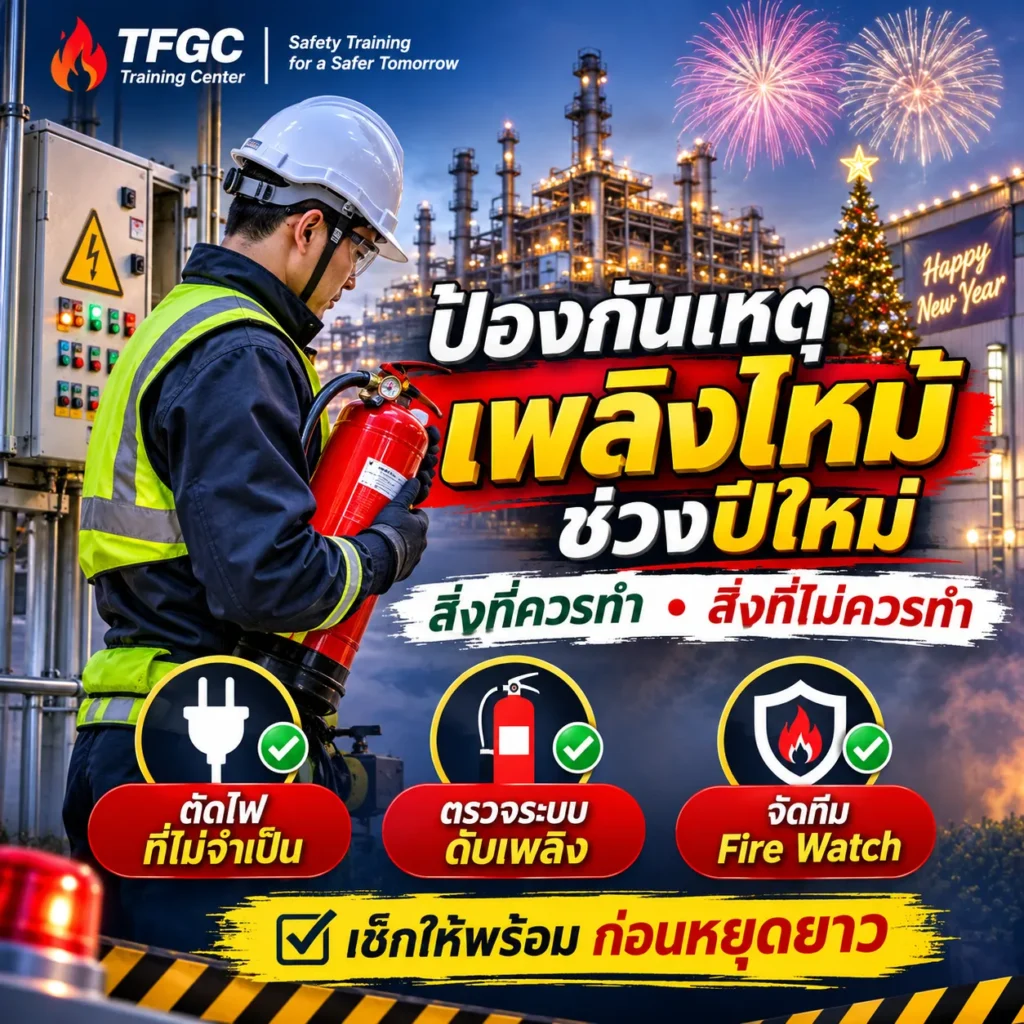
Holiday Fire Safety: What to Do and Not to Do to Prevent Fires During New Year and Long Weekends
The New Year festival and extended long weekends are times of joy and celebration. However, they also witness a sharp spike in fire incidents and industrial disasters across households, office buildings, and manufacturing plants. A momentary lapse in judgment—such as leaving electrical appliances plugged in, setting off fireworks near high-risk zones, or failing to inspect fire protection systems before facility shutdown—can trigger catastrophic losses. This comprehensive guide outlines critical dos and don’ts to ensure absolute fire safety during extended holidays.
1. Why Long Weekends and New Year Holidays Elevate Fire Risks
Summary: Extended holidays drastically increase fire risks because facilities remain unattended, combined with compounding hazards such as electrical thermal overload, festive fireworks, and inadequate pre-shutdown energy isolation.
Disaster management statistics consistently show that electrical short circuits and human negligence are the leading causes of holiday fires. When factories or buildings remain closed for consecutive days, standby appliances can suffer voltage spikes or thermal buildup, melting wire insulation. Furthermore, external celebrations involving firecrackers, fireworks, or sky lanterns drastically increase the probability of stray embers igniting combustible materials.
International organizations like the NFPA (National Fire Protection Association) emphasize strict holiday fire safety management plans. These principles align with guidelines from the Thailand Safety Dept. (Department of Labour Protection and Welfare), which mandates rigorous risk mitigation for employers and facility managers prior to holiday closures.
2. Essential DOs for Fire Prevention During New Year Holidays
Summary: Mandatory pre-holiday actions include disconnecting non-essential electrical circuits, inspecting automatic fire suppression systems, assigning dedicated fire watch patrols, and clearing combustible debris around facilities.
Proactive preparation effectively minimizes disaster exposure. Key operational practices include:
- Isolate Non-Essential Electrical Power: Switch off and unplug all unnecessary equipment—such as computers, copiers, printers, and auxiliary air conditioners—to eliminate standby electrical hazards.
- Inspect Automated Fire Protection Systems: Verify that Fire Alarm Control Panels, sprinkler heads, and fire pumps are fully operational.
- Establish a Fire Watch and Patrol Team: Appoint security personnel to conduct routine patrols inspecting high-risk zones throughout the holiday shutdown.
- Clear Exterior Building Perimeters: Remove combustible materials such as wooden pallets, cardboard boxes, and debris away from exterior walls and potential ember trajectories.
| Operational Action (DOs) | Implementation Details | Safety Benefits & Protection |
| Unplug Standby Electronics | Disconnect all idle office and plant equipment | Eliminates thermal accumulation and short-circuit risks |
| Inspect Fire Extinguishers | Check pressure gauges and safety pins on all units | Guarantees immediate readiness for incipient fires |
| Test Fire Alarm Systems | Verify smoke and heat detector functionality | Ensures early warning before fires expand |
| Clear Evacuation Routes | Remove obstacles blocking emergency exit doors | Secures unobstructed egress and responder access |
3. Strict DON’Ts: Prohibited Practices During the Festive Season
Summary: Critical prohibitions include leaving heating appliances plugged in, neglecting gas and chemical valve isolation, launching fireworks near industrial boundaries, and permanently locking emergency exits.
Minor negligence can destroy entire facilities. Avoid these dangerous practices:
- Never Leave Heating Appliances Plugged In: Avoid leaving coffee makers, water boilers, or portable heaters energized, except for refrigerators or critical server rooms equipped with dedicated safety controls.
- Never Leave Gas or Chemical Valves Open: Industrial facilities must completely shut off LPG supply lines and chemical feed systems prior to holiday closures.
- Never Ignite Fireworks Near High-Risk Zones: Strictly prohibit launching firecrackers or sky lanterns near warehouses, fuel stations, or dry vegetation.
- Never Permanently Barricade Emergency Exits: Even during holidays, never chain or bolt emergency exit doors shut from the outside, ensuring rapid egress if an emergency occurs.
4. What Others Sit: Overlooked Blind Spots During Holiday Shutdowns
Summary: Critical blind spots often ignored include low-voltage electrical thermal accumulation and lightning/surge protection neglect during unstable holiday weather.
Facility managers frequently focus only on basic lighting shutdowns. However, fire protection engineers highlight hidden vulnerabilities:
- Temporary Festive Holiday Lighting: Installing uncertified decorative string lights (LED strips) along factory perimeters or fences without proper overcurrent protection can cause thermal overload at connection points, initiating electrical fires.
- Chemical Exothermic Reactions Without Temperature Control: In specific chemical manufacturing plants, shutting down HVAC or ventilation systems during holidays can cause ambient room temperatures to rise, triggering spontaneous combustion.
- Lack of Coordination with Local Authorities: Many facilities shut down without providing emergency contact details to local fire stations. When external fires occur, responders cannot contact site managers to obtain facility blueprints or gate access.
5. Common Pitfalls and Myths
Summary: Assuming that “main breaker shutoff guarantees 100% safety” or that “unoccupied buildings cannot experience electrical fires” are dangerous misconceptions leading to holiday disasters.
- Myth 1: “Tripping the main circuit breaker makes everything entirely safe.”
- Fact: While the main breaker cuts general power, devices connected directly to Uninterruptible Power Supplies (UPS) or emergency lighting remain energized and require individual isolation.
- Myth 2: “Sealed buildings are completely safe from external sparks.”
- Fact: Stray embers from neighborhood fireworks can land on metal roofs or combustible insulation. Facilities must inspect roof vents and clear surrounding combustible debris.
- Myth 3: “Fire extinguishers require no checks during holiday closures.”
- Fact: Extinguishers must be verified for unobstructed visibility, accessibility, and pressure compliance per OSHA standards prior to shutdown.
6. Real-World Case Studies
Case studies from holiday fires in Eastern Seaboard industrial estates prove that negligence regarding temporary festive lighting and lack of patrols can cause multi-million-baht damages overnight.
Case Study 1: Warehouse Fire Caused by Festive String Lights
- Scenario: A logistics warehouse in Rayong left decorative festive lighting connected 24/7 throughout a 4-day New Year holiday without on-site monitoring.
- Response: Uncertified string lights short-circuited due to electrical overload and morning dew accumulation, igniting nearby corrugated cardboard storage boxes. With no security personnel patrolling, the fire spread unchecked until it breached the roof structure.
- Result: Total structural and inventory loss exceeded 80 million THB, demonstrating the danger of leaving temporary electrical decorations unattended.
Case Study 2: Industrial Plant Averts Disaster via Fire Watch Protocols
- Scenario: An electronics manufacturing plant in Chonburi enforced a strict Holiday Fire Watch protocol, conducting inspections every two hours throughout the New Year break.
- Response: Patrolling guards detected a faint burning odor near the central air-handling control panel on the second day of the shutdown, immediately notified plant supervisors, tripped the local breaker, and suppressed nascent wiring flames with a CO2 extinguisher.
- Result: The incident was successfully resolved within 5 minutes, protecting critical server infrastructure and preventing catastrophic losses.
7. Actionable Holiday Fire Safety Checklist
A 6-step operational checklist for homes, offices, and factories before holiday closures.
- [ ] 1. Inspect and Disconnect Power: Unplug all non-essential electrical equipment and verify main breaker status.
- [ ] 2. Isolate Gas and Chemical Lines: Shut off LPG tanks, process gas pipelines, and secure chemical storage rooms.
- [ ] 3. Clear Combustible Exterior Debris: Remove dry leaves, packaging waste, and flammable materials away from building perimeters.
- [ ] 4. Check Fire Protection and Alarms: Inspect fire extinguishers, sprinkler valves, and test Fire Alarm panel connectivity.
- [ ] 5. Assign Emergency Contacts: Appoint responsible holiday duty managers and provide emergency numbers to security and local fire stations.
- [ ] 6. Secure Doors and Windows: Lock all building access points to prevent wind-driven embers or sky lanterns from entering.
8. Frequently Asked Questions (FAQ)
Which appliances must be unplugged before a New Year long weekend?
All non-essential electrical devices—such as computers, printers, coffee makers, and microwaves—must be unplugged, excepting refrigerators and dedicated server rooms with climate control and surge protection.
Who should be notified when a factory closes for the New Year?
Management should notify the industrial estate administrative office (if applicable) and local fire departments, providing 24/7 emergency contact numbers for Safety Officers (EHS Managers).
What are the legal regulations regarding fireworks during New Year?
Launching fireworks, firecrackers, or sky lanterns requires local municipal permits and is strictly prohibited near fuel stations, warehouses, or dense residential zones under building control laws.
Why is an automatic fire alarm system critical during holiday shutdowns?
It serves as the primary frontline warning mechanism, transmitting alerts to monitoring centers or mobile devices even when buildings are entirely unoccupied.
How frequently should fire watch patrols be conducted during holidays?
Security patrols should thoroughly inspect high-risk areas at least every 2 to 4 hours around the clock when facilities are unmanned.
What specific guidance does NFPA provide for holiday shutdowns?
NFPA recommends executing a comprehensive “Holiday Shutdown Checklist,” verifying all energy isolation points, and testing fire protection systems before the final staff member departs.
9. References
- NFPA (National Fire Protection Association) – International standards for holiday fire safety and risk management.
- OSHA (Occupational Safety and Health Administration) – Workplace safety management guidelines and fire protection mandates.
- ISO (International Organization for Standardization) – ISO 45001 Occupational Health and Safety Management Systems.
- Thailand Safety Dept. (Department of Labour Protection and Welfare) – Thai labor regulations and industrial accident prevention measures.
Elevate Your Facility’s Safety Standards with TFGC International Standard Fire Safety and Training Center
TFGC (Tactical Fire Guard Training Center), located in Rayong Province, provides premier occupational safety, health, and fire suppression training for industries across the Eastern Seaboard (Chonburi, Rayong) and nationwide.
- Our Strengths: Specializing in realistic hands-on training through complex scenario simulations to maximize participant capability. Customized courses tailored to actual workplace conditions, supporting rubber plants, oil facilities, hospitals, high-rise buildings, and industrial estates. Covering Basic Fire Fighting, Advanced Fire Fighting, Petro Fire, Chemical Fire, Electric Fire, Fire Solar, Fire EV, Fire Watch, and specialized fire suppression courses.
- Contact Channels:
- Website: https://tfgc-safety.com/
- LINE Official: https://lin.ee/VJZXUjD
- YouTube: https://www.youtube.com/@TFGC_TrainingCenter
- TikTok: https://www.tiktok.com/@tfgc.training_center
- Facebook: https://www.facebook.com/search/top?q=TFGC%20Training%20Center
- Phone: 099 939 5416