
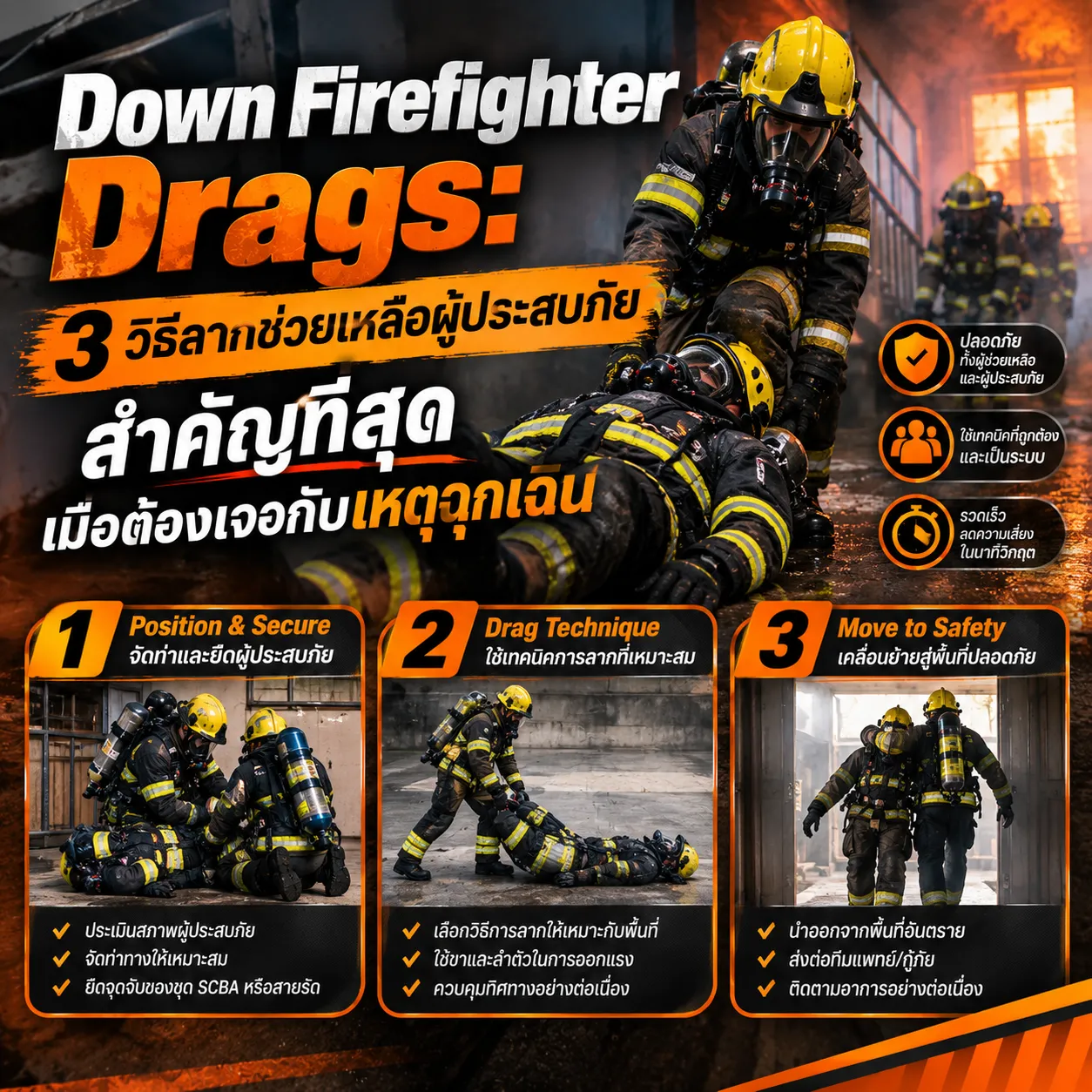
ในการปฏิบัติภารกิจระงับอัคคีภัยและความปลอดภัยในโรงงาน ความเสี่ยงสูงสุดคือการที่ทีมนักดับเพลิงหรือเจ้าหน้าที่กู้ภัยประสบอุบัติเหตุ ได้รับบาดเจ็บ หรือหมดสติภายในพื้นที่จำกัดและอาคารเพลิงไหม้ การช่วยเหลือเพื่อนร่วมทีม (Mayday / Down Firefighter) ถือเป็นสถานการณ์ที่กดดันและสำคัญที่สุด การวางแผนและการปฏิบัติการช่วยเหลือที่ขาดระบบระเบียบอาจนำไปสู่ความสูญเสียซ้ำซ้อน บทความนี้จะพาท่านเจาะลึกกระบวนการ Down Firefighter Drags ตามหลักมาตรฐานสากล NFPA (National Fire Protection Association) เพื่อยกระดับความปลอดภัย เพิ่มประสิทธิภาพการปฏิบัติงาน และช่วยให้ผู้ปฏิบัติงานสามารถนำไปประยุกต์ใช้ในการลากและช่วยเหลือผู้ประสบภัยเมื่อต้องเจอกับสถานการณ์วิกฤตได้อย่างมีประสิทธิภาพสูงสุด
Key Takeaways: จุดสำคัญที่ต้องรู้
- การใช้กลุ่มกล้ามเนื้อัดใหญ่ (Large Muscle Groups): หลีกเลี่ยงการใช้กล้ามเนื้อนิ้วหรือแขนเล็กๆ ในการดึง เพื่อป้องกันความเหนื่อยล้าอย่างรวดเร็ว
- การลดแรงเสียดทาน (Friction Reduction): การปรับท่าทาง การใช้สายสะพาย SCBA หรือการยกน้ำหนักตัวให้พ้นพื้นช่วยให้เคลื่อนย้ายได้ง่ายขึ้น
- การสื่อสารที่ชัดเจน: การออกคำสั่งที่กระชับและเป็นระบบ (เช่น “Ready, Lift”) ช่วยให้ทีมทำงานประสานกันได้อย่างแม่นยำในภาวะกดดัน
ทำความเข้าใจแก่นแท้ของ Down Firefighter Drags ในการปฏิบัติงาน
เมื่อเกิดเหตุการณ์เจ้าหน้าที่หมดสติหรือติดค้าง สถิติชี้ว่ากว่า 70% ของการเข้าช่วยเหลือมักมาจากทีมปฏิบัติการใกล้เคียงโดยไม่มีถุงอุปกรณ์กู้ภัยพิเศษ (RIT Bag) พร้อมใช้งาน การทำ Down Firefighter Drags จึงต้องอาศัยอุปกรณ์ที่มีติดตัว เช่น สายสะพายเครื่องช่วยหายใจ (SCBA Straps) หรือสายรัดเอนกประสงค์ ตามคำแนะนำของสถาบันระดับโลกอย่าง IFSTA
1. รายละเอียดเนื้อหาแบบสรุป: ขั้นตอนการปฏิบัติตามสถานการณ์
- การปรับทิศทางและจัดระเบียบผู้ประสบภัย: ก่อนเริ่มลากออกจากพื้นที่อันตราย ทีมช่วยเหลือต้องประเมินว่าจะนำออกในลักษณะ “หันหัวออกก่อน (Head-first)” หรือ “หันเท้าออกก่อน (Feet-first)” โดยสามารถใช้เทคนิคการหมุนตัวหรือใช้เข่าและแขนสอดเพื่อพลิกตัวผู้ประสบภัยได้อย่างรวดเร็วในพื้นที่แคบ
- การประยุกต์ใช้ชุดเครื่องช่วยหายใจ (SCBA Pack Conversion): การคลายสายเข็มขัดและสายสะพายถังอากาศ เพื่อเปลี่ยนโครงสร้างของชุดให้กลายเป็นจุดจับ (Handles) ช่วยให้ผู้ช่วยเหลือสามารถดึงหรือประคองน้ำหนักได้อย่างมั่นคงโดยไม่ต้องออกแรงบีบจับที่ตัวบุคคลโดยตรง
- การเคลื่อนย้ายผ่านบันได (Stairwell Extraction): การนำผู้ประสบภัยขึ้นหรือลงบันไดหนีไฟโดยอาศัยจังหวะก้าวขาและการใช้เข็มขัดหรือสายรัดช่วยพยุงน้ำหนักตัวให้อยู่บนขั้นบันไดอย่างเป็นระบบ
การแก้ปัญหาเฉพาะเหตุการณ์: วิธีรับมือเมื่อ “พื้นที่ปฏิบัติการแคบมาก และไม่มีอุปกรณ์ช่วยเหลือพิเศษ”
ในสถานการณ์หน้างานฉุกเฉินจริง ทีมนักกู้ภัยอาจพบอุปสรรคที่ไม่เป็นไปตามตำรา เช่น ช่องทางเดินหรือห้องเครื่องจักรคับแคบจนไม่สามารถยืนหยิบจับอุปกรณ์ได้สะดวก หรือผู้ประสบภัยติดอยู่ใต้ซากโครงสร้าง ประสบการณ์ตรงจากทีมปฏิบัติการมืออาชีพมีแนวทางแก้ไขดังนี้ครับ:
- กรณีพื้นที่แคบจนไม่สามารถหมุนตัวได้: ให้ใช้เทคนิคการดึงผ่านขาไขว้ (Cross-leg Grip) โดยการไขว้ขาของผู้ประสบภัยแล้วสอดแขนใต้ข้อเข่า เพื่อใช้แรงดึงจากท่อนแขนและลำตัวขยับถอยหลังทีละน้อยโดยไม่ต้องใช้มือจับเสื้อผ้าที่อาจฉีกขาด
- กรณีอุปกรณ์ SCBA ขัดข้องหรือสายรัดปรับไม่ได้: ให้ใช้เครื่องมือช่างที่มี เช่น ขวานดับเพลิงหรือท่อเหล็ก สอดเข้ากับช่องว่างของสายสะพาย SCBA เพื่อทำเป็นคานงัดหรือมือจับชั่วคราวในการลากดึงผู้ประสบภัยออกจากโซนอันตราย
หลักการทางวิทยาศาสตร์และชีวกลศาสตร์ (Biomechanics & Physics)
การวิเคราะห์ทางวิทยาศาสตร์ช่วยให้เข้าใจกลไกการเคลื่อนย้ายที่มีประสิทธิภาพ:
- ชีวกลศาสตร์ของการใช้แรง (Biomechanics of Force & Muscle Leverage): การดึงน้ำหนักตัวของนักดับเพลิงที่สวมใส่ชุด PPE และถัง SCBA (น้ำหนักรวมกว่า 30-40 กิโลกรัม) หากใช้มือจับดึงโดยตรงจะทำให้กล้ามเนื้อแขนล้าภายในไม่กี่วินาที การใช้เทคนิคพยุงน้ำหนักพาดผ่านลำตัวหรือสะพายผ่านไหล่ช่วยเปลี่ยนมาใช้กล้ามเนื้อขาและแกนกลางลำตัว (Core Muscles) ซึ่งมีความแข็งแรงกว่ามาก
- แรงเสียดทานจลน์ (Kinetic Friction): การลากร่างผู้ประสบภัยไปกับพื้นราบโดยตรงจะสร้างแรงเสียดทานสูง การใช้เทคนิคยกส่วนลำตัวช่วงบนหรือสะโพกให้ลอยขึ้นเล็กน้อย จะช่วยลดพื้นที่สัมผัสกับพื้น ส่งผลให้ใช้แรงน้อยลงในการเคลื่อนย้าย
การปรับประยุกต์ใช้เพื่อความปลอดภัยในโรงงานอุตสาหกรรมและอาคารสูง
ในพื้นที่โรงงานอุตสาหกรรม คลังสินค้า หรืออาคารสูงในนิคมอุตสาหกรรมมาบตาพุด จังหวัดระยอง การประยุกต์ใช้กระบวนการ Down Firefighter Drags มีแนวทางปฏิบัติที่สำคัญดังนี้:
- การฝึกอบรมจำลองสถานการณ์ประจำเดือน (Monthly Station Drills): ทีมฉุกเฉินภายในโรงงานควรจัดให้มีการฝึกซ้อมภาคสนามในการลากช่วยเหลือผู้ประสบภัยในสภาพแสงน้อยหรือปิดไฟ เพื่อสร้างความคุ้นเคยในการคลำหาจุดจับบนชุด SCBA
- การบูรณาการเข้ากับกฎหมายความปลอดภัย: การเตรียมพร้อมทีมช่วยเหลือผู้ปฏิบัติงานในพื้นที่อันตรายสอดคล้องกับข้อกำหนดด้านความปลอดภัย อาชีวอนามัย และสภาพแวดล้อมในการทำงาน ตามมาตรฐานของสถาบัน TOSH เพื่อสร้างความมั่นใจในการคุ้มครองชีวิตบุคลากร
คำถามเช็กความเข้าใจในการปฏิบัติงาน (Safety Check Quiz)
- เพราะเหตุใดการดึงผู้ประสบภัยโดยใช้กล้ามเนื้อแขนและนิ้วมือจึงไม่แนะนำในการปฏิบัติงานจริง?
- การปรับแปลงชุดเครื่องช่วยหายใจ (SCBA Pack Conversion) มีประโยชน์อย่างไรในกระบวนการช่วยเหลือ?
- หากต้องเคลื่อนย้ายผู้ประสบภัยลงจากอาคารผ่านบันไดหนีไฟ จุดสำคัญที่ทีมกู้ภัยต้องคำนึงถึงคืออะไร?
เซกชัน FAQ: คำถามที่พบบ่อย
- Q1: Down Firefighter Drags คืออะไร?
- A: คือเทคนิคและวิธีการลากหรือเคลื่อนย้ายนักดับเพลิงที่ได้รับบาดเจ็บหรือหมดสติออกจากพื้นที่อันตรายไปยังที่ปลอดภัย
- Q2: ทำไมเราจึงควรใช้สายสะพาย SCBA เป็นจุดช่วยดึงแทนการจับที่ตัวชุดโดยตรง?
- A: เพราะสายสะพายมีความแข็งแรงและออกแบบมาเพื่อรองรับน้ำหนัก ทำให้สามารถควบคุมและออกแรงดึงได้อย่างมั่นคงกว่า
- Q3: มาตรฐานสากลใดที่รองรับการฝึกปฏิบัตินี้?
- A: ได้รับการอ้างอิงและบรรจุอยู่ในหลักสูตรสากลของ NFPA และ IFSTA
ศูนย์ฝึกอบรมความปลอดภัยและดับเพลิงมาตรฐานสากล TFGC
ศูนย์ฝึกอบรมความปลอดภัยและดับเพลิงมาตรฐานสากล TFGC (Tactical Fire Guard Training Center) ตั้งอยู่ในจังหวัดระยอง พร้อมให้บริการฝึกอบรมหลักสูตรความปลอดภัย อาชีวอนามัย และการระงับอัคคีภัยแก่ภาคอุตสาหกรรมในพื้นที่ภาคตะวันออก นิคมอุตสาหกรรมชลบุรี ระยอง และทั่วประเทศ
- จุดเด่นของเรา: เน้นการฝึกปฏิบัติจริงด้วยการจำลองสถานการณ์ทับซ้อน เพื่อให้ผู้เข้าอบรมได้ใช้ศักยภาพเต็มรูปแบบ ปรับเนื้อหาตามหน้างานจริง รองรับโรงงานยาง, น้ำมัน, โรงพยาบาล อาคารสูง รวมถึงกลุ่มนิคมอุตสาหกรรม ครอบคลุมหลักสูตรอบรมดับเพลิงขั้นต้น, อบรมดับเพลิงขั้นสูง, Petro Fire, Chemical Fire, Electric Fire, Fire Solar, Fire EV, Fire Watch และอบรมดับเพลิงเฉพาะทาง
- ช่องทางการติดต่อ:
- Website: https://tfgc-safety.com/
- LINE Official: https://lin.ee/VJZXUjD
- Facebook: TFGC Training Center
- TikTok: @tfgc.training_center
- Youtube: TFGC YouTube Channel
- เบอร์โทรติดต่อ: 099 939 5416
แหล่งอ้างอิงสากล: สถาบันส่งเสริมความปลอดภัย อาชีวอนามัย และสภาพแวดล้อมในการทำงาน (TOSH)
English Content Translation
Down Firefighter Drags: 3 Essential Rescue Methods When Facing Emergency Incidents
In industrial safety and fire suppression operations, the highest risk is when firefighters or rescue personnel suffer accidents, injuries, or unconsciousness within confined spaces and burning structures. Rescuers assisting fallen teammates (Mayday / Down Firefighter operations) represents one of the most pressured and critical scenarios. Disorganized planning and rescue execution can lead to compounding casualties. This article explores the process of Down Firefighter Drags according to international NFPA (National Fire Protection Association) standards to enhance safety, improve operational efficiency, and empower personnel to execute victim drags and rescues effectively during critical emergencies.
Key Takeaways
- Large Muscle Group Engagement: Avoid utilizing small finger or arm muscles for pulling to prevent rapid fatigue.
- Friction Reduction: Adjusting postures, utilizing SCBA shoulder straps, or lifting weight off the floor eases transportation.
- Clear Communication: Concise, systematic command issuing (e.g., “Ready, Lift”) ensures synchronized team coordination under pressure.
Understanding the Core of Down Firefighter Drags in Operations
When personnel fall unconscious or become trapped, statistics indicate that over 70% of rescues originate from adjacent operational teams without specialized RIT (Rapid Intervention Team) bags available. Executing Down Firefighter Drags requires utilizing readily available equipment, such as SCBA shoulder straps or utility webbing, per guidance from global organizations like IFSTA.
1. Summary of Detailed Content: Step-by-Step Procedures by Scenario
- Victim Reorientation and Packaging: Prior to extracting from hazard zones, rescue teams assess whether to extract head-first or feet-first, utilizing rolling techniques or knee-arm insertion to reorient victims swiftly in tight spaces.
- SCBA Pack Conversion: Loosening waist belts and shoulder straps to convert self-contained breathing apparatus assemblies into secure handles, enabling rescuers to pull or brace weights securely without directly gripping clothing.
- Stairwell Extraction: Transporting victims up or down stairwells by coordinating leg steps and utilizing belts or webbing to support body weight stably across stairs.
Handling Unexpected Conditions: Managing Constrained Spaces Without Specialized Rescue Gear
In real-world emergency field operations, rescue teams frequently encounter conditions deviating from manuals, such as ultra-narrow hallways or machinery rooms preventing standing postures, or victims trapped beneath structural debris:
- Scenario: Ultra-Narrow Spaces Preventing Rotation: Employ cross-leg grip techniques by crossing the victim’s legs and inserting arms beneath their knees, utilizing upper body pulling power to back away incrementally without grabbing tearable garments.
- Scenario: Damaged SCBA Gear or Adjustable Straps: Utilize available hand tools, such as fire axes or steel bars, inserted through SCBA harness gaps to function as temporary levers or handles for dragging victims out of danger zones.
Scientific Principles and Biomechanics
Scientific analysis clarifies mechanics for efficient transportation:
- Biomechanics of Force & Muscle Leverage: Dragging firefighters outfitted in PPE and SCBA gear (weighing 30-40 kg total) via direct hand grips exhausts arm muscles within seconds. Utilizing techniques that support weights across torsos or over shoulders shifts labor to stronger leg and core muscles.
- Kinetic Friction: Dragging victims directly across flat floors generates high friction. Utilizing techniques that elevate upper torsos or hips slightly reduces floor contact area, lowering physical exertion requirements during extraction.
Adapting for Industrial Safety and High-Rises
Within industrial plants, warehouses, or high-rise buildings in industrial estates like Map Ta Phut, Rayong Province, applying Down Firefighter Drags protocols involves key practices:
- Monthly Station Drills: Internal plant emergency teams should conduct practical rescue simulation drills in low-light or blackout conditions to build familiarity with locating grip points on SCBA gear.
- Safety Law Integration: Preparing teams to rescue operators in hazardous zones aligns with occupational safety, health, and environmental regulations per TOSH standards to ensure personnel protection during crises.
Safety Check Quiz
- Why is pulling victims solely with arm and finger muscles discouraged in actual operations?
- What operational benefits does SCBA pack conversion provide during rescue processes?
- When extracting victims down stairwells, what critical factor must rescue teams manage?
Common Operational Errors and Corrective Actions
- Error 1: Utilizing direct clothing grips rather than structural harness handles.
- Impact: Garments rip under heavy PPE weight, dropping victims and wasting critical time.
- Corrective Action: Mandate SCBA harness strap utilization per Down Firefighter Drags protocols.
- Error 2: Bending backs rather than utilizing leg drive during lifting.
- Impact: Severe lower lumbar injuries among rescue personnel.
- Corrective Action: Enforce proper biomechanical lifting and leg drive techniques.
FAQ: Frequently Asked Questions
- Q1: What are Down Firefighter Drags?
- A: Techniques and methods for dragging or extracting injured or unconscious firefighters out of hazard zones to safety.
- Q2: Why utilize SCBA shoulder straps as pull points rather than grabbing PPE directly?
- A: Because straps possess high structural strength designed to support loads, enabling secure control and exertion.
- Q3: Which international standards specify this training guideline?
- A: Referenced and incorporated in international standards by NFPA and IFSTA.
Tactical Fire Guard Training Center (TFGC)
Tactical Fire Guard Training Center (TFGC), located in Rayong Province, provides professional safety, occupational health, and fire suppression training for industries across the Eastern region, Chonburi, Rayong, and nationwide.
- Our Strengths: Emphasis on practical hands-on training through multi-layered simulation technologies, adhering to international NFPA standards and customized to real workplace conditions—supporting rubber plants, oil facilities, hospitals, high-rise buildings, and industrial estates. Covering Basic Firefighting, Advanced Firefighting, Petro Fire, Chemical Fire, Electric Fire, Solar Fire, EV Fire, Fire Watch, and specialized firefighting courses.
- Contact Channels:
- Website: https://tfgc-safety.com/
- LINE Official: https://lin.ee/VJZXUjD
- Facebook: TFGC Training Center
- TikTok: @tfgc.training_center
- Youtube: TFGC YouTube Channel
- Phone: 099 939 5416
International Reference: Thailand Institute of Occupational Safety and Health (TOSH)Handline Nozzles