
ในการปฏิบัติภารกิจระงับอัคคีภัยและความปลอดภัยในอาคาร การช่วยเหลือชีวิตผู้ประสบภัยถือเป็นภารกิจที่มีลำดับความสำคัญสูงสุดเหนือสิ่งอื่นใด การวางแผนและการปฏิบัติการค้นหาและช่วยเหลือที่ขาดระบบระเบียบอาจนำไปสู่ความสูญเสียทั้งต่อชีวิตของผู้ประสบภัยและทีมกู้ภัยเอง บทความนี้จะพาท่านเจาะลึกกระบวนการ Search and Rescue ตามหลักมาตรฐานสากล NFPA (National Fire Protection Association) เพื่อยกระดับความปลอดภัย เพิ่มประสิทธิภาพการปฏิบัติงาน และช่วยให้ผู้ปฏิบัติงานสามารถนำไปประยุกต์ใช้ในการค้นหาและช่วยเหลือเมื่อต้องเจอกับเพลิงไหม้อาคารได้อย่างมีประสิทธิภาพสูงสุด
Key Takeaways: จุดสำคัญที่ต้องรู้
- ลำดับความสำคัญของภารกิจ: การค้นหาและช่วยเหลือ (Search and Rescue) ต้องดำเนินควบคู่ไปกับการควบคุมเพลิง เพื่อจำกัดพื้นที่อันตรายและช่วยชีวิตผู้ติดค้าง
- การประเมินพื้นที่อย่างเป็นระบบ: ทีมกู้ภัยต้องแบ่งโซนค้นหาอย่างชัดเจน (Primary Search และ Secondary Search) เพื่อไม่ให้ตกหล่นพื้นที่เสี่ยง
- การสื่อสารและความปลอดภัยของทีม: การใช้อุปกรณ์ป้องกันภัยส่วนบุคคล (PPE) และเครื่องช่วยหายใจ (SCBA) ร่วมกับการสื่อสารทางวิทยุคือหัวใจสำคัญรอดชีวิต
ทำความเข้าใจแก่นแท้ของ Search and Rescue ในการปฏิบัติงาน
เมื่อเกิดเหตุเพลิงไหม้ในอาคารสำนักงานหรือโรงงานอุตสาหกรรม เวลาทุกวินาทีมีความหมายต่อชีวิตของผู้ติดค้าง การทำ Search and Rescue จึงต้องอาศัยการวางแผนเชิงยุทธวิธีตามคำแนะนำของสถาบันระดับโลกอย่าง IFSTA ทีมกู้ภัยต้องมีความกล้าหาญแต่ต้องปฏิบัติงานภายใต้กฎระเบียบด้านความปลอดภัยอย่างเคร่งครัด
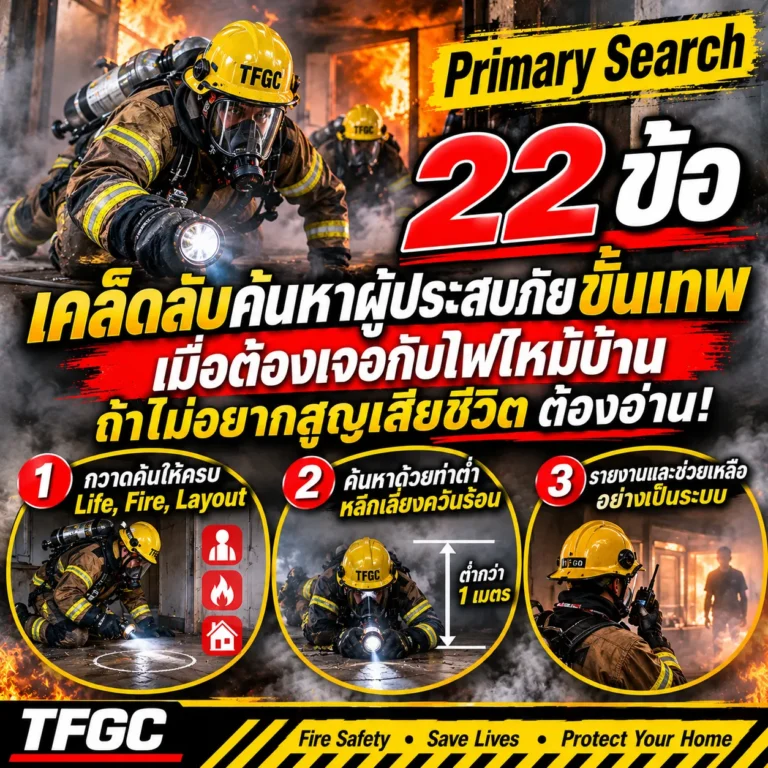
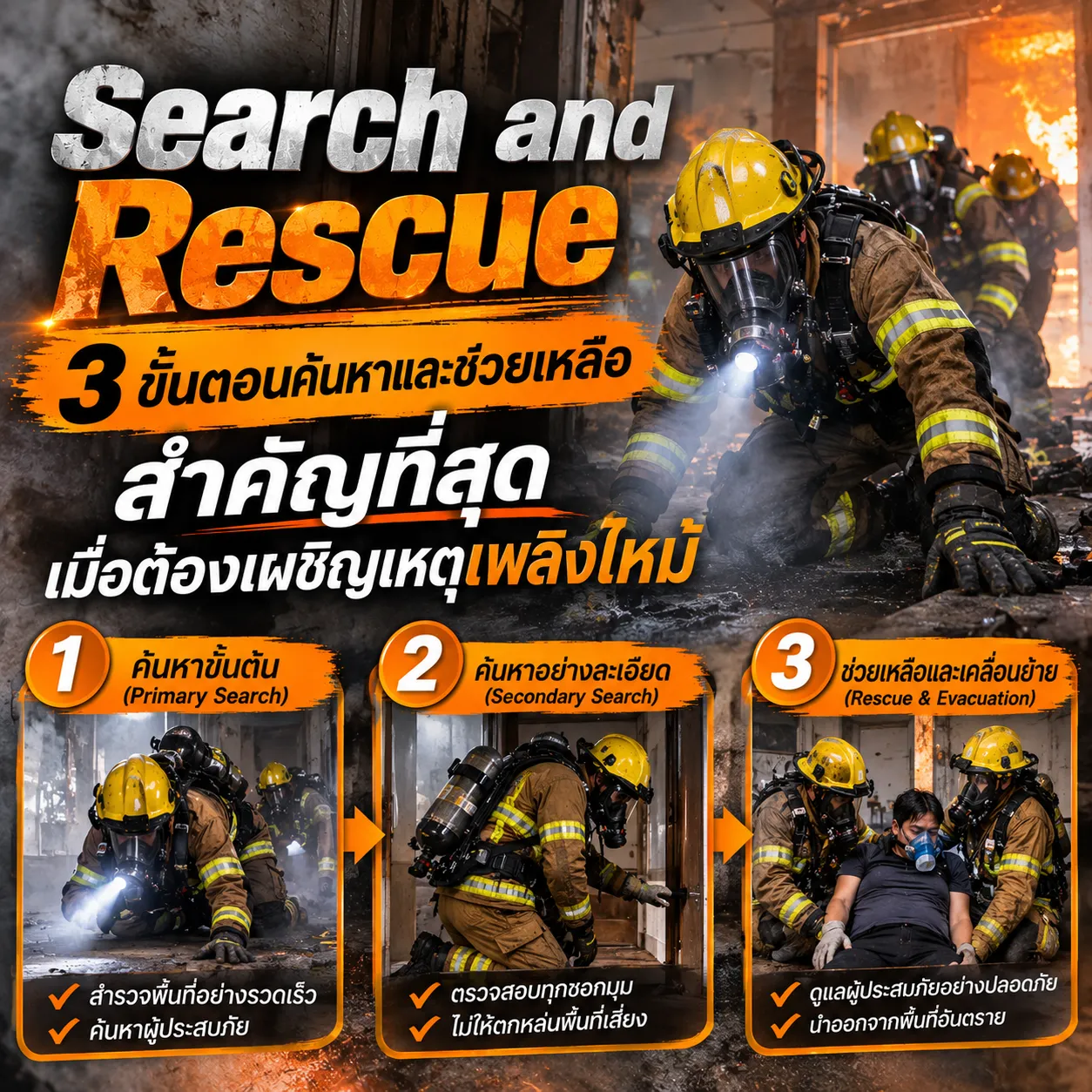
1. ขั้นตอนการค้นหาขั้นต้น (Primary Search)
ขั้นตอนแรกของการทำ Search and Rescue คือการค้นหาอย่างรวดเร็ว (Primary Search) ทันทีที่เข้าถึงพื้นที่ เพื่อสำรวจหาผู้ประสบภัยที่หมดสติหรือติดค้างอยู่ใกล้ทางออก ห้องน้ำ หรือมุมอับสายตา ทีมกู้ภัยจะเคลื่อนที่ชิดผนังห้องเพื่อรักษาระยะและไม่ให้หลงทิศทางในสภาพที่มีควันหนาทึบไร้ทัศนวิสัย
2. ขั้นตอนการค้นหาอย่างละเอียด (Secondary Search)
หลังจากควบคุมเพลิงได้ระดับหนึ่งแล้ว ทีมกู้ภัยชุดที่สองจะเข้าปฏิบัติการค้นหาอย่างละเอียด (Secondary Search) เพื่อตรวจสอบซ้ำทุกซอกทุกมุมอย่างครอบคลุม รวมถึงการสำรวจพื้นที่ใต้ซากปรักหักพังหรือห้องที่ปิดล็อก เพื่อให้มั่นใจว่าจะไม่มีผู้ประสบภัยตกค้างอยู่ภายในอาคารอย่างเด็ดขาด
การแก้ปัญหาเฉพาะเหตุการณ์: วิธีรับมือเมื่อ “ทัศนวิสัยเป็นศูนย์ หรือผู้ประสบภัยมีน้ำหนักมากเกินกว่าจะเคลื่อนย้ายคนเดียว”
ในสถานการณ์หน้างานฉุกเฉินจริง ทีมนกู้ภัยอาจพบอุปสรรคที่ไม่เป็นไปตามตำรา เช่น ควันดำปกคลุมหนาแน่นจนมองไม่เห็นทาง หรือพบผู้ประสบภัยหมดสติในจุดที่แคบ ประสบการณ์ตรงจากทีมปฏิบัติการมืออาชีพมีแนวทางแก้ไขดังนี้ครับ:
- กรณีทัศนวิสัยเป็นศูนย์และสูญเสียการมองเห็นในห้องกว้าง: ให้ใช้เทคนิคการสัมผัสร่วมกัน (Orientation/Search Rope) โดยผูกเชือกนำทางหรือใช้มือเกาะเกี่ยวกันเป็นทีม เพื่อป้องกันการพลัดหลง และใช้การเคาะผนังหรือส่งเสียงเรียกเป็นระยะเพื่อฟังเสียงสะท้อนหรือเสียงตอบรับ
- กรณีพบผู้ประสบภัยน้ำหนักมากและไม่สามารถอุ้มเดี่ยวออกมาได้: ห้ามใช้แรงยกโดยพลการเพราะจะทำให้กล้ามเนื้อบาดเจ็บ ให้ใช้ผ้าห่มดับเพลิง (Fire Blanket) หรืออุปกรณ์เปลสนามพับได้ (Webbing/Stretcher) ทำเป็นเปกลาก (Dragging Technique) เพื่อผ่อนแรงและเคลื่อนย้ายผู้ประสบภัยออกจากโซนอันตรายได้อย่างรวดเร็ว
หลักการทางวิทยาศาสตร์และชีวกลศาสตร์ (Biomechanics & Fire Behavior)
การวิเคราะห์ทางวิทยาศาสตร์ช่วยให้เข้าใจพฤติกรรมของไฟและสีงแวดล้อมที่ส่งผลต่อการช่วยเหลือ:
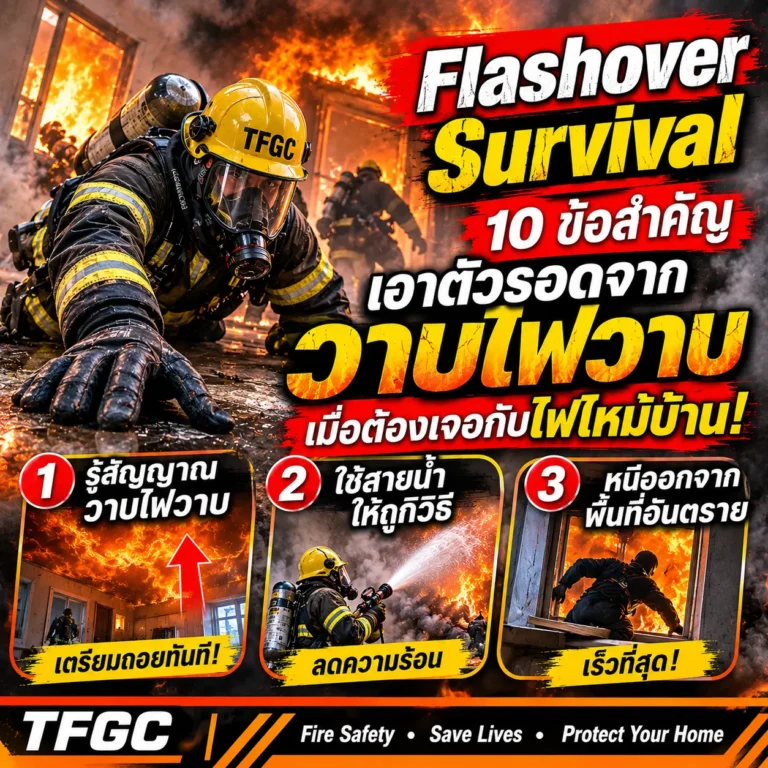
- พฤติกรรมการลอยตัวของก๊าซพิษ (Thermal Layering): อุณหภูมิและความร้อนจะลอยตัวสะสมอยู่บริเวณเพดาน ส่วนก๊าซพิษและควันหนาแน่นมักปกคลุมในระดับต่ำ การฝึกอบรม Search and Rescue จึงเน้นย้ำให้ทีมกู้ภัยเคลื่อนที่ในระดับต่ำ (Low Crawling) เพื่อหนีความร้อนและรับอากาศที่ดีกว่าบริเวณใกล้พื้น
- ชีวกลศาสตร์ของการยกและเคลื่อนย้าย (Biomechanics of Lifting): การช่วยเหลือผู้ประสบภัยต้องใช้หลักการใช้กล้ามเนื้อขา (Leg Drive) แทนการก้มหลัง เพื่อป้องกันอาการบาดเจ็บกระดูกสันหลังส่วนเอว (Lower Back Injury) ภายใต้น้ำหนักอุปกรณ์ SCBA ที่สะพายอยู่
การปรับประยุกต์ใช้เพื่อความปลอดภัยในโรงงานอุตสาหกรรมและอาคารสูง
ในพื้นที่โรงงานอุตสาหกรรม คลังเก็บสินค้า หรืออาคารสูงในนิคมอุตสาหกรรมมาบตาพุด จังหวัดระยอง การประยุกต์ใช้กระบวนการ Search and Rescue มีแนวทางปฏิบัติที่สำคัญดังนี้:
- การซ้อมแผนอพยพและค้นหาประจำปี (Annual Evacuation & Rescue Drills): สถานประกอบการควรจัดให้มีการจำลองสถานการณ์ค้นหาผู้สูญหายในพื้นที่จริง เพื่อให้ทีมฉุกเฉินภายใน (In-house Emergency Team) คุ้นเคยกับผังอาคารและจุดอับสายตา
- การบูรณาการเข้ากับกฎหมายความปลอดภัย: การจัดเตรียมทีมกู้ภัยประจำอาคารสอดคล้องกับข้อกำหนดด้านความปลอดภัย อาชีวอนามัย และสภาพแวดล้อมในการทำงาน ตามมาตรฐานของสถาบัน TOSH เพื่อคุ้มครองชีวิตลูกจ้างในยามวิกฤต
คำถามเช็กความเข้าใจในการปฏิบัติงาน (Safety Check Quiz)
- ความแตกต่างที่สำคัญที่สุดระหว่างการค้นหาขั้นต้น (Primary Search) และการค้นหาอย่างละเอียด (Secondary Search) คืออะไร?
- เพราะเหตุใดทีมกู้ภัยจึงต้องเคลื่อนที่ในระดับต่ำ (Low Crawling) เมื่อเข้าไปในพื้นที่เพลิงไหม้ที่มีควันหนาทึบ?
- หากพบผู้ประสบภัยหมดสติในพื้นที่จำกัดและมีน้ำหนักมาก ทีมกู้ภัยควรใช้เทคนิคใดในการเคลื่อนย้ายเพื่อผ่อนแรง?
เซกชัน FAQ: คำถามที่พบบ่อย
- Q1: Search and Rescue คืออะไร?
- A: คือกระบวนการค้นหาและช่วยเหลือผู้ประสบภัยในสถานการณ์ภัยพิบัติหรือเพลิงไหม้ โดยมุ่งเน้นการช่วยชีวิตเป็นลำดับแรกสุด
- Q2: ทำไมการเคลื่อนที่ชิดผนังจึงเป็นเทคนิคสำคัญในการค้นหา?
- A: เพราะช่วยให้ทีมกู้ภัยสามารถจดจำทิศทาง สำรวจห้องได้อย่างเป็นระบบ และป้องกันการพลัดหลงในสภาพไร้ทัศนวิสัย
- Q3: มาตรฐานสากลใดที่รองรับการฝึกปฏิบัตินี้?
- A: ได้รับการอ้างอิงและบรรจุอยู่ในหลักสูตรสากลของ NFPA และ IFSTA
ศูนย์ฝึกอบรมความปลอดภัยและดับเพลิงมาตรฐานสากล TFGC
ศูนย์ฝึกอบรมความปลอดภัยและดับเพลิงมาตรฐานสากล TFGC (Tactical Fire Guard Training Center) ตั้งอยู่ในจังหวัดระยอง พร้อมให้บริการฝึกอบรมหลักสูตรความปลอดภัย อาชีวอนามัย และการระงับอัคคีภัยแก่ภาคอุตสาหกรรมในพื้นที่ภาคตะวันออก นิคมอุตสาหกรรมชลบุรี ระยอง และทั่วประเทศ
- จุดเด่นของเรา: เน้นการฝึกปฏิบัติจริงด้วยการจำลองสถานการณ์ทับซ้อน เพื่อให้ผู้เข้าอบรมได้ใช้ศักยภาพเต็มรูปแบบ ปรับเนื้อหาตามหน้างานจริง รองรับโรงงานยาง, น้ำมัน, โรงพยาบาล อาคารสูง รวมถึงกลุ่มนิคมอุตสาหกรรม ครอบคลุมหลักสูตรอบรมดับเพลิงขั้นต้น, อบรมดับเพลิงขั้นสูง, Petro Fire, Chemical Fire, Electric Fire, Fire Solar, Fire EV, Fire Watch และอบรมดับเพลิงเฉพาะทาง
- ช่องทางการติดต่อ:
- Website: https://tfgc-safety.com/
- LINE Official: https://lin.ee/VJZXUjD
- Facebook: TFGC Training Center
- TikTok: @tfgc.training_center
- Youtube: TFGC YouTube Channel
- เบอร์โทรติดต่อ: 099 939 5416
แหล่งอ้างอิงสากล: สถาบันส่งเสริมความปลอดภัย อาชีวอนามัย และสภาพแวดล้อมในการทำงาน (TOSH)
English Content Translation
Search and Rescue: 3 Essential Steps for Search and Rescue Operations When Facing Building Fires
In fire suppression and building safety missions, rescuing victims is the highest priority above all else. Disorganized planning and execution during search and rescue operations can lead to casualties among both victims and rescue teams. This article explores the process of Search and Rescue according to international NFPA (National Fire Protection Association) standards to enhance safety, improve operational efficiency, and empower personnel to execute search and rescue effectively when facing building fires.
Key Takeaways
- Mission Priority: Search and rescue operations must be coordinated alongside fire suppression to isolate hazardous zones and save trapped occupants.
- Systematic Area Assessment: Rescue teams must clearly divide search zones (Primary Search and Secondary Search) to ensure no high-risk areas are missed.
- Team Communication and Safety: Utilizing personal protective equipment (PPE) and self-contained breathing apparatus (SCBA) alongside radio communication is vital to survival.
Understanding the Core of Search and Rescue in Operations
When fires occur in office buildings or industrial plants, every second counts for trapped victims. Executing Search and Rescue requires tactical planning per guidelines from global organizations like IFSTA. Rescue teams must display courage while operating strictly under safety protocols.
1. Primary Search Procedures
The initial step of Search and Rescue involves rapid primary searches immediately upon entry to locate unconscious or trapped victims near exits, restrooms, or blind spots. Rescue teams move along room perimeters to maintain orientation and prevent disorientation in zero-visibility smoke conditions.
2. Secondary Search Procedures
Once fire suppression achieves containment, secondary search teams conduct thorough, systematic checks across every corner, including rubble and locked rooms, ensuring zero victims remain unaccounted for inside structures.
Handling Unexpected Conditions: Managing Zero Visibility or Heavy Victims in the Field
In real-world emergency field operations, rescue teams frequently encounter conditions deviating from manuals, such as dense black smoke blinding vision or unconscious victims in confined spaces:
- Scenario: Zero Visibility and Disorientation in Large Rooms: Utilize search ropes or buddy-system gripping to prevent separation, and periodically tap walls or call out to listen for echoes or responses.
- Scenario: Heavy Victims and Inability to Lift Alone: Never attempt unassisted heavy lifting to prevent muscular injuries. Utilize fire blankets or webbing stretchers to execute dragging techniques, easing transportation out of hazard zones rapidly.
Scientific Principles and Biomechanics
Scientific analysis clarifies fire behavior and environmental factors influencing rescue operations:
- Thermal Layering and Toxic Gas Behavior: Heat accumulates near ceilings, while dense toxic smoke blankets lower levels. Search and Rescue training emphasizes low crawling to evade heat and breathe cleaner air near floors.
- Biomechanics of Lifting: Rescuers must utilize leg drive rather than bending their backs to protect lower lumbar regions while carrying heavy SCBA gear.
Adapting for Industrial Safety and High-Rises
Within industrial plants, warehouses, or high-rise buildings in industrial estates like Map Ta Phut, Rayong Province, applying Search and Rescue protocols involves key practices:
- Annual Evacuation and Rescue Drills: Facilities should conduct simulated missing-person rescue drills in actual areas to familiarize internal emergency teams with floor plans and blind spots.
- Safety Law Integration: Establishing in-house rescue teams aligns with occupational safety, health, and environmental regulations per TOSH standards to protect employee lives during crises.
Safety Check Quiz
- What is the most critical difference between a primary search and a secondary search?
- Why must rescue teams utilize low crawling techniques when entering smoky fire environments?
- If an unconscious victim is found in a confined space and is extremely heavy, what transport technique should rescuers use?
Common Operational Errors and Corrective Actions
- Error 1: Entering uncontained fire compartments without backup hose lines or ventilation support.
- Impact: Exposes rescue teams to sudden flashover or backdraft hazards.
- Corrective Action: Mandate strict coordination with fire attack and ventilation teams per Search and Rescue rules.
- Error 2: Failing to maintain physical contact or guide lines during zero-visibility searches.
- Impact: Rescuers become disoriented and lost inside large industrial compartments.
- Corrective Action: Enforce search rope deployment and buddy-system protocols.
FAQ: Frequently Asked Questions
- Q1: What is Search and Rescue?
- A: The process of locating and rescuing victims during disasters or fires, prioritizing life-saving objectives above all else.
- Q2: Why is wall-hugging a vital search technique?
- A: It helps rescue teams maintain orientation, systematically inspect rooms, and prevent disorientation in zero-visibility conditions.
- Q3: Which international standards specify this protocol?
- A: Referenced and incorporated in international standards by NFPA and IFSTA.
Tactical Fire Guard Training Center (TFGC)
Tactical Fire Guard Training Center (TFGC), located in Rayong Province, provides professional safety, occupational health, and fire suppression training for industries across the Eastern region, Chonburi, Rayong, and nationwide.
- Our Strengths: Emphasis on practical hands-on training through multi-layered simulation technologies, adhering to international NFPA standards and customized to real workplace conditions—supporting rubber plants, oil facilities, hospitals, high-rise buildings, and industrial estates. Covering Basic Firefighting, Advanced Firefighting, Petro Fire, Chemical Fire, Electric Fire, Solar Fire, EV Fire, Fire Watch, and specialized firefighting courses.
- Contact Channels:
- Website: https://tfgc-safety.com/
- LINE Official: https://lin.ee/VJZXUjD
- Facebook: TFGC Training Center
- TikTok: @tfgc.training_center
- Youtube: TFGC YouTube Channel
- Phone: 099 939 5416
International Reference: Thailand Institute of Occupational Safety and Health (TOSH)Fire Flow Air Movement