
ในภารกิจการผจญเพลิงและการระงับอัคคีภัย อุปกรณ์ชิ้นสำคัญที่เชื่อมต่อระหว่างนักดับเพลิงกับแหล่งน้ำคือหัวฉีดสายส่งน้ำ การเลือกใช้งานประเภทของหัวฉีดที่ถูกต้องย่อมส่งผลโดยตรงต่อความสำเร็จและความปลอดภัยของผู้ปฏิบัติงาน บทความนี้จะพาท่านเจาะลึก 4 ประเภทหลักของ Handline Nozzles ตามหลักมาตรฐานสากล NFPA (National Fire Protection Association) เพื่อให้วิศวกรความปลอดภัยและนักผจญเพลิงสามารถเลือกใช้งานได้อย่างเหมาะสมกับหน้างานจริง
Key Takeaways: จุดสำคัญที่ต้องรู้
- ความแตกต่างของโครงสร้าง: Handline Nozzles ทั้ง 4 แบบมีกลไกการทำงาน แรงดัน และอัตราการไหลของน้ำ (GPM) ที่แตกต่างกันอย่างสิ้นเชิง
- การควบคุมแรงปฏิกิริยา: หัวฉีดแบบ Smooth Bore เน้นปริมาตรน้ำด้วยแรงดันต่ำ ขณะที่ Combination Nozzles เน้นความยืดหยุ่นในการปรับรูปแบบลำ
- การประยุกต์ใช้ตามหน้างาน: การเลือกหัวฉีดต้องพิจารณาจากประเภทของเชื้อเพลิง เช่น โรงงานอุตสาหกรรม คลังน้ำมัน หรืออาคารสูง
เจาะลึก 4 ประเภทหลักของ Handline Nozzles ตามมาตรฐานสากล
การเข้าใจคุณลักษณะของ Handline Nozzles แต่ละรูปแบบช่วยให้ทีมปฏิบัติการสามารถตัดสินใจได้อย่างรวดเร็วในสถานการณ์ฉุกเฉิน โดยอ้างอิงแนวทางจากสถาบัน IFSTA ดังนี้ครับ:
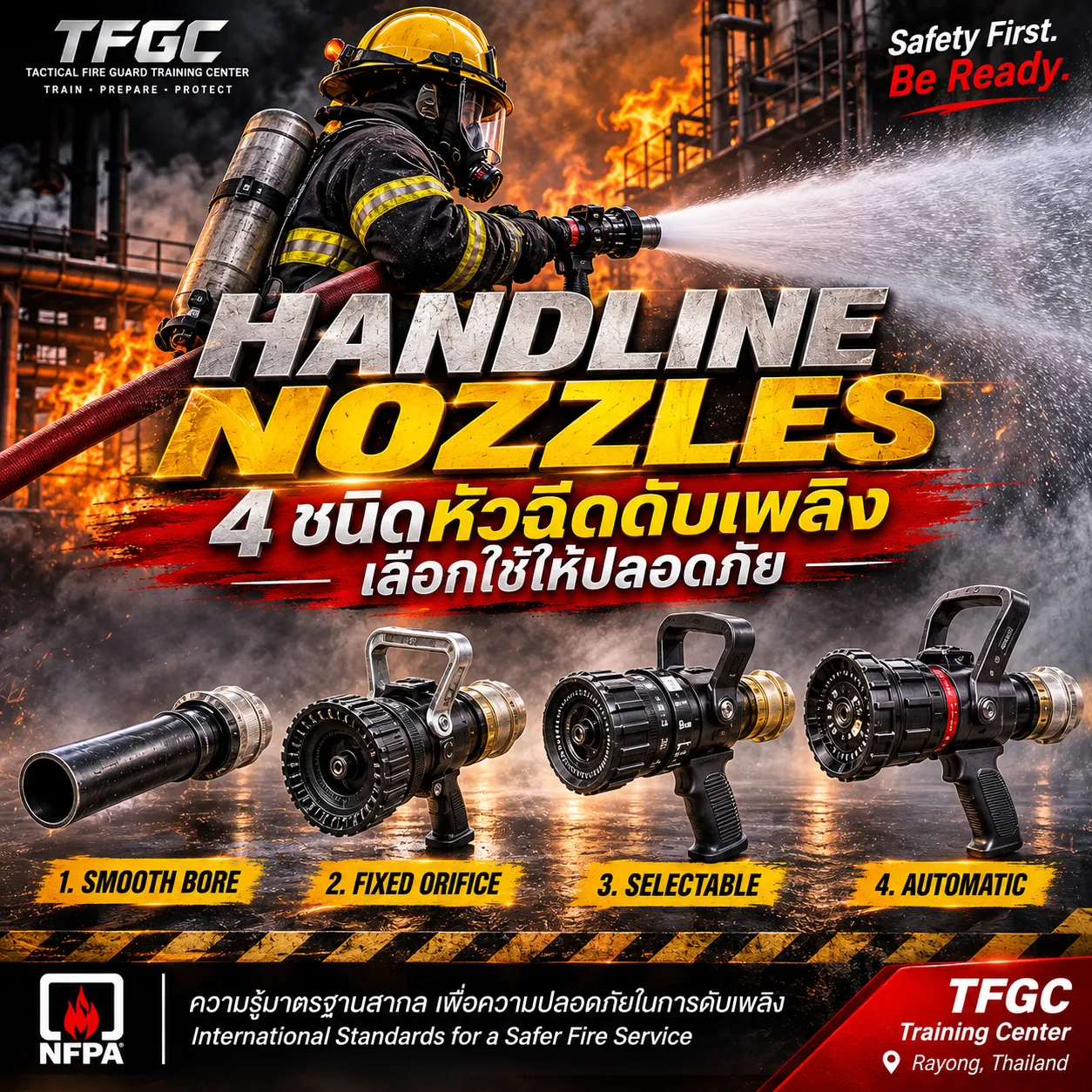
1. หัวฉีดแบบลำตรง (Smooth Bore Nozzle)
หัวฉีดประเภทนี้มีดีไซน์ที่เรียบง่ายที่สุด ประกอบด้วยวาล์วเปิด-ปิดและปลายท่อกลึงเรียบ มักใช้งานที่แรงดันประมาณ 3.4 บาร์ (50 PSI) Handline Nozzles ชนิดนี้โดดเด่นในเรื่องการส่งปริมาณน้ำมหาศาลด้วยแรงดันต่ำ ส่งผลให้แรงปฏิกิริยาที่ปลายหัวฉีด (Nozzle Reaction) น้อยลง และให้สายน้ำที่หนาแน่นแข็งแกร่ง ขับเคลื่อนด้วยปริมาตรน้ำ (Volume Driven) เป็นหลัก
2. หัวฉีดแบบคงที่ (Fixed Orifice Combination Nozzle)
พัฒนาขึ้นมาอีกระดับเพื่อรองรับการปรับรูปแบบลำน้ำได้ทั้งแบบพุ่งตรง (Straight Stream) หรือแบบม่านน้ำ (Fog) ภายในมีแกนควบคุมอัตราการไหลคงที่ (Constant GPM) ส่งผลให้น้ำไหลผ่านช่องทางที่สะอาดและสร้างแรงดันอินเตอร์เฟซที่สมบูรณ์ Handline Nozzles แบบนี้ใช้งานง่ายและให้ประสิทธิภาพลำน้ำที่มีประสิทธิภาพสูงหากควบคุมแรงดันน้ำให้ตรงตามสเปก
3. หัวฉีดแบบปรับอัตราการไหลได้ (Selectable Combination Nozzle)
เป็นหัวฉีดที่ผู้ใช้งานสามารถเลือกปรับอัตราการไหลของน้ำได้หลากหลายระดับ (เช่น ตั้งแต่ 30 ถึง 200 GPM) ที่แรงดัน 5.2 หรือ 6.9 บาร์ (75 หรือ 100 PSI) เหมาะสำหรับติดตั้งบริเวณกันชนหน้าของรถดับเพลิง (Bumper Line) เพื่อรับมือกับสถานการณ์ที่หลากหลาย เช่น ไฟไหม้หญ้า ไฟไหม้ถังขยะ หรือเพิ่มอัตราการไหลเมื่อต้องการน้ำปริมาณมาก อย่างไรก็ตาม ทุกการเปลี่ยนแปลงอัตราการไหลจะต้องปรับแรงดันที่เครื่องสูบน้ำ (Pump Discharge Pressure) ควบคู่กันไปด้วย
4. หัวฉีดแบบอัตโนมัติ (Automatic Combination Nozzle)
หัวฉีดชนิดนี้มีกลไกสปริงภายในที่คอยรักษาแรงดันที่ปลายกระบอกให้คงที่โดยอัตโนมัติ ไม่ว่าอัตราการไหลจะเปลี่ยนแปลงไปในช่วงกว้าง (เช่น 60 ถึง 200 GPM) ข้อดีคือช่วยให้ลำน้ำพุ่งได้ไกลแม้ในสถานการณ์ที่แรงดันน้ำตก แต่ข้อควรระวังคืออาจทำให้ผู้ปฏิบัติงานเกิดความเข้าใจคลาดเคลื่อน (False Sense of Security) ว่าได้ปริมาณน้ำที่เพียงพอในขณะที่แรงดันต่ำ
หลักการทางวิทยาศาสตร์และกลศาสตร์ของของไหล (Fluid Mechanics)
การทำความเข้าใจฟิสิกส์ของการไหลของน้ำช่วยให้การบริหารจัดการน้ำมีประสิทธิภาพสูงสุด:
- พลศาสตร์ของของไหลและความดัน (Fluid Dynamics & Pressure): การไหลของน้ำผ่าน Handline Nozzles เป็นไปตามสมการความต่อเนื่องและหลักการของเบอร์นูลลี การลดขนาดพื้นที่หน้าตัดที่ปลายท่อช่วยแปลงความดันสถิตให้กลายเป็นความดันจลน์ ส่งผลให้เกิดความเร็วสูงในการพุ่งทะลวงกลุ่มควันและเปลวเพลิง
- ความสัมพันธ์ระหว่างแรงดันและแรงปฏิกิริยา: ตามกฎการเคลื่อนที่ของนิวตัน แรงดันน้ำที่ออกจากหัวฉีดสร้างแรงต้านกลับสู่ผู้ถือ การใช้หัวฉีดแรงดันต่ำ (เช่น 50 PSI ใน Smooth Bore) ช่วยลดภาระทางกายภาพของนักดับเพลิงได้อย่างมีนับสำคัญ
การปรับประยุกต์ใช้ Handline Nozzles ให้เข้ากับหน้างานอุตสาหกรรมในประเทศไทย
ในบริบทของโรงงานอุตสาหกรรม คลังสินค้า และนิคมอุตสาหกรรมขนาดใหญ่ในประเทศไทย เช่น มาบตาพุด จังหวัดระยอง การเลือกใช้ Handline Nozzles ให้เหมาะสมกับความเสี่ยงเฉพาะด้านถือเป็นเรื่องสำคัญยิ่ง:
- พื้นที่เก็บสารเคมีและคลังน้ำมัน (Petrochemical & Chemical Plants): ควรประยุกต์ใช้หัวฉีดประเภท Combination ที่สามารถปรับเป็นม่านน้ำ (Fog Pattern) เพื่อใช้ในการบังคับทิศทางไอระเหยของสารเคมี ป้องกันความร้อนแผ่รังสี และช่วยระบายควันพิษ
- อาคารสูงและสำนักงาน (High-Rise Buildings): ควรพิจารณาเลือกใช้หัวฉีดที่มีการควบคุมแรงดันที่เสถียร เนื่องจากระบบท่อยืน (Standpipe System) ในอาคารสูงมักมีปัญหาเรื่องแรงดันน้ำตกค้าง การเลือกหัวฉีดที่เหมาะสมช่วยให้การส่งน้ำขึ้นสู่ชั้นบนสุดยังคงมีประสิทธิภาพ
- สถานีชาร์จรถยนต์ไฟฟ้าและระบบโซลาร์เซลล์ (EV & Solar Fire Risk): จำเป็นต้องเลือกใช้หัวฉีดที่สามารถปรับละอองน้ำฝอยละเอียดเพื่อควบคุมอุณหภูมิในจุดเสี่ยงทางไฟฟ้าได้อย่างปลอดภัย
คำถามเช็กความเข้าใจในการปฏิบัติงาน (Safety Check Quiz)
- ข้อแตกต่างที่สำคัญที่สุดระหว่างหัวฉีด Smooth Bore และ Combination Nozzle คืออะไร?
- เพราะเหตุใดหัวฉีดแบบ Selectable Combination จึงได้รับความนิยมในการติดตั้งบริเวณกันชนหน้ารถดับเพลิง?
- ความเสี่ยงหลักจากการใช้หัวฉีดแบบ Automatic Nozzle คืออะไรตามมาตรฐานสากล?
ข้อผิดพลาดที่พบบ่อยและวิธีแก้ไขในการปฏิบัติงาน
- ข้อผิดพลาดที่ 1: การใช้แรงดันปั๊มน้ำไม่สัมพันธ์กับชนิดของหัวฉีด
- ผลกระทบ: ทำให้อัตราการไหลของน้ำไม่เป็นไปตามการออกแบบ ส่งผลให้ประสิทธิภาพการดับเพลิงลดลงหรือเกิดอันตรายต่อผู้ปฏิบัติงาน
- วิธีแก้ไขและฝึกฝน: ตรวจสอบค่าแรงดัน (PSI/Bar) ที่ระบุไว้บนตัวหัวฉีด Handline Nozzles ทุกครั้งก่อนปฏิบัติภารกิจ
- ข้อผิดพลาดที่ 2: การเลือกใช้รูปแบบละอองน้ำผิดประเภทในเพลิงไหม้บางชนิด
- ผลกระทบ: การใช้ม่านน้ำแรงดันสูงในบางสถานการณ์อาจช่วยโหมกระพือเปลวไฟให้ลุกลามรุนแรงขึ้น
- วิธีแก้ไขและฝึกฝน: ฝึกอบรมทักษะการประเมินสถานการณ์เพลิงไหม้ร่วมกับหลักสูตรของ TOSH อย่างเคร่งครัด
เซกชัน FAQ: คำถามที่พบบ่อย
- Q1: Handline Nozzles มีกี่ประเภทหลักอะไรบ้าง?
- A: มี 4 ประเภทหลัก ได้แก่ Smooth Bore, Fixed Orifice Combination, Selectable Combination และ Automatic Combination Nozzle
- Q2: ทำไมหัวฉีด Smooth Bore จึงได้รับความนิยมในหมู่นักดับเพลิงสายรุกคืบ (Aggressive Attack)?
- A: เพราะใช้แรงดันต่ำ (50 PSI) ส่งปริมาณน้ำได้มาก ลำน้ำแข็งแกร่ง และสร้างแรงปฏิกิริยาที่ควบคุมได้ง่ายกว่า
- Q3: หัวฉีดแบบ Automatic Nozzle อาจสร้างความเข้าใจผิดอย่างไร?
- A: อาจทำให้ผู้ปฏิบัติงานรู้สึกว่าลำน้ำสวยงามปกติ แม้ว่าอัตราการไหลของน้ำจริงจะตกลงต่ำกว่าเกณฑ์ความปลอดภัย
ศูนย์ฝึกอบรมความปลอดภัยและดับเพลิงมาตรฐานสากล TFGC
ศูนย์ฝึกอบรมความปลอดภัยและดับเพลิงมาตรฐานสากล TFGC (Tactical Fire Guard Training Center) ตั้งอยู่ในจังหวัดระยอง พร้อมให้บริการฝึกอบรมหลักสูตรความปลอดภัย อาชีวอนามัย และการระงับอัคคีภัยแก่ภาคอุตสาหกรรมในพื้นที่ภาคตะวันออก นิคมอุตสาหกรรมชลบุรี ระยอง และทั่วประเทศ
- จุดเด่นของเรา: เน้นการฝึกปฏิบัติจริงด้วยการจำลองสถานการณ์ทับซ้อน เพื่อให้ผู้เข้าอบรมได้ใช้ศักยภาพเต็มรูปแบบ ปรับเนื้อหาตามหน้างานจริง รองรับโรงงานยาง, น้ำมัน, โรงพยาบาล อาคารสูง รวมถึงกลุ่มนิคมอุตสาหกรรม ครอบคลุมหลักสูตรอบรมดับเพลิงขั้นต้น, อบรมดับเพลิงขั้นสูง, Petro Fire, Chemical Fire, Electric Fire, Fire Solar, Fire EV, Fire Watch และอบรมดับเพลิงเฉพาะทาง
- ช่องทางการติดต่อ:
- Website: https://tfgc-safety.com/
- LINE Official: https://lin.ee/VJZXUjD
- Facebook: FB TFGC Training Center
- TikTok: tiktok-link
- เบอร์โทรติดต่อ: 099 939 5416
แหล่งอ้างอิงสากล: สถาบันส่งเสริมความปลอดภัย อาชีวอนามัย และสภาพแวดล้อมในการทำงาน (TOSH)
Handline Nozzles: 4 Basic Types of Firefighting Nozzles for Safe Operation
In firefighting and fire suppression missions, a critical equipment connecting firefighters to the water source is the handline nozzle. Choosing the correct type of nozzle directly impacts both the success and safety of operators. This article will take you deep into the 4 primary types of Handline Nozzles according to international NFPA (National Fire Protection Association) standards, ensuring safety engineers and firefighters can select the right equipment for actual working conditions.
Key Takeaways
- Structural Differences: All 4 types of Handline Nozzles feature completely distinct operating mechanisms, pressures, and water flow rates (GPM).
- Nozzle Reaction Control: Smooth bore nozzles prioritize high water volume at low pressure, whereas combination nozzles offer versatility in stream patterns.
- Application by Worksite: Nozzle selection must consider fuel types, such as industrial plants, oil terminals, or high-rise buildings.
Exploring the 4 Primary Types of Handline Nozzles by International Standards
Understanding the characteristics of each Handline Nozzle enables operational teams to make rapid decisions during emergency situations, referencing guidelines from IFSTA:
1. Smooth Bore Nozzle
This is the simplest design among the four, consisting of a shut-off ball valve and a smooth tapered tip. It commonly operates at a pressure of approximately 3.4 bar (50 PSI). These Handline Nozzles excel at delivering large volumes of water at low pressure, resulting in lower nozzle reaction forces and producing a solid, powerful water stream driven primarily by volume.
2. Fixed Orifice Combination Nozzle
Developed to support adjustable water stream patterns, including straight stream or fog. It features an internal flow stem designed to maintain a constant GPM flow rate, allowing water to pass through a pristine waterway and create a solid pressure interface. These Handline Nozzles are user-friendly and deliver high stream effectiveness when water pressure matches specifications.
3. Selectable Combination Nozzle
This nozzle allows operators to select from a range of flow rates (e.g., 30 to 200 GPM) at 5.2 or 6.9 bar (75 or 100 PSI). It is ideal for installation on front bumper lines of fire apparatus to handle diverse scenarios, such as grass fires, trash fires, or increased flow demands. However, any flow rate change requires a corresponding adjustment to the pump discharge pressure.
4. Automatic Combination Nozzle
This nozzle incorporates an internal spring mechanism that automatically maintains pressure at the tip regardless of flow rate changes across a wide range (e.g., 60 to 200 GPM). Its advantage is maintaining good stream reach even during low-pressure situations; however, caution is required as it can create a false sense of security regarding actual water volume delivery.
Scientific Principles and Fluid Mechanics
Understanding the physics of water flow ensures maximum efficiency in water management:
- Fluid Dynamics and Pressure: Water flow through Handline Nozzles follows the continuity equation and Bernoulli’s principle. Reducing the cross-sectional area at the tip converts static pressure into kinetic energy, generating high velocity to penetrate smoke and flames.
- Relationship Between Pressure and Reaction: According to Newton’s laws of motion, water pressure exiting the nozzle creates an opposing reaction force. Utilizing low-pressure nozzles (such as 50 PSI in smooth bores) significantly reduces the physical burden on firefighters.
Adapting Handline Nozzles for Industrial Sites in Thailand
Within large industrial plants, warehouses, and industrial estates in Thailand—such as Map Ta Phut in Rayong Province—selecting appropriate Handline Nozzles for specific hazards is crucial:
- Petrochemical and Chemical Plants: Combination nozzles capable of adjusting into a fog pattern should be applied to control chemical vapor directions, block radiant heat, and assist in smoke removal.
- High-Rise Buildings and Offices: Stable pressure-regulated nozzles should be considered, as standpipe systems in high-rise buildings often suffer from pressure drop issues, ensuring effective water delivery to upper floors.
- Electric Vehicle Charging Stations and Solar Power Systems: Utilizing nozzles capable of producing fine water mist is essential to safely manage temperatures in electrical risk areas.
Safety Check Quiz
- What is the most critical difference between a smooth bore nozzle and a combination nozzle?
- Why are selectable combination nozzles popular for front bumper line installations?
- What is the primary risk associated with automatic nozzles according to international standards?
Common Operational Errors and Corrective Actions
- Error 1: Mismatched pump discharge pressure for the nozzle type.
- Impact: Water flow rates fail to meet design specs, reducing firefighting efficiency or endangering operators.
- Corrective Action: Always verify the pressure rating (PSI/Bar) indicated on the Handline Nozzles before deployment.
- Error 2: Incorrect water spray pattern selection for specific fire classes.
- Impact: High-pressure water curtains in certain scenarios can inadvertently intensify fire spread.
- Corrective Action: Rigorously train in fire behavior assessment alongside guidelines from TOSH.
FAQ: Frequently Asked Questions
- Q1: How many main types of Handline Nozzles are there?
- A: There are 4 main types: Smooth Bore, Fixed Orifice Combination, Selectable Combination, and Automatic Combination Nozzles.
- Q2: Why are smooth bore nozzles popular among aggressive attack firefighters?
- A: Because they operate at low pressure (50 PSI), deliver high water volume, maintain a strong stream, and produce easily manageable reaction forces.
- Q3: What misunderstanding can an automatic nozzle create?
- A: It can give operators a false impression of a normal stream appearance even if actual water flow drops below safe thresholds.
Tactical Fire Guard Training Center (TFGC)
Tactical Fire Guard Training Center (TFGC), located in Rayong Province, provides professional safety, occupational health, and fire suppression training for industries across the Eastern region, Chonburi, Rayong, and nationwide.
- Our Strengths: Emphasis on practical hands-on training through multi-layered simulation technologies, adhering to international NFPA standards and customized to real workplace conditions—supporting rubber plants, oil facilities, hospitals, high-rise buildings, and industrial estates. Covering Basic Firefighting, Advanced Firefighting, Petro Fire, Chemical Fire, Electric Fire, Solar Fire, EV Fire, Fire Watch, and specialized firefighting courses.
- Contact Channels:
- Website: https://tfgc-safety.com/
- LINE Official: https://lin.ee/VJZXUjD
- Facebook: TFGC Training Center
- TikTok: @tfgc.training_center
- Phone: 099 939 5416
International Reference: Thailand Institute of Occupational Safety and Health (TOSH)