
ในภารกิจการผจญเพลิงและการระงับอัคคีภัยภายในอาคาร การฉีดน้ำเข้าสู่พื้นที่ไม่ได้ทำหน้าที่เพียงแค่ลดอุณหภูมิและดับไฟเท่านั้น แต่กระแสน้ำแรงดันสูงยังสร้างการเคลื่อนที่ของอากาศ (Air Movement) ที่ส่งผลกระทบต่อสภาพแวดล้อมภายในห้องเพลิงไหม้อย่างมหาศาล หากทีมผจญเพลิงขาดความเข้าใจในเรื่องพลศาสตร์ของกระแสลม อาจทำให้เกิดภาวะควันย้อนกลับหรือก๊าซร้อนพุ่งเข้าใส่ทีมปฏิบัติการ บทความนี้จะพาท่านเจาะลึกหลักการ Fire Flow Air Movement ตามมาตรฐานสากล NFPA (National Fire Protection Association) เพื่อยกระดับความปลอดภัยและเพิ่มประสิทธิภาพในการตัดสินใจหน้างานจริง
Key Takeaways: จุดสำคัญที่ต้องรู้
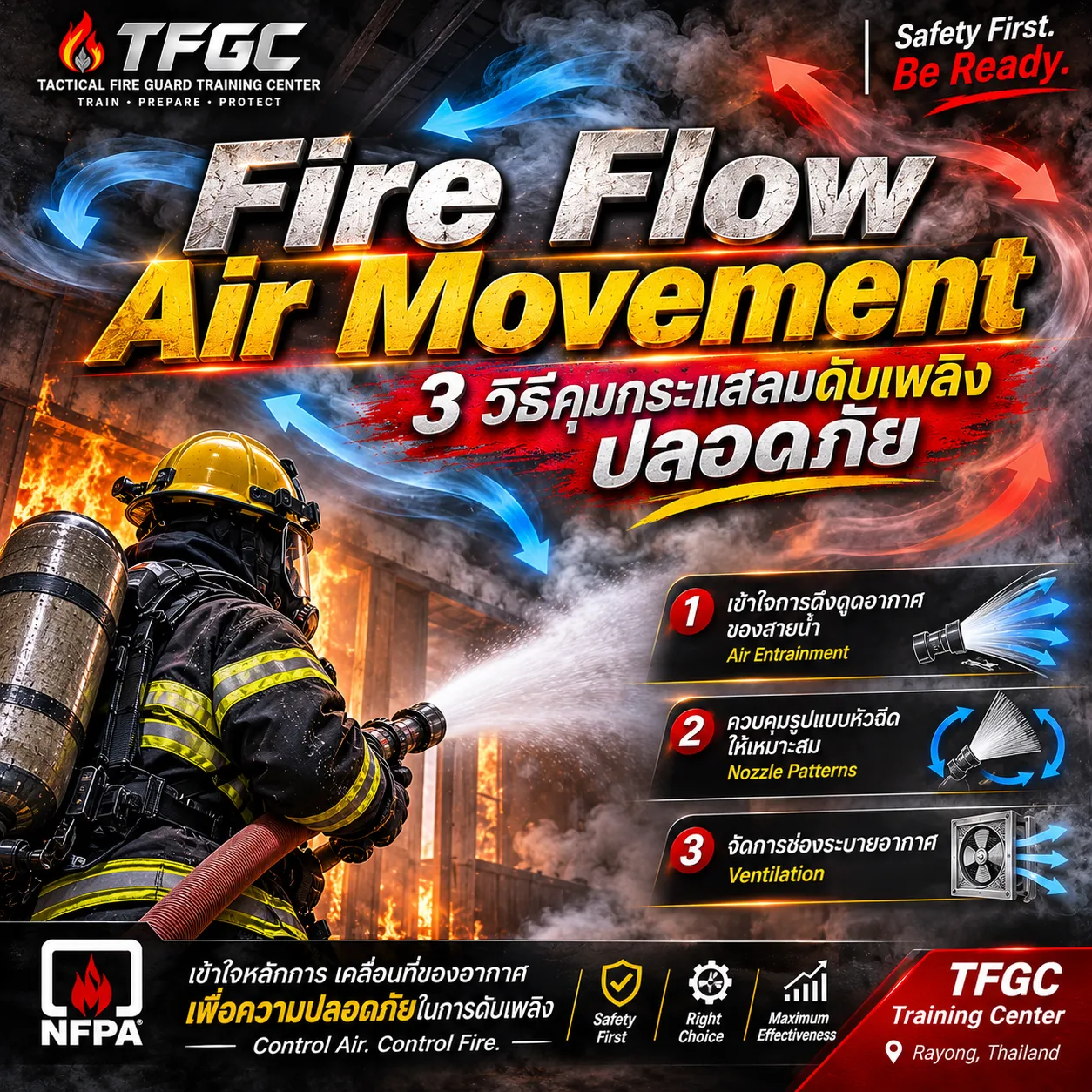
- การดึงดูดอากาศของสายน้ำ (Air Entrainment): หัวฉีดดับเพลิงทุกรูปแบบสร้างการเคลื่อนที่ของอากาศรอบตัวในปริมาณมหาศาล
- ผลกระทบจากการขยับหัวฉีด (Nozzle Patterns): การกวาดหัวฉีดเป็นรูปตัว O หรือ Z มีปริมาตรการเคลื่อนที่ของอากาศสูงเทียบเท่ากับหัวฉีดแบบละอองน้ำฝอย (Fog Stream)
- ความสำคัญของช่องระบายอากาศ: การจัดการช่องระบายอากาศ (Ventilation) สอดคล้องกับการฉีดน้ำช่วยควบคุมทิศทางความร้อนและควันพิษได้อย่างปลอดภัย
ทำความเข้าใจแก่นแท้ของ Fire Flow Air Movement ในการปฏิบัติงาน
เมื่อนักดับเพลิงเปิดหัวฉีดน้ำเข้าสู่ห้องปิดทึบ ละอองน้ำและลำน้ำจะทำหน้าที่ดึงดูดมวลอากาศรอบข้าง (Entrained Air) ให้เคลื่อนที่ตามแรงดันน้ำ หากพิจารณาตามการศึกษาของสถาบันระดับโลกอย่าง IFSTA จะพบว่ากระแสลมที่ถูกขับเคลื่อนด้วยลำน้ำตรง (Straight Stream) สามารถเคลื่อนย้ายปริมาตรอากาศทั้งหมดภายในห้องขนาดมาตรฐานได้ภายในเวลาเพียงไม่กี่วินาที
1. พลศาสตร์การเคลื่อนที่ของอากาศจากรูปแบบหัวฉีด
การใช้หัวฉีดแบบลำตรงหรือลำตรงผสม (Straight/Solid Stream) หากถืออยู่นิ่งๆ จะเคลื่อนย้ายอากาศน้อยมาก แต่ในสถานการณ์จริง นักดับเพลิงต้องขยับหัวฉีดในรูปแบบตัว O หรือตัว Z เพื่อกระจายน้ำไปทั่วพื้นผิวที่ร้อน การขยับดังกล่าวจะสร้างกระแสดูดอากาศและผลักดันอากาศร้อน ควันพิษ และไอน้ำให้ไหลย้อนกลับมาหาทีมผู้ปฏิบัติงาน ซึ่งหากไม่มีช่องระบายอากาศที่ดี อาจส่งผลให้ทีมงานเผชิญกับภาวะความร้อนรุนแรงได้
2. ความแตกต่างระหว่างลำตรงและละอองน้ำฝอย
แม้ว่าหัวฉีดละอองน้ำ (Fog Stream) จะสร้างกระแสลมปั่นป่วนและเคลื่อนย้ายอากาศได้มากกว่า (สูงถึง 10,000 ลูกบาศก์ฟุตต่อนาที) แต่การขยับลำน้ำตรงในลักษณะยุทธวิธีก็สร้างกระแสลมที่มีความรุนแรงใกล้เคียงกัน การทำความเข้าใจ Fire Flow Air Movement จึงช่วยให้หัวหน้าชุดควบคุมการเปิด-ปิดหัวฉีดและการระบายอากาศได้อย่างสอดคล้อง ไม่สร้างกระแสลมสับสนที่อาจโหมเปลวไฟให้ลุกลามเร็วกว่าเดิม
หลักการทางวิทยาศาสตร์และกลศาสตร์ของของไหล (Fluid Mechanics)
การอธิบายปรากฏการณ์นี้ด้วยฟิสิกส์พื้นฐานช่วยให้เข้าใจกลไกหน้างานได้ดียิ่งขึ้น:
- การถ่ายทอดพลังงานจลน์ (Kinetic Energy Transfer): พลังงานจากน้ำที่พุ่งออกจากหัวฉีดด้วยความเร็วสูงจะถ่ายทอดพลังงานจลน์ไปยังโมเลกุลของอากาศรอบข้าง ดึงดูดและผลักดันมวลอากาศให้เคลื่อนที่ตามทิศทางของลำน้ำ ตามหลักการพลศาสตร์ของไหล (Fluid Dynamics)
- ความดันลบและการเกิดกระแสลมหมุนเวียน (Negative Pressure & Circulation): เมื่อลำน้ำพุ่งผ่านพื้นที่แคบ จะเกิดความดันต่ำในบริเวณรอบหัวฉีด ส่งผลให้อากาศภายนอกถูกดูดเข้ามาเติมเต็มอย่างรวดเร็ว ก่อให้เกิดกระแสลมหมุนวน (Chaotic Air Currents) ที่พัดพาความร้อนและไอน้ำไปทั่วห้อง
การปรับประยุกต์ใช้เพื่อความปลอดภัยในโรงงานและอาคารสูง
ในบริบทของโรงงานอุตสาหกรรม คลังสินค้า หรืออาคารสูงในนิคมอุตสาหกรรมมาบตาพุด จังหวัดระยอง การบริหารจัดการ Fire Flow Air Movement มีแนวทางปฏิบัติที่สำคัญดังนี้:
- การประสานงานกับการระบายอากาศ (Ventilation Integration): ก่อนเปิดฉีดน้ำปราบเพลิงในห้องปิด ทีมงานต้องมั่นใจว่ามีช่องระบายอากาศ (Ventilation Opening) อยู่ในทิศทางด้านหน้าหรือเหนือจุดเกิดเหตุ เพื่อให้กระแสลมร้อนถูกผลักดันออกนอกอาคาร ไม่ย้อนกลับมาทำอันตรายผู้ปฏิบัติงาน
- การฝึกอบรมจำลองสถานการณ์ (Simulation Training): สถานประกอบการควรจัดอบรมเชิงปฏิบัติการเพื่อจำลองพฤติกรรมการเคลื่อนที่ของอากาศและควันไฟ ช่วยให้ทีมผจญเพลิงเข้าใจจังหวะการเปิดหัวฉีดที่เหมาะสม ลดความเสี่ยงจากไอน้ำลวกผิว (Steam Burn)
คำถามเช็กความเข้าใจในการปฏิบัติงาน (Safety Check Quiz)
- การขยับหัวฉีดในรูปแบบตัว O หรือ Z ส่งผลอย่างไรต่อกระแสลมภายในห้องเพลิงไหม้?
- เพราะเหตุใดการฉีดน้ำในห้องปิดทึบที่ไม่มีช่องระบายอากาศจึงอาจเป็นอันตรายต่อทีมผจญเพลิง?
- ปรากฏการณ์ Air Entrainment เกิดขึ้นจากสาเหตุใดในกระบวนการฉีดน้ำดับเพลิง?
ข้อผิดพลาดที่พบบ่อยและวิธีแก้ไขในการปฏิบัติงาน
- ข้อผิดพลาดที่ 1: การเปิดหัวฉีดพ่นน้ำลึกเข้าไปในห้องปิดโดยไม่มีช่องระบายอากาศรองรับ
- ผลกระทบ: ก่อให้เกิดกระแสลมปั่นป่วน ดันไอน้ำร้อนและก๊าซพิษย้อนกลับมาหาทีมผู้ปฏิบัติงาน เสี่ยงต่อการบาดเจ็บรุนแรง
- วิธีแก้ไขและฝึกฝน: ประเมินทางระบายอากาศทุกครั้งก่อนเริ่มโจมตีเพลิง และใช้ระยะยิงเพื่อระบายความร้อนเบื้องต้นตามหลักการของ Fire Flow Air Movement
- ข้อผิดพลาดที่ 2: ความเข้าใจคลาดเคลื่อนว่าลำน้ำตรงไม่สร้างกระแสลมปั่นป่วน
- ผลกระทบ: ประเมินสถานการณ์ความรุนแรงของกระแสลมต่ำเกินไป จนทำให้เสียจังหวะในการรุกคืบ
- วิธีแก้ไขและฝึกฝน: ศึกษาผลการวิจัยความปลอดภัยจากสถาบัน TOSH และฝึกฝนการสังเกตทิศทางควันไฟร่วมกับการขยับหัวฉีด
เซกชัน FAQ: คำถามที่พบบ่อย
- Q1: Fire Flow Air Movement คืออะไร?
- A: คือการศึกษาพลศาสตร์การเคลื่อนที่ของอากาศและกระแสลมที่เกิดขึ้นจากการฉีดน้ำดับเพลิง ซึ่งมีผลโดยตรงต่อทิศทางของความร้อน ควัน และความปลอดภัยของนักดับเพลิง
- Q2: การขยับหัวฉีดแบบ O หรือ Z ทำให้เกิดกระแสลมลักษณะใด?
- A: ทำให้เกิดการเคลื่อนที่ของอากาศและดึงมวลอากาศรอบข้างในปริมาณมาก เทียบเท่ากับการใช้หัวฉีดละอองน้ำฝอย (Fog Stream)
- Q3: เราจะป้องกันอันตรายจากกระแสลมร้อนย้อนกลับได้อย่างไร?
- A: ต้องตรวจสอบและเปิดช่องระบายอากาศให้อยู่ในตำแหน่งด้านหน้าลำน้ำเสมอ เพื่อให้ความร้อนถูกพัดออกนอกอาคารอย่างปลอดภัย
ศูนย์ฝึกอบรมความปลอดภัยและดับเพลิงมาตรฐานสากล TFGC
ศูนย์ฝึกอบรมความปลอดภัยและดับเพลิงมาตรฐานสากล TFGC (Tactical Fire Guard Training Center) ตั้งอยู่ในจังหวัดระยอง พร้อมให้บริการฝึกอบรมหลักสูตรความปลอดภัย อาชีวอนามัย และการระงับอัคคีภัยแก่ภาคอุตสาหกรรมในพื้นที่ภาคตะวันออก นิคมอุตสาหกรรมชลบุรี ระยอง และทั่วประเทศ
- จุดเด่นของเรา: เน้นการฝึกปฏิบัติจริงด้วยการจำลองสถานการณ์ทับซ้อน เพื่อให้ผู้เข้าอบรมได้ใช้ศักยภาพเต็มรูปแบบ ปรับเนื้อหาตามหน้างานจริง รองรับโรงงานยาง, น้ำมัน, โรงพยาบาล อาคารสูง รวมถึงกลุ่มนิคมอุตสาหกรรม ครอบคลุมหลักสูตรอบรมดับเพลิงขั้นต้น, อบรมดับเพลิงขั้นสูง, Petro Fire, Chemical Fire, Electric Fire, Fire Solar, Fire EV, Fire Watch และอบรมดับเพลิงเฉพาะทาง
- ช่องทางการติดต่อ:
- Website: https://tfgc-safety.com/
- LINE Official: https://lin.ee/VJZXUjD
- Facebook: TFGC Training Center
- TikTok: @tfgc.training_center
- เบอร์โทรติดต่อ: 099 939 5416
แหล่งอ้างอิงสากล: สถาบันส่งเสริมความปลอดภัย อาชีวอนามัย และสภาพแวดล้อมในการทำงาน (TOSH)
English Content Translation
Fire Flow Air Movement: 3 Ways to Control Firefighting Airflows Safely
During indoor firefighting and fire suppression missions, discharging water into a space does not merely reduce temperature and extinguish flames. High-pressure water streams also generate massive air movement that significantly impacts the internal environment of a fire compartment. If fire attack teams lack an understanding of airflow dynamics, it can lead to backdraft conditions or hot gases surging toward the operators. This article delves into the principles of Fire Flow Air Movement according to international NFPA (National Fire Protection Association) standards to enhance safety and improve decision-making efficiency on the fire ground.
Key Takeaways
- Air Entrainment: Every type of fire nozzle induces massive surrounding air movement.
- Impact of Nozzle Patterns: Sweeping nozzles in O or Z patterns produces air movement volumes comparable to fog streams.
- Importance of Ventilation: Integrating ventilation openings with water stream application safely controls heat and smoke directions.
Understanding the Core of Fire Flow Air Movement in Operations
When firefighters open a nozzle into a confined room, water droplets and streams entrain surrounding air to move along with water pressure. According to studies by organizations like IFSTA, airflow driven by straight streams can displace the entire volume of air in a standard room within seconds.
1. Air Dynamics from Nozzle Patterns
Using straight or solid streams while stationary moves very little air. However, in reality, firefighters must manipulate nozzles in O or Z patterns to distribute water across hot surfaces. This movement creates suction and pushes hot air, toxic smoke, and steam back toward the operating team. Without proper ventilation, operators face severe thermal hazards.
2. Differences Between Straight and Fog Streams
Although fog streams create turbulent airflow and displace more air (up to 10,000 cubic feet per minute), tactical straight stream manipulation generates comparable violent currents. Understanding Fire Flow Air Movement allows incident commanders to coordinate nozzle operations and ventilation harmoniously without accelerating fire spread.
Scientific Principles and Fluid Mechanics
Explaining this phenomenon through fundamental physics aids workplace application:
- Kinetic Energy Transfer: High-speed water exiting a nozzle transfers kinetic energy to surrounding air molecules, entraining and driving air masses along the stream path according to fluid dynamics.
- Negative Pressure and Circulation: Constricted spaces create low pressure around nozzles, rapidly pulling in outside air and generating chaotic air currents that distribute heat and steam throughout the room.
Adapting for Industrial Safety in Thailand
Within industrial plants, warehouses, or high-rise buildings in industrial estates like Map Ta Phut, Rayong Province, managing Fire Flow Air Movement involves critical protocols:
- Ventilation Integration: Before discharging water into enclosed spaces, teams must ensure ventilation openings exist ahead of or above the fire area, routing hot currents out of the structure safely away from operators.
- Simulation Training: Facilities should conduct practical training simulations modeling air and smoke behavior, helping attack teams master nozzle-opening timings and reduce steam burn risks.
Safety Check Quiz
- How does manipulating a nozzle in an O or Z pattern affect airflow inside a fire compartment?
- Why is discharging water into a sealed room without ventilation potentially dangerous?
- What causes air entrainment during fire stream operations?
Common Operational Errors and Corrective Actions
- Error 1: Discharging water deep into enclosed rooms without adequate ventilation openings.
- Impact: Creates turbulent air currents pushing hot steam and toxic gases back toward operators, risking severe injury.
- Corrective Action: Assess ventilation routes before attack and utilize reach for initial cooling based on Fire Flow Air Movement principles.
- Error 2: Misconceiving that straight streams do not create turbulent air currents.
- Impact: Underestimating airflow severity, resulting in compromised tactical advancement.
- Corrective Action: Study safety research from TOSH and practice observing smoke behavior alongside nozzle manipulation.
FAQ: Frequently Asked Questions
- Q1: What is Fire Flow Air Movement?
- A: The study of fluid dynamics concerning airflow generated by firefighting water streams, directly affecting heat direction, smoke, and firefighter safety.
- Q2: What kind of airflow does O or Z nozzle sweeping generate?
- A: Massive air entrainment and movement comparable to fog stream application.
- Q3: How can hot airflow feedback hazards be prevented?
- A: By verifying and maintaining ventilation openings positioned ahead of the water stream path to vent heat safely outdoors.
Tactical Fire Guard Training Center (TFGC)
Tactical Fire Guard Training Center (TFGC), located in Rayong Province, provides professional safety, occupational health, and fire suppression training for industries across the Eastern region, Chonburi, Rayong, and nationwide.
- Our Strengths: Emphasis on practical hands-on training through multi-layered simulation technologies, adhering to international NFPA standards and customized to real workplace conditions—supporting rubber plants, oil facilities, hospitals, high-rise buildings, and industrial estates. Covering Basic Firefighting, Advanced Firefighting, Petro Fire, Chemical Fire, Electric Fire, Solar Fire, EV Fire, Fire Watch, and specialized firefighting courses.
- Contact Channels:
- Website: https://tfgc-safety.com/
- LINE Official: https://lin.ee/VJZXUjD
- Facebook: TFGC Training Center
- TikTok: @tfgc.training_center
- Phone: 099 939 5416
International Reference: Thailand Institute of Occupational Safety and Health (TOSH)