
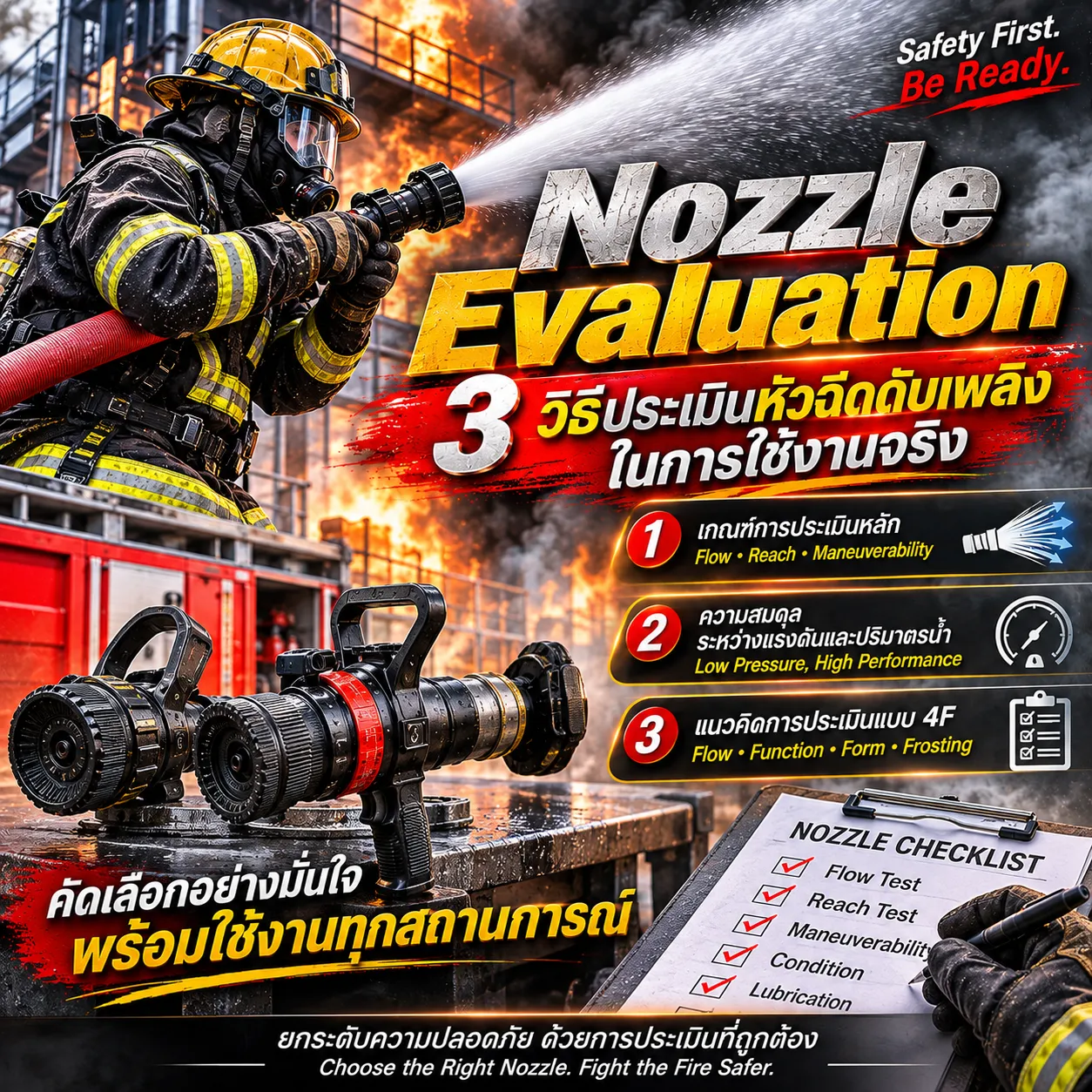
ในการปฏิบัติภารกิจระงับอัคคีภัยและการผจญเพลิง การคัดเลือกและทดสอบอุปกรณ์ให้มีความพร้อมสูงสุดถือเป็นหัวใจสำคัญที่จะช่วยปกป้องชีวิตของทีมนักดับเพลิง หลายหน่วยงานมักประสบปัญหาในการเลือกซื้อและจัดหาอุปกรณ์โดยขาดเกณฑ์การทดสอบที่เป็นระบบ บทความนี้จะพาท่านเจาะลึกกระบวนการ Nozzle Evaluation ตามหลักมาตรฐานสากล NFPA (National Fire Protection Association) เพื่อยกระดับความปลอดภัย เพิ่มประสิทธิภาพการทำงาน และช่วยให้องค์กรสามารถเลือกใช้วิธีประเมินหัวฉีดดับเพลิงในการใช้งานจริงได้อย่างแม่นยำ
Key Takeaways: จุดสำคัญที่ต้องรู้
- เกณฑ์การประเมินหลัก 3 ประการ: การพิจารณาอัตราการไหล (Flow) ระยะส่งน้ำ (Reach) และความคล่องตัวในการใช้งาน (Maneuverability) เป็นหัวใจสำคัญของการประเมิน
- ความสมดุลระหว่างความดันและปริมาตรน้ำ: การเปลี่ยนผ่านไปสู่ระบบแรงดันต่ำ (เช่น 3.4 บาร์ หรือ 50 PSI) ช่วยให้ควบคุมแรงปฏิกิริยาได้ง่ายขึ้นโดยยังคงปริมาณน้ำที่เพียงพอ
- แนวคิดการประเมินแบบ 4F: การพิจารณาตามลำดับความสำคัญตั้งแต่ Flow, Function, Form ไปจนถึง Frosting ช่วยให้การจัดซื้ออุปกรณ์มีความคุ้มค่าและปลอดภัยสูงสุด
ทำความเข้าใจแก่นแท้ของ Nozzle Evaluation ในการปฏิบัติงาน
เมื่อหน่วยดับเพลิงหรือทีมความปลอดภัยของสถานประกอบการต้องดำเนินการจัดหาอุปกรณ์ใหม่ เป้าหมายหลักคือการเพิ่มศักยภาพในการรุกคืบดับเพลิงพร้อมทั้งรักษาสมดุลความปลอดภัยของผู้ปฏิบัติงาน กระบวนการ Nozzle Evaluation จึงต้องอาศัยความเข้าใจเชิงลึกเกี่ยวกับความสัมพันธ์ระหว่างแรงดัน (Pressure) ปริมาณน้ำ (Flow / GPM) และแรงปฏิกิริยาหัวฉีด (Nozzle Reaction) ตามคำแนะนำของสถาบันระดับโลกอย่าง IFSTA
1. ความเข้าใจที่ถูกต้องระหว่างแรงดันและปริมาตรน้ำในการใช้งานจริง
ข้อผิดพลาดที่พบบ่อยในการประเมินอุปกรณ์คือการโฟกัสที่แรงดันมากเกินไปจนลืมไปว่า “แรงดันไม่ได้ช่วยดับไฟ แต่น้ำต่างหากที่ดับไฟ” (Pressure doesn’t put out fire, flow does) การทำ Nozzle Evaluation ที่มีประสิทธิภาพจึงต้องมุ่งเน้นไปที่การค้นหาจุดตัดที่ลงตัวระหว่างการส่งปริมาณน้ำมหาศาลและการรักษาแรงปฏิกิริยาให้อยู่ในระดับที่นักดับเพลิงคนเดียวสามารถถือปฏิบัติและควบคุมได้ด้วยตนเอง
2. หลักการประเมินแบบ 4F Approach สำหรับการประเมินหัวฉีดดับเพลิง ในการใช้งานจริง
ในการดำเนินโครงการทดสอบและประเมินหัวฉีด ผู้เชี่ยวชาญแนะนำให้ใช้แนวทาง 4 ขั้นตอน (4F Approach) เพื่อความเรียบง่ายและครอบคลุมทุกมิติ:
- F ตัวที่ 1 – Flow (อัตราการไหล): กำหนดเป้าหมายปริมาณน้ำที่ต้องการก่อนเป็นอันดับแรก
- F ตัวที่ 2 – Function (ฟังก์ชันการทำงาน): พิจารณารูปแบบการกระจายน้ำ เช่น หัวฉีดแบบลำตรงหรือแบบผสมผสาน
- F ตัวที่ 3 – Form (รูปแบบโครงสร้าง): เลือกดีไซน์ของอุปกรณ์ เช่น ชิ้นเดียวจบหรือแบบถอดประกอบได้ (Break-apart)
- F ตัวที่ 4 – Frosting (องค์ประกอบเสริม): อุปกรณ์เสริมความสะดวก เช่น ด้ามจับพกพา หรือขอบเรืองแสงในที่มืด ซึ่งควรพิจารณาเป็นลำดับสุดท้าย
หลักการทางวิทยาศาสตร์และกลศาสตร์ของของไหล (Fluid Mechanics)
การวิเคราะห์ทางวิทยาศาสตร์ช่วยให้การเลือกใช้อุปกรณ์มีความสมเหตุสมผลเชิงวิศวกรรม:
- พลศาสตร์ของของไหลและความดันสถิต (Fluid Dynamics): การเปรียบเทียบระหว่างระบบจ่ายน้ำปริมาณมากแรงดันต่ำ (High Volume, Low Pressure) กับระบบแรงดันสูงปริมาณน้อย ช่วยให้เห็นภาพชัดเจนว่าหัวฉีดที่ออกแบบอย่างถูกต้องจะแปลงพลังงานศักย์ของน้ำให้กลายเป็นพลังงานจลน์ที่มีประสิทธิภาพสูงสุดโดยไม่สร้างภาระทางกายภาพเกินขีดจำกัดของมนุษย์
- ชีวกลศาสตร์และแรงปฏิกิริยา (Biomechanics & Reaction Force): ตามกฎการเคลื่อนที่ของนิวตัน แรงปฏิกิริยาที่เกิดขึ้นที่ปลายหัวฉีดต้องได้รับการซับพอร์ตผ่านโครงสร้างร่างกายและพื้นดิน Nozzle Evaluation จึงต้องทดสอบว่าผู้ปฏิบัติงานสามารถต้านทานแรงดังกล่าวได้โดยไม่เสียการทรงตัว
การปรับประยุกต์ใช้เพื่อความปลอดภัยในโรงงานอุตสาหกรรมและอาคารสูง
ในพื้นที่อุตสาหกรรมขนาดใหญ่ คลังเก็บสารเคมี หรือนิคมอุตสาหกรรมมาบตาพุด จังหวัดระยอง การประยุกต์ใช้กระบวนการ Nozzle Evaluation มีแนวทางปฏิบัติที่สำคัญดังนี้:
- การทดสอบความคล่องตัวหน้างานจริง (Maneuverability Testing): ทีมความปลอดภัยควรนำหัวฉีดมาทดสอบจำลองการลากสายผ่านมุมตึก พื้นที่แคบ หรือบันไดหนีไฟของอาคารสูง เพื่อให้มั่นใจว่าอุปกรณ์ที่มีอัตราการไหลสูงนั้นไม่หนักหรือเทอะทะจนเจ้าหน้าที่ไม่สามารถถือสู้เพลิงได้ตามลำพัง
- การปรับหลักสูตรฝึกอบรมประจำปี: นำผลการประเมินอุปกรณ์มาบูรณาการร่วมกับการฝึกอบรมดับเพลิงขั้นสูง เพื่อให้พนักงานมีความคุ้นเคยกับแรงปฏิกิริยาและอัตราการไหลของหัวฉีดรุ่นใหม่ๆ ตามมาตรฐานของสถาบัน TOSH
คำถามเช็กความเข้าใจในการปฏิบัติงาน (Safety Check Quiz)
- ปัจจัยหลัก 3 ประการที่เป็นหัวใจสำคัญในการทำ Nozzle Evaluation คืออะไร?
- เพราะเหตุใดหลักการประเมินจึงให้ความสำคัญกับอัตราการไหล (Flow) มากกว่าแรงดัน (Pressure)?
- ในแนวทาง 4F Approach องค์ประกอบใดควรถูกพิจารณาเป็นลำดับแรกสุดในการจัดซื้ออุปกรณ์?
เซกชัน FAQ: คำถามที่พบบ่อย
- Q1: Nozzle Evaluation คืออะไร?
- A: คือกระบวนการทดสอบและประเมินประสิทธิภาพของหัวฉีดดับเพลิง โดยพิจารณาจากอัตราการไหล ระยะส่งน้ำ และความคล่องตัวในการใช้งาน
- Q2: ทำไมจึงต้องเปลี่ยนผ่านไปสู่ระบบหัวฉีดแรงดันต่ำ (50 PSI)?
- A: เพราะช่วยให้สามารถส่งปริมาณน้ำในปริมาณที่สูงได้โดยที่แรงปฏิกิริยาหัวฉีดไม่รุนแรงเกินกว่าที่นักดับเพลิงจะควบคุมได้
- Q3: แนวคิด 4F Approach ประกอบด้วยอะไรบ้าง?
- A: ประกอบด้วย Flow (อัตราการไหล), Function (ฟังก์ชัน), Form (รูปแบบ) และ Frosting (องค์ประกอบเสริม)
ศูนย์ฝึกอบรมความปลอดภัยและดับเพลิงมาตรฐานสากล TFGC
ศูนย์ฝึกอบรมความปลอดภัยและดับเพลิงมาตรฐานสากล TFGC (Tactical Fire Guard Training Center) ตั้งอยู่ในจังหวัดระยอง พร้อมให้บริการฝึกอบรมหลักสูตรความปลอดภัย อาชีวอนามัย และการระงับอัคคีภัยแก่ภาคอุตสาหกรรมในพื้นที่ภาคตะวันออก นิคมอุตสาหกรรมชลบุรี ระยอง และทั่วประเทศ
- จุดเด่นของเรา: เน้นการฝึกปฏิบัติจริงด้วยการจำลองสถานการณ์ทับซ้อน เพื่อให้ผู้เข้าอบรมได้ใช้ศักยภาพเต็มรูปแบบ ปรับเนื้อหาตามหน้างานจริง รองรับโรงงานยาง, น้ำมัน, โรงพยาบาล อาคารสูง รวมถึงกลุ่มนิคมอุตสาหกรรม ครอบคลุมหลักสูตรอบรมดับเพลิงขั้นต้น, อบรมดับเพลิงขั้นสูง, Petro Fire, Chemical Fire, Electric Fire, Fire Solar, Fire EV, Fire Watch และอบรมดับเพลิงเฉพาะทาง
- ช่องทางการติดต่อ:
- Website: https://tfgc-safety.com/
- LINE Official: https://lin.ee/VJZXUjD
- Facebook: TFGC Training Center
- TikTok: @tfgc.training_center
- เบอร์โทรติดต่อ: 099 939 5416
แหล่งอ้างอิงสากล: สถาบันส่งเสริมความปลอดภัย อาชีวอนามัย และสภาพแวดล้อมในการทำงาน (TOSH)
English Content Translation
Nozzle Evaluation: 3 Methods for Firefighting Nozzle Assessment in Actual Operations
In fire suppression and emergency response missions, properly selecting and testing equipment for maximum readiness is vital to safeguarding firefighter lives. Many organizations struggle with procurement due to a lack of systematic evaluation criteria. This article explores the process of Nozzle Evaluation according to international NFPA (National Fire Protection Association) standards to enhance safety, improve operational efficiency, and empower organizations to select firefighting nozzle assessment methods in actual operations accurately.
Key Takeaways
- Three Core Evaluation Criteria: Considering flow rate, stream reach, and maneuverability is fundamental to performance assessment.
- Pressure and Volume Balance: Transitioning to low-pressure systems (such as 3.4 bar or 50 PSI) simplifies reaction control while delivering adequate water volume.
- The 4F Approach: Prioritizing evaluations from Flow, Function, and Form to Frosting ensures cost-effective and safe equipment procurement.
Understanding the Core of Nozzle Evaluation in Operations
When fire brigades or industrial safety teams procure new equipment, the primary objective is to enhance fire attack capabilities while preserving operator safety. Therefore, Nozzle Evaluation requires a deep understanding of the relationship between pressure, water flow (GPM), and nozzle reaction forces, referencing guidance from global organizations like IFSTA.
1. Correct Understanding of Pressure Versus Water Volume in Actual Operations
A common evaluation error is over-focusing on pressure while overlooking the principle that “pressure doesn’t put out fire, flow does.” Effective Nozzle Evaluation must focus on identifying the intersection where massive water delivery is balanced with manageable nozzle reaction forces operable by a single firefighter.
2. The 4F Approach for Firefighting Nozzle Assessment in Actual Operations
To streamline equipment testing and evaluation, experts recommend a 4-step framework (4F Approach):
- First F – Flow: Establish target water volume objectives first.
- Second F – Function: Determine operational patterns such as straight stream or combination nozzles.
- Third F – Form: Select equipment design, such as single-unit or break-apart configurations.
- Fourth F – Frosting: Consider auxiliary comfort features like pistol grips or glow-in-the-dark bumpers, which should be secondary purchasing objectives.
Scientific Principles and Fluid Mechanics
Scientific analysis ensures engineering validity in equipment selection:
- Fluid Dynamics and Static Pressure: Comparing high-volume low-pressure supply systems with low-volume high-pressure booster lines illustrates how correctly engineered nozzles convert potential energy into kinetic energy with maximum efficiency without physical human overload.
- Biomechanics and Reaction Forces: Per Newton’s laws of motion, nozzle reaction forces must be supported through human skeletal structures and the earth. Nozzle Evaluation must verify that operators can resist these forces without losing balance.
Adapting for Industrial Safety and High-Rises
Within large industrial plants, chemical storage terminals, or industrial estates like Map Ta Phut, Rayong Province, applying Nozzle Evaluation principles involves key practices:
- Field Maneuverability Testing: Safety teams should simulate dragging hose lines through building corners, tight spaces, or high-rise stairwells to ensure high-flow equipment remains manageable for single personnel.
- Annual Training Curriculum Integration: Incorporate evaluation findings into advanced firefighting training so personnel become familiar with reaction forces and flow rates of new nozzle models per TOSH standards.
Safety Check Quiz
- What are the three core factors fundamental to Nozzle Evaluation?
- Why does evaluation methodology prioritize flow rate over pressure?
- In the 4F Approach, which component should be prioritized first during procurement?
Common Operational Errors and Corrective Actions
- Error 1: Procuring equipment based on aesthetics or auxiliary features (Frosting) rather than core performance.
- Impact: Acquiring expensive equipment that fails to meet practical pressure and flow control needs.
- Corrective Action: Adhere strictly to Nozzle Evaluation protocols, prioritizing equipment via the 4F framework.
- Error 2: Neglecting single-firefighter operational testing.
- Impact: Equipment performs well in theoretical tests but fails when staffing is limited during critical incidents.
- Corrective Action: Conduct field simulation tests to verify single-person nozzle control safety.
FAQ: Frequently Asked Questions
- Q1: What is Nozzle Evaluation?
- A: The process of testing and assessing firefighting nozzle performance based on flow rate, reach, and maneuverability.
- Q2: Why transition to low-pressure nozzle systems (50 PSI)?
- A: Because it permits high-volume water delivery while keeping nozzle reaction forces manageable for firefighters.
- Q3: What does the 4F Approach comprise?
- A: Flow, Function, Form, and Frosting.
Tactical Fire Guard Training Center (TFGC)
Tactical Fire Guard Training Center (TFGC), located in Rayong Province, provides professional safety, occupational health, and fire suppression training for industries across the Eastern region, Chonburi, Rayong, and nationwide.
- Our Strengths: Emphasis on practical hands-on training through multi-layered simulation technologies, adhering to international NFPA standards and customized to real workplace conditions—supporting rubber plants, oil facilities, hospitals, high-rise buildings, and industrial estates. Covering Basic Firefighting, Advanced Firefighting, Petro Fire, Chemical Fire, Electric Fire, Solar Fire, EV Fire, Fire Watch, and specialized firefighting courses.
- Contact Channels:
- Website: https://tfgc-safety.com/
- LINE Official: https://lin.ee/VJZXUjD
- Facebook: TFGC Training Center
- TikTok: @tfgc.training_center
- Phone: 099 939 5416
International Reference: Thailand Institute of Occupational Safety and Health (TOSH)