
ในการปฏิบัติภารกิจระงับอัคคีภัยและความปลอดภัยในโรงงาน การบูรณาการอุปกรณ์และระบบส่งน้ำทั้งหมดให้ทำงานร่วมกันอย่างสมบูรณ์ถือเป็นหัวใจสำคัญที่จะกำหนดความเป็นความตายของผู้ปฏิบัติงาน ระบบการโจมตีเพลิงที่ไม่ได้รับการตรวจสอบหรือประกอบอย่างถูกต้องอาจล้มเหลวในนาทีวิกฤต บทความนี้จะพาท่านเจาะลึกกระบวนการ Fire Attack System ตามหลักมาตรฐานสากล NFPA (National Fire Protection Association) เพื่อยกระดับความปลอดภัย เพิ่มประสิทธิภาพการทำงาน และช่วยให้ผู้ปฏิบัติงานสามารถนำไปประยุกต์ใช้ในการประกอบและบริหารจัดการระบบดับเพลิงในการใช้งานจริงได้อย่างแม่นยำ
Key Takeaways: จุดสำคัญที่ต้องรู้
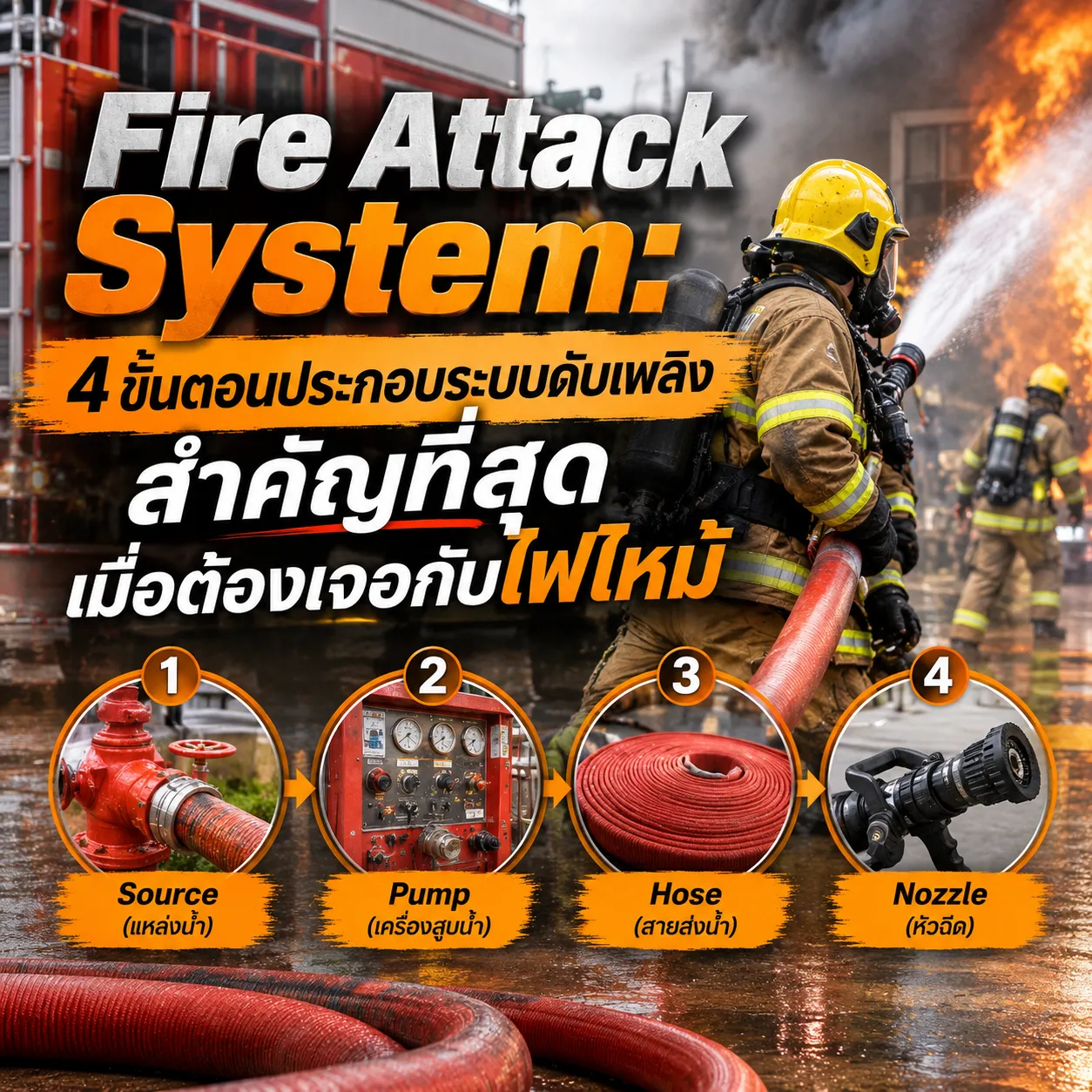
- องค์ประกอบหลัก 4 ส่วน: ระบบโจมตีเพลิงประกอบด้วย แหล่งน้ำ (Source) เครื่องสูบน้ำ (Pump) สายส่งน้ำ (Hose) และหัวฉีด (Nozzle) ซึ่งต้องเชื่อมโยงกันอย่างสมบูรณ์
- การบริหารจัดการแหล่งน้ำ: การเปิดวาล์วหัวจ่ายน้ำดับเพลิง (Hydrant) และวาล์วทางดูดให้สุดช่วยป้องกันปัญหาการไหลของน้ำติดขัด
- การเลือกขนาดสายส่งน้ำ: การเลือกใช้สายขนาด 1.75 นิ้ว, 2 นิ้ว หรือ 2.5 นิ้ว ต้องสอดคล้องกับความรุนแรงและขนาดของพื้นที่เพลิงไหม้
ทำความเข้าใจแก่นแท้ของ Fire Attack System ในการปฏิบัติงาน
เมื่อทีมนักดับเพลิงหรือทีมความปลอดภัยของสถานประกอบการต้องเตรียมความพร้อมด้านอุปกรณ์ การทำความเข้าใจเกี่ยวกับ Fire Attack System จะช่วยให้เห็นภาพรวมของระบบส่งน้ำตั้งแต่ต้นทางจนถึงปลายทาง ตามคำแนะนำของสถาบันระดับโลกอย่าง IFSTA ระบบที่ดีต้องประกอบด้วย 4 องค์ประกอบหลักที่ได้รับการตรวจสอบและจับคู่กันอย่างเหมาะสม
1. การจัดการแหล่งน้ำและเครื่องสูบน้ำ (Water Source & Pump)
จุดเริ่มต้นของ Fire Attack System เริ่มต้นที่หัวจ่ายน้ำดับเพลิง (Hydrant) เมื่อทำการเปิดใช้งาน พนักงานต้องมั่นใจว่าได้เปิดวาล์วหัวจ่ายจนสุดทุกรอบเกลียว เนื่องจากผู้ผลิตแต่ละรายมีจำนวนรอบการเปิดที่ไม่เท่ากัน การเปิดไม่สุดจะทำให้ปริมาณน้ำไหลเข้าสู่ท่อส่งและเครื่องสูบน้ำลดลง นอกจากนี้ วาล์วทางดูดของปั๊มน้ำ (Intake Valve) จะต้องเปิดให้สุดเช่นกัน เพื่อป้องกันการเกิดแรงปั่นป่วน (Turbulence) ที่จะทำให้ประสิทธิภาพการจ่ายน้ำลดลง
2. การเลือกขนาดสายส่งน้ำและการจัดการหัวฉีด (Hose Lines & Nozzle Mechanics)
ระบบดับเพลิงมีการเลือกใช้สายส่งน้ำหลัก 3 ขนาด ได้แก่ สาย 1.75 นิ้ว (เหมาะสำหรับงานรุกคืบภายในอาคารที่ต้องการความคล่องตัวสูง), สาย 2 นิ้ว (ขนาดกลางที่ให้ปริมาตรน้ำ 240-260 GPM เหมาะสำหรับการโจมตีที่มีประสิทธิภาพ), และสาย 2.5 นิ้ว (ขนาดใหญ่สำหรับเพลิงไหม้รุนแรง) เมื่อน้ำเดินทางมาถึงปลายหัวฉีด พลขับและผู้ถือหัวฉีดต้องทำการไล่อากาศออกจากระบบ (Bleed off) ให้หมดจด และต้องตรวจสอบให้แน่ใจว่าคันโยกวาล์ว (Bale) เปิดจนสุด 100% เพื่อไม่ให้มีสิ่งกีดขวางการไหลของน้ำ
วิธีการแก้ปัญหาเฉพาะเหตุการณ์: รับมืออย่างไรเมื่อ “วาล์วหัวจ่ายน้ำชำรุดเปิดไม่สุด หรือสายส่งน้ำเกิดพับหักงอระหว่างทาง”
ในสถานการณ์หน้างานฉุกเฉินจริง นักเพลิงอาจพบอุปสรรคที่ไม่เป็นไปตามทฤษฎี เช่น หัวจ่ายน้ำสนิมเกาะเปิดได้ไม่เต็มรอบ หรือเกิดแรงดันตกจากสายส่งน้ำพับหักงอ ประสบการณ์ตรงจากทีมนักดับเพลิงมืออาชีพมีแนวทางแก้ไขดังนี้ครับ:
- กรณีหัวจ่ายน้ำ (Hydrant) ชำรุดเปิดได้ไม่เต็มรอบหรือติดขัด: หากพบว่าวาล์วเปิดได้จำกัดและปริมาณน้ำไม่เพียงพอ ให้รีบประสานงานพลขับรถปั๊มน้ำเพื่อดึงน้ำจากแหล่งสำรองอื่น (เช่น รถบรรทุกน้ำ Mobile Water Supply) เข้ามาเสริมแรงดันทันที พร้อมทั้งแจ้งทีมช่างซ่อมบำรุงเข้าตรวจสอบแก้ไข
- กรณีสายส่งน้ำเกิดพับหักงอ (Kink) บริเวณมุมตึกระหว่างทาง: หากสังเกตว่าแรงดันน้ำที่หัวฉีดตกลงกะทันหันและสายยางนิ่ม ให้ส่งกำลังพลเดินตรวจแนวสายส่งน้ำทันทีเพื่อสะบัดหรือจัดระเบียบมุมโค้งของสายให้คลายออก หรือใช้เทคนิคการทำลูป (Loop) ผ่อนแรงเพื่อเปิดทางให้อากาศและน้ำไหลผ่านสะดวก
หลักการทางวิทยาศาสตร์และกลศาสตร์ของของไหล (Fluid Mechanics)
การวิเคราะห์ทางวิทยาศาสตร์ช่วยให้เข้าใจกลไกการทำงานของระบบส่งน้ำ:
- พลศาสตร์ของของไหลและความต้านทานการไหล (Fluid Dynamics & Friction Loss): การไหลของน้ำผ่านท่อและสายส่งน้ำเกิดความต้านทานเสียดสี (Friction Loss) การเปิดวาล์วหัวจ่ายและทางดูดให้สุดช่วยลดการสูญเสียพลังงานจลน์ รักษาอัตราการไหล (GPM) ให้เป็นไปตามหลักการของเบอร์นูลลี
- กลศาสตร์ของวาล์วลูกบอล (Ball Valve Mechanics): การเปิดคันโยกหัวฉีดไม่สุดจะทำให้ลิ้นวาล์วทรงกลมภายในขวางกั้นทางเดินน้ำ ก่อให้เกิดการหดตัวของพื้นที่หน้าตัด (Venturi Effect) ส่งผลให้ละอองน้ำหรือลำน้ำสูญเสียแรงปะทะและไม่สามารถทำลายความร้อนได้เต็มประสิทธิภาพ
การปรับประยุกต์ใช้เพื่อความปลอดภัยในโรงงานอุตสาหกรรมและอาคารสูง
ในพื้นที่อุตสาหกรรมขนาดใหญ่ คลังเก็บสารเคมี หรือนิคมอุตสาหกรรมมาบตาพุด จังหวัดระยอง การประยุกต์ใช้กระบวนการ Fire Attack System มีแนวทางปฏิบัติที่สำคัญดังนี้:
- การตรวจสอบระบบหัวจ่ายน้ำประจำปี (Annual Hydrant Flow Testing): ทีมความปลอดภัยของโรงงานต้องจัดทำแผนตรวจสอบแรงดันและอัตราการไหลของหัวจ่ายน้ำดับเพลิงรอบโรงงานอย่างสม่ำเสมอ เพื่อให้มั่นใจว่าระบบจ่ายน้ำหลักมีความพร้อมใช้งานตลอด 24 ชั่วโมง
- การบูรณาการเข้ากับการฝึกอบรมพนักงาน: นำองค์ประกอบทั้ง 4 ส่วนของระบบมาจำลองฝึกซ้อมในหลักสูตรดับเพลิงขั้นสูง เพื่อให้ทีมฉุกเฉินมีความเข้าใจในการประสานงานระหว่างแหล่งน้ำ ปั๊ม สาย และหัวฉีดตามมาตรฐานของสถาบัน TOSH
คำถามเช็กความเข้าใจในการปฏิบัติงาน (Safety Check Quiz)
- องค์ประกอบหลัก 4 ส่วนที่จำเป็นต้องมีในระบบ Fire Attack System ได้แก่ส่วนใดบ้าง?
- เพราะเหตุใดเราจึงต้องเปิดวาล์วหัวจ่ายน้ำดับเพลิง (Hydrant) ให้สุดทุกรอบเกลียว?
- หากคันโยกวาล์ว (Bale) ที่หัวฉีดเปิดไม่สุด จะส่งผลกระทบอย่างไรต่อประสิทธิภาพการดับเพลิง?
เซกชัน FAQ: คำถามที่พบบ่อย
- Q1: Fire Attack System คืออะไร?
- A: คือระบบโจมตีเพลิงที่ประกอบด้วย 4 องค์ประกอบสำคัญ ได้แก่ แหล่งน้ำ เครื่องสูบน้ำ สายส่งน้ำ และหัวฉีด ซึ่งต้องทำงานประสานกันอย่างลงตัว
- Q2: ทำไมการเปิดวาล์วหัวจ่ายน้ำไม่สุดจึงเป็นอันตรายต่อระบบ?
- A: เพราะจะทำให้ปริมาณน้ำไหลเข้าสู่เครื่องสูบน้ำไม่เพียงพอ เกิดแรงปั่นป่วน และส่งผลให้แรงดันและอัตราการไหลที่ปลายหัวฉีดตกต่ำกว่าเกณฑ์
- Q3: สายส่งน้ำขนาดใดที่นิยมใช้ในการรุกคืบดับเพลิงภายในอาคาร?
- A: สายส่งน้ำขนาด 1.75 นิ้ว เนื่องจากมีความคล่องตัวสูง น้ำหนักเบา และควบคุมง่ายสำหรับทีมนักดับเพลิง
ศูนย์ฝึกอบรมความปลอดภัยและดับเพลิงมาตรฐานสากล TFGC
ศูนย์ฝึกอบรมความปลอดภัยและดับเพลิงมาตรฐานสากล TFGC (Tactical Fire Guard Training Center) ตั้งอยู่ในจังหวัดระยอง พร้อมให้บริการฝึกอบรมหลักสูตรความปลอดภัย อาชีวอนามัย และการระงับอัคคีภัยแก่ภาคอุตสาหกรรมในพื้นที่ภาคตะวันออก นิคมอุตสาหกรรมชลบุรี ระยอง และทั่วประเทศ
- จุดเด่นของเรา: เน้นการฝึกปฏิบัติจริงด้วยการจำลองสถานการณ์ทับซ้อน เพื่อให้ผู้เข้าอบรมได้ใช้ศักยภาพเต็มรูปแบบ ปรับเนื้อหาตามหน้างานจริง รองรับโรงงานยาง, น้ำมัน, โรงพยาบาล อาคารสูง รวมถึงกลุ่มนิคมอุตสาหกรรม ครอบคลุมหลักสูตรอบรมดับเพลิงขั้นต้น, อบรมดับเพลิงขั้นสูง, Petro Fire, Chemical Fire, Electric Fire, Fire Solar, Fire EV, Fire Watch และอบรมดับเพลิงเฉพาะทาง
- ช่องทางการติดต่อ:
- Website: https://tfgc-safety.com/
- LINE Official: https://lin.ee/VJZXUjD
- Facebook: TFGC Training Center
- TikTok: @tfgc.training_center
- เบอร์โทรติดต่อ: 099 939 5416
แหล่งอ้างอิงสากล: สถาบันส่งเสริมความปลอดภัย อาชีวอนามัย และสภาพแวดล้อมในการทำงาน (TOSH)
English Content Translation
Fire Attack System: 4 Essential Steps to Assemble a Fire Attack System When Facing Fires
In industrial safety and fire suppression operations, integrating all equipment and water delivery systems to function seamlessly is vital to determining firefighter survival. Fire attack systems that lack inspection or proper assembly can fail during critical moments. This article explores the process of Fire Attack System according to international NFPA (National Fire Protection Association) standards to enhance safety, improve operational efficiency, and empower personnel to assemble and manage fire attack systems accurately in actual operations.
Key Takeaways
- Four Core Components: A fire attack system comprises a water source, pump, hose, and nozzle, which must be properly matched and integrated.
- Water Source Management: Opening fire hydrants and intake valves completely prevents water supply disruption and turbulence.
- Hose Size Selection: Utilizing 1.75-inch, 2-inch, or 2.5-inch hose lines must align with fire severity and compartment scale.
Understanding the Core of Fire Attack System in Operations
When industrial facilities or firefighting teams prepare equipment readiness, understanding Fire Attack System provides a comprehensive view of water delivery systems from source to nozzle. According to guidance from global organizations like IFSTA, an effective system requires four core components inspected and properly matched.
1. Water Source and Pump Management
The foundation of a Fire Attack System begins at the fire hydrant. When opening hydrants, personnel must ensure valves are opened fully through all stem turns since manufacturers vary in turn counts. Partial openings restrict water volume entering supply lines and pumps. Furthermore, pump intake valves must open fully to eliminate turbulence and maintain full pump flow.
2. Hose Line Selection and Nozzle Mechanics
Fire services utilize three primary hose sizes: 1.75-inch (ideal for interior maneuverability), 2-inch (intermediate size delivering 240-260 GPM with good mobility), and 2.5-inch (heavy-duty lines for massive fires). Upon water arrival at nozzles, nozzle operators must bleed air completely and verify that bail handles are opened 100% to prevent flow obstruction.
Handling Unexpected Conditions: Managing Defective Hydrants or Hose Kinks in the Field
In emergency field situations, firefighters frequently encounter conditions deviating from manuals, such as rusted hydrants failing to open fully or pressure drops from hose kinks:
- Scenario: Rusted Hydrants Failing to Open Fully: If partial valve openings restrict water supply, immediately coordinate with pump operators to supply water from secondary mobile water supply sources while dispatching maintenance crews.
- Scenario: Hose Kinks Around Building Corners: If nozzle pressure drops suddenly and lines feel limp, dispatch support personnel immediately to inspect lines, clear kinks, or utilize looping techniques to restore smooth water flow.
Scientific Principles and Fluid Mechanics
Scientific analysis clarifies water delivery system mechanics:
- Fluid Dynamics and Friction Loss: Water flowing through pipes and hoses encounters friction loss. Opening hydrant and intake valves fully minimizes kinetic energy loss, maintaining GPM flow rates per Bernoulli’s principle.
- Ball Valve Mechanics: Partially opening nozzle bails obstructs internal spherical valve pathways, causing venturi constriction that diminishes stream impact and cooling capacity.
Adapting for Industrial Safety and High-Rises
Within large industrial plants, chemical storage terminals, or industrial estates like Map Ta Phut, Rayong Province, applying Fire Attack System principles involves key protocols:
- Annual Hydrant Flow Testing: Safety teams must establish inspection schedules verifying pressure and flow rates of facility hydrants to ensure 24/7 water supply readiness.
- Employee Training Integration: Simulate all four system components in advanced firefighting drills so emergency teams master coordination between sources, pumps, hoses, and nozzles per TOSH standards.
Safety Check Quiz
- What four core components are necessary to form a Fire Attack System?
- Why must fire hydrants be opened completely through all stem turns?
- What negative impact does a partially opened nozzle bail handle have on fire suppression performance?
Common Operational Errors and Corrective Actions
- Error 1: Failing to bleed air from hose lines prior to fire attack.
- Impact: Trapped air pockets cause stream sputtering and unstable pressure at the nozzle tip.
- Corrective Action: Mandate complete air bleeding protocols during line charging per Fire Attack System guidelines.
- Error 2: Neglecting hydrant maintenance and flow verification.
- Impact: Restricted water supply during actual emergencies due to internal valve corrosion.
- Corrective Action: Establish routine hydrant flushing and maintenance schedules per NFPA standards.
FAQ: Frequently Asked Questions
- Q1: What is a Fire Attack System?
- A: A coordinated firefighting system comprising a water source, pump, hose, and nozzle working together to suppress fires effectively.
- Q2: Why is partial hydrant opening dangerous?
- A: It restricts water volume entering pumps, causing turbulence and reducing nozzle pressure and flow rates.
- Q3: Which hose size is standard for interior fire attacks?
- A: 1.75-inch hose lines, offering high mobility and manageable weight for interior teams.
Tactical Fire Guard Training Center (TFGC)
Tactical Fire Guard Training Center (TFGC), located in Rayong Province, provides professional safety, occupational health, and fire suppression training for industries across the Eastern region, Chonburi, Rayong, and nationwide.
- Our Strengths: Emphasis on practical hands-on training through multi-layered simulation technologies, adhering to international NFPA standards and customized to real workplace conditions—supporting rubber plants, oil facilities, hospitals, high-rise buildings, and industrial estates. Covering Basic Firefighting, Advanced Firefighting, Petro Fire, Chemical Fire, Electric Fire, Solar Fire, EV Fire, Fire Watch, and specialized firefighting courses.
- Contact Channels:
- Website: https://tfgc-safety.com/
- LINE Official: https://lin.ee/VJZXUjD
- Facebook: TFGC Training Center
- TikTok: @tfgc.training_center
- Phone: 099 939 5416
International Reference: Thailand Institute of Occupational Safety and Health (TOSH)Line Gauge and PiezometerMeasure Nozzle PressureLine Gauge and Piezometer