
ในภารกิจการระงับอัคคีภัยและการผจญเพลิงภายในอาคารสูง การขนย้ายและลากสายส่งน้ำขึ้นสู่ชั้นเหนือพื้นดินถือเป็นภารกิจที่ท้าทายและใช้พละกำลังมากที่สุด การวางแผนและการปฏิบัติงานที่ผิดพลาดอาจทำให้สายส่งน้ำหักงอ เกิดการติดขัด หรือส่งน้ำไม่ถึงจุดเกิดเหตุในนาทีวิกฤต บทความนี้จะพาท่านเจาะลึกกระบวนการ Stretching Vertical ตามหลักมาตรฐานสากล NFPA (National Fire Protection Association) เพื่อยกระดับความปลอดภัย เพิ่มประสิทธิภาพการทำงาน และช่วยให้ผู้ปฏิบัติงานสามารถนำไปประยุกต์ใช้ในการลากสายยางขึ้นอาคารสูงเมื่อต้องเจอกับเพลิงไหม้อย่างมีประสิทธิภาพสูงสุด
Key Takeaways: จุดสำคัญที่ต้องรู้
- การคำนวณความยาวสาย: การประเมินระยะทางจากรถดับเพลิงถึงชั้นเป้าหมายอย่างแม่นยำ (เช่น การใช้สาย 300 ฟุต) เป็นจุดเริ่มต้นของความสำเร็จ
- การจัดวางสายในบันไดหนีไฟ: การพาดสายชิดด้านในของบันไดช่วยป้องกันการเกิดปัญหาสายพับ (Kink) และไม่กีดขวางทางหนีไฟ
- การบริหารจัดการจุดพักและเส้นทางอพยพ: การสำรวจเส้นทางและการวางจุดพักสายก่อนชั้นเกิดเพลิงไหม้ช่วยให้การฉีดน้ำมีความคล่องตัวสูง
ทำความเข้าใจแก่นแท้ของ Stretching Vertical ในการปฏิบัติงาน
เมื่อเผชิญเหตุเพลิงไหม้ในอาคารสูงหรือคอนโดมิเนียม การทำ Stretching Vertical ต้องอาศัยการประสานงานที่ยอดเยี่ยมระหว่างพลขับ ทีมหัวฉีด และทีมสนับสนุน ตามคำแนะนำของสถาบันระดับโลกอย่าง IFSTA การบริหารจัดการสายส่งน้ำแนวตั้งมีขั้นตอนปฏิบัติที่ชัดเจนดังนี้ครับ:
1. การประเมินระยะทางและการเตรียมสายบนรถ
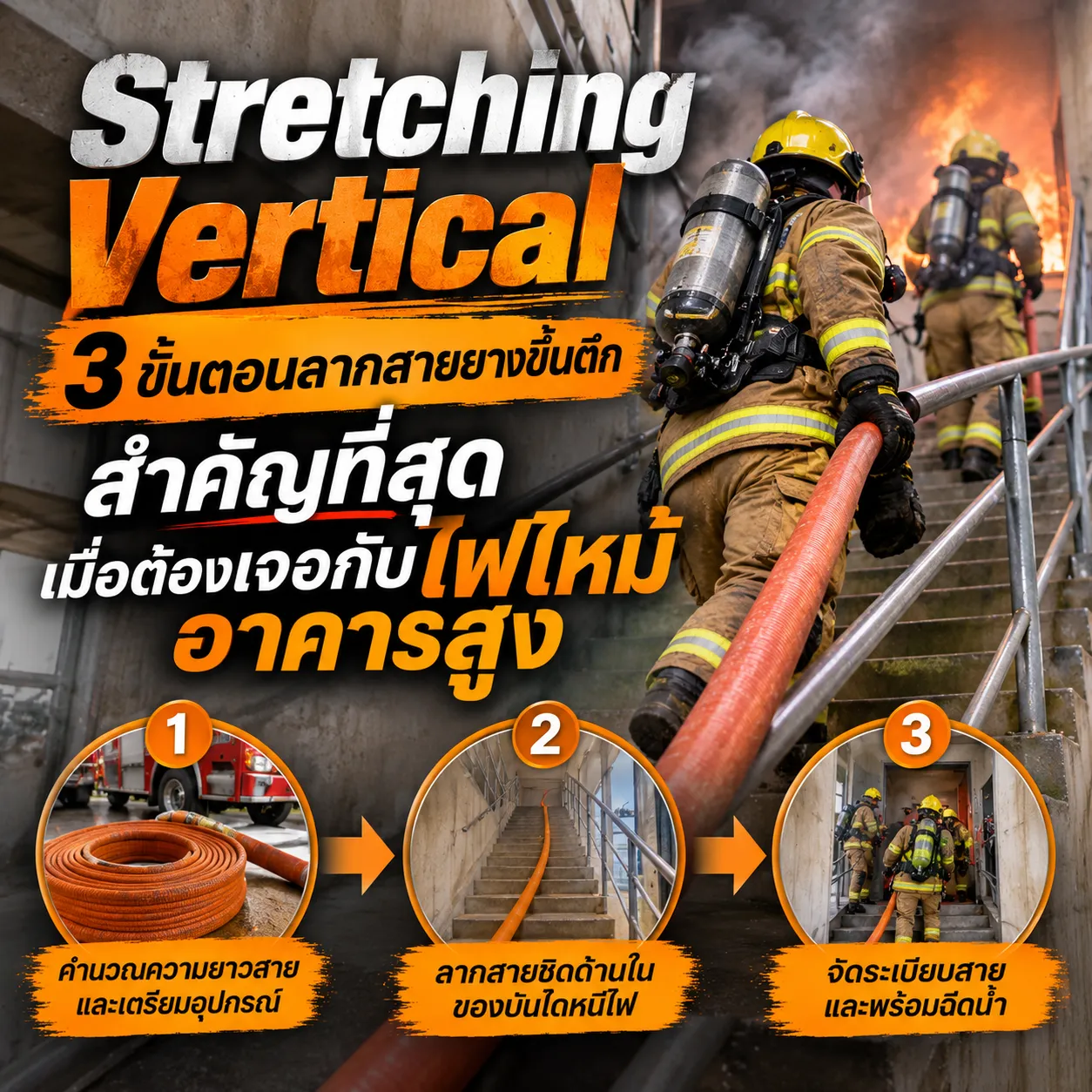
ก่อนดึงสายออกจากรถดับเพลิง ทีมงานต้องคำนวณระยะทางรวม (Estimation of Stretch) ให้เพียงพอ เช่น การกำหนดระยะ 300 ฟุตเพื่อให้สายส่งน้ำเดินทางจากรถขึ้นไปถึงเป้าหมายได้อย่างปลอดภัย ผู้ถือหัวฉีดจะแบกสายประมาณ 200 ฟุตไว้บนไหล่ โดยจัดตำแหน่งหัวฉีดให้อยู่บริเวณเอวเพื่อความคล่องตัว ในขณะที่ทีมสนับสนุน (Supply-side firefighter) จะทำหน้าที่ดึงสายออกจากช่องเก็บและพลิกจัดระเบียบสายเพื่อป้องกันการบิดงอ
2. การลากสายขึ้นบันไดและการจัดวางชิดด้านใน (Stairwell Layout)
ระหว่างการเคลื่อนพลขึ้นอาคาร ทีมสนับสนุนจะทำหน้าที่นำทางและควบคุมความเร็วในการลากสาย เพื่อไม่ให้ทีมหัวฉีดเคลื่อนที่เร็วเกินไปจนสายตึงเกินไป สิ่งสำคัญคือการพาดสายส่งน้ำไว้ “ชิดด้านในของราวบันได” การทำเช่นนี้จะช่วยให้สายได้รับความยาวสูงสุดจากรถถึงชั้นเป้าหมาย และป้องกันไม่ให้สายขยายตัวดันไปชนผนังด้านนอกจนเกิดรอยพับหักงอ (Kink) รวมถึงไม่กีดขวางเส้นทางเข้าออกของผู้อพยพและเจ้าหน้าที่
การแก้ปัญหาเฉพาะเหตุการณ์: วิธีรับมือเมื่อ “บันไดหนีไฟแคบเกินไป หรือสายส่งน้ำเกิดติดขัดระหว่างทาง”
ในสถานการณ์หน้างานจริง นักผจญเพลิงอาจพบอุปสรรคที่ไม่เป็นไปตามตำรา เช่น บานประตูหนีไฟปิดล็อกอัตโนมัติ พื้นที่บันไดแคบจนสายพับ หรือเกิดแรงตึงมหาศาลทำให้ลากไม่ขึ้น ประสบการณ์ตรงจากทีมนักดับเพลิงมืออาชีพมีแนวทางแก้ไขดังนี้ครับ:
- กรณีประตูหนีไฟปิดล็อกกั้นสายส่งน้ำ: ให้ใช้ลิ่มหรือสายยางเส้นเล็กขัดกลอนประตูไว้ชั่วคราว หรือมอบหมายให้กำลังพลหนึ่งนายทำหน้าที่ควบคุมและแง้มประตูตลอดเส้นทาง เพื่อป้องกันไม่ให้ประตูหนีไฟหนีบสายจนน้ำไม่สามารถไหลผ่านได้
- กรณีเกิดแรงตึงมหาศาลและสายติดขัดตามมุมฉากของบันได: ห้ามใช้แรงดึงกระชากโดยเด็ดขาด เพราะจะทำให้สายเสียหายหรือเกิดปมขัด ให้ส่งกำลังพลเดินย้อนกลับไปตรวจสอบตามจุดหักมุมเพื่อช่วยผ่อนแรงและจัดระเบียบสายในลักษณะการทำลูป (Loop) ผ่อนแรงก่อนดึงต่อ
หลักการทางวิทยาศาสตร์และกลศาสตร์ของของไหล (Fluid Mechanics)
การวิเคราะห์ทางวิทยาศาสตร์ช่วยให้เข้าใจกลไกการส่งน้ำในแนวตั้ง:
- แรงโน้มถ่วงและหัวกดของน้ำ (Gravity & Head Pressure): การส่งน้ำขึ้นสู่อาคารสูงในแนวดิ่ง (Vertical Stretch) ต้องเผชิญกับแรงโน้มถ่วงของโลก ซึ่งสร้างแรงต้านและแรงกด (Hydrostatic Head Pressure) พลขับรถปั๊มน้ำจะต้องคำนวณแรงดันชดเชยความสูง (Elevation Pressure Loss) เพิ่มเติมทุกๆ ชั้น เพื่อให้ปลายหัวฉีดได้รับแรงดันตามเกณฑ์มาตรฐาน (เช่น 50 PSI)
- พลศาสตร์การขยายตัวของสาย (Hose Expansion Dynamics): เมื่อสายส่งน้ำถูกอัดด้วยแรงดันน้ำ สายจะเกิดการขยายตัวทั้งในแนวเส้นรอบวงและแนวความยาว หากสายถูกพาดติดกับผนังด้านนอกอย่างแน่นหนาโดยไม่มีพื้นที่ให้ขยายตัว จะทำให้เกิดแรงบีบอัดจนน้ำไหลผ่านไม่สะดวก
การปรับประยุกต์ใช้เพื่อความปลอดภัยในโรงงานอุตสาหกรรมและอาคารสูง
ในพื้นที่อาคารสูง คลังสินค้า หรือนิคมอุตสาหกรรมมาบตาพุด จังหวัดระยอง การประยุกต์ใช้กระบวนการ Stretching Vertical มีแนวทางปฏิบัติที่สำคัญดังนี้:
- การซ้อมแผนเผชิญเหตุอาคารสำนักงานสูง (High-Rise Building Drills): อาคารสูงในเขตเมืองหรือนิคมอุตสาหกรรมควรจัดให้มีการฝึกซ้อมลากสายส่งน้ำขึ้นบันไดหนีไฟจริงอย่างน้อยปีละครั้ง เพื่อให้ทีมฉุกเฉินและพนักงานมีความคุ้นเคยกับระยะทางและน้ำหนักของอุปกรณ์
- การตรวจสอบระบบท่อยืน (Standpipe System Integration): ในกรณีที่อาคารมีระบบท่อส่งน้ำดับเพลิงแห้งหรือเปียก (Standpipe) ทีมผจญเพลิงต้องฝึกฝนการต่อพ่วงสายจากชั้นอาคารเพื่อลดภาระการลากสายยาวในแนวดิ่ง ควบคู่ไปกับการปฏิบัติตามมาตรฐานของสถาบัน TOSH
คำถามเช็กความเข้าใจในการปฏิบัติงาน (Safety Check Quiz)
- เพราะเหตุใดจึงต้องพาดสายส่งน้ำไว้ชิดด้านในของบันไดหนีไฟระหว่างการทำ Stretching Vertical?
- พลขับรถปั๊มน้ำต้องคำนวณปัจจัยใดเพิ่มขึ้นเป็นพิเศษเมื่อทำการส่งน้ำขึ้นสู่อาคารสูงในแนวดิ่ง?
- หากประตูหนีไฟปิดหนีบสายส่งน้ำจนเกิดแรงตึงขัดขวาง นักดับเพลิงควรแก้ไขอย่างไรเป็นอันดับแรก?
เซกชัน FAQ: คำถามที่พบบ่อย
- Q1: Stretching Vertical คืออะไร?
- A: คือยุทธวิธีและขั้นตอนการวางแผนลากสายส่งน้ำขึ้นสู่ชั้นเหนือพื้นดินในอาคารสูง เพื่อเตรียมพร้อมสำหรับการโจมตีเพลิงไหม้
- Q2: ทำไมจึงต้องให้ทีมสนับสนุน (Supply-side) เป็นผู้เดินนำและควบคุมความเร็วในการลากสาย?
- A: เพื่อควบคุมจังหวะการเคลื่อนที่ ไม่ให้ทีมหัวฉีดเคลื่อนที่เร็วเกินไป และช่วยตรวจสอบอุปสรรคหรือจุดพับของสายตลอดเส้นทาง
- Q3: มาตรฐานสากลใดที่รองรับการฝึกปฏิบัตินี้?
- A: ได้รับการอ้างอิงและบรรจุอยู่ในหลักสูตรสากลของ NFPA และ IFSTA
ศูนย์ฝึกอบรมความปลอดภัยและดับเพลิงมาตรฐานสากล TFGC
ศูนย์ฝึกอบรมความปลอดภัยและดับเพลิงมาตรฐานสากล TFGC (Tactical Fire Guard Training Center) ตั้งอยู่ในจังหวัดระยอง พร้อมให้บริการฝึกอบรมหลักสูตรความปลอดภัย อาชีวอนามัย และการระงับอัคคีภัยแก่ภาคอุตสาหกรรมในพื้นที่ภาคตะวันออก นิคมอุตสาหกรรมชลบุรี ระยอง และทั่วประเทศ
- จุดเด่นของเรา: เน้นการฝึกปฏิบัติจริงด้วยการจำลองสถานการณ์ทับซ้อน เพื่อให้ผู้เข้าอบรมได้ใช้ศักยภาพเต็มรูปแบบ ปรับเนื้อหาตามหน้างานจริง รองรับโรงงานยาง, น้ำมัน, โรงพยาบาล อาคารสูง รวมถึงกลุ่มนิคมอุตสาหกรรม ครอบคลุมหลักสูตรอบรมดับเพลิงขั้นต้น, อบรมดับเพลิงขั้นสูง, Petro Fire, Chemical Fire, Electric Fire, Fire Solar, Fire EV, Fire Watch และอบรมดับเพลิงเฉพาะทาง
- ช่องทางการติดต่อ:
- Website: https://tfgc-safety.com/
- LINE Official: https://lin.ee/VJZXUjD
- Facebook: TFGC Training Center
- TikTok: @tfgc.training_center
- Youtube: TFGC YouTube Channel
- เบอร์โทรติดต่อ: 099 939 5416
แหล่งอ้างอิงสากล: สถาบันส่งเสริมความปลอดภัย อาชีวอนามัย และสภาพแวดล้อมในการทำงาน (TOSH)
English Content Translation
Stretching Vertical: 3 Essential Steps for Vertical Hose Stretches When Facing High-Rise Fires
In interior firefighting and emergency missions within high-rise buildings, transporting and stretching hose lines to upper floors is the most demanding and physically intensive task. Poor planning and execution can cause hose lines to kink, jam, or fail to deliver water to fire zones during critical moments. This article explores the process of Stretching Vertical according to international NFPA (National Fire Protection Association) standards to enhance safety, improve operational efficiency, and empower personnel to execute vertical hose stretches effectively when facing high-rise building fires.
Key Takeaways
- Hose Length Estimation: Accurately calculating distances from apparatus to target floors (such as 300-foot stretches) forms the foundation of success.
- Stairwell Layout Strategy: Positioning hoses along the interior side of stairwells prevents kinking and keeps egress routes clear.
- Staging and Egress Management: Route reconnaissance and hose staging below fire floors ensure smooth water application.
Understanding the Core of Stretching Vertical in Operations
When confronting high-rise or condominium fires, executing Stretching Vertical requires exceptional coordination between apparatus operators, nozzle teams, and support personnel. Per guidance from global organizations like IFSTA, vertical water delivery involves clear operational steps:
1. Distance Estimation and Apparatus Preparation
Before pulling lines from apparatus, teams must estimate total stretches accurately—such as securing 300 feet of hose to reach targets safely from engines. Nozzle operators shoulder approximately 200 feet, positioning nozzles near their waist for mobility, while supply-side firefighters pull and flake hose beds to prevent twisting.
2. Stairwell Layout and Interior Positioning
During ascents, supply-side personnel lead and control stretching speeds to prevent nozzle teams from advancing too quickly. Crucially, hoses are laid along the “interior side of stairwell banisters.” This maximizes available hose length from apparatus to target floors, prevents external wall friction from kinking hoses, and keeps escape paths clear for occupants and emergency responders.
Handling Unexpected Conditions: Managing Constrained Stairwells or Hose Jams in the Field
In real-world field emergencies, professional firefighters frequently encounter conditions deviating from manuals, such as automatic fire doors locking down on lines, narrow stairwells causing kinks, or extreme tension preventing further pulls:
- Scenario: Fire Doors Pinching Hose Lines: Utilize chocks or webbing to wedge open fire doors temporarily, or assign personnel to control and crack open doors along routes to prevent doors from clamping hoses shut and blocking water flow.
- Scenario: Extreme Tension and Corner Jams: Never yank forcefully, as this damages equipment or locks corners. Dispatch support personnel back to corners to relieve tension and form relief loops before continuing.
Scientific Principles and Fluid Mechanics
Scientific analysis clarifies vertical water delivery mechanics:
- Gravity and Hydrostatic Head Pressure: Vertical hose stretches encounter Earth’s gravity, generating hydrostatic head pressure. Apparatus pump operators must calculate elevation pressure loss per floor to ensure standard nozzle tip pressures (e.g., 50 PSI).
- Hose Expansion Dynamics: When pressurized, hoses expand circumferentially and longitudinally. Laying hoses tightly against exterior walls without expansion room compresses lines and disrupts water delivery.
Adapting for Industrial Safety and High-Rises
Within high-rise buildings, warehouses, or industrial estates like Map Ta Phut, Rayong Province, applying Stretching Vertical principles involves key protocols:
- High-Rise Building Fire Drills: Urban high-rise buildings and industrial plants should conduct annual practical vertical stairwell hose stretch drills to build team familiarity with distances and equipment weight.
- Standpipe System Integration: Where dry or wet standpipe systems exist, attack teams must practice building connections to minimize long vertical hose laying, complying with TOSH standards.
Safety Check Quiz
- Why must hose lines be laid along the interior side of stairwells during Stretching Vertical?
- What additional physical factor must apparatus pump operators calculate for vertical water delivery?
- If fire doors clamp down on hose lines and create severe tension, what immediate corrective action should be taken?
Common Operational Errors and Corrective Actions
- Error 1: Failing to flake and organize hose beds prior to vertical deployment.
- Impact: Twisted lines create severe kinking and friction loss during stairwell ascents.
- Corrective Action: Mandate thorough hose bed flaking per Stretching Vertical protocols.
- Error 2: Advancing nozzle teams too rapidly ahead of supply-side handlers.
- Impact: Hose runs out prematurely on lower floors before reaching target fire zones.
- Corrective Action: Enforce strict pace control led by supply-side firefighters.
FAQ: Frequently Asked Questions
- Q1: What is Stretching Vertical?
- A: A tactical protocol for planning and executing hose stretches to upper floors in high-rise buildings to prepare for fire suppression.
- Q2: Why do supply-side personnel lead stairwell ascents?
- A: To control movement pace, prevent nozzle teams from outpacing supply, and monitor line obstructions.
- Q3: Which international standards specify this protocol?
- A: Referenced and incorporated in international standards by NFPA and IFSTA.
Tactical Fire Guard Training Center (TFGC)
Tactical Fire Guard Training Center (TFGC), located in Rayong Province, provides professional safety, occupational health, and fire suppression training for industries across the Eastern region, Chonburi, Rayong, and nationwide.
- Our Strengths: Emphasis on practical hands-on training through multi-layered simulation technologies, adhering to international NFPA standards and customized to real workplace conditions—supporting rubber plants, oil facilities, hospitals, high-rise buildings, and industrial estates. Covering Basic Firefighting, Advanced Firefighting, Petro Fire, Chemical Fire, Electric Fire, Solar Fire, EV Fire, Fire Watch, and specialized firefighting courses.
- Contact Channels:
- Website: https://tfgc-safety.com/
- LINE Official: https://lin.ee/VJZXUjD
- Facebook: TFGC Training Center
- TikTok: @tfgc.training_center
- Youtube: TFGC YouTube Channel
- Phone: 099 939 5416
International Reference: Thailand Institute of Occupational Safety and Health (TOSH)Search and Rescue