
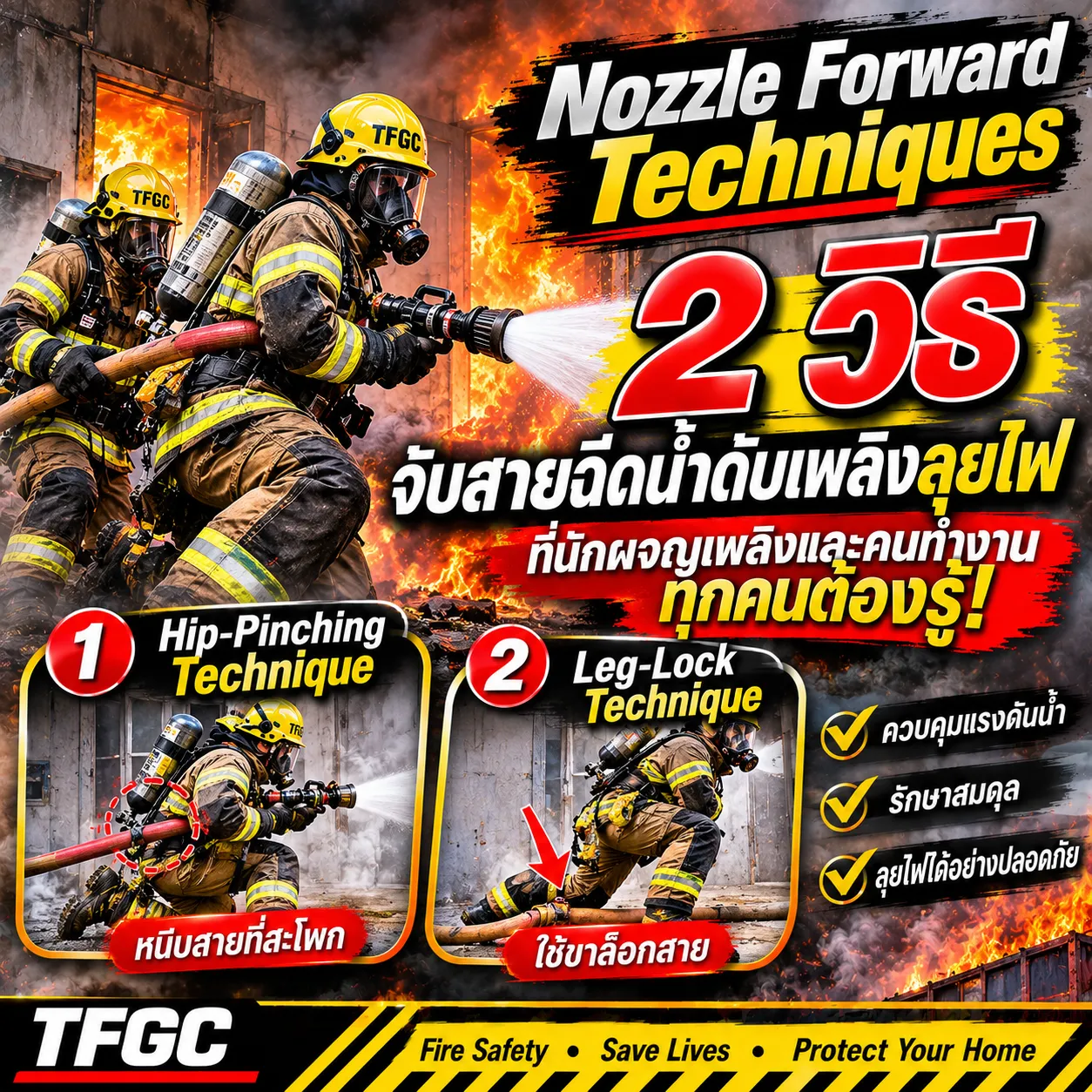
ในสถานการณ์เพลิงไหม้ภายในอาคารที่เต็มไปด้วยกลุ่มควันหนาทึบและอุณหภูมิความร้อนสูงอันตราย การเคลื่อนที่เข้าประชิดต้นเพลิงถือเป็นภารกิจที่ท้าทายและเดิมพันด้วยชีวิต หากคุณเป็นนักผจญเพลิง เจ้าหน้าที่ความปลอดภัย หรือบุคคลทั่วไปที่สนใจด้านการระงับอัคคีภัย คุณเคยสงสัยหรือไม่ว่าทีมดับเพลิงมืออาชีพเขามีเทคนิคการถือหัวฉีดน้ำและการเคลื่อนที่อย่างไร จึงสามารถทรงตัวต้านแรงปฏิกิริยาของน้ำ (Nozzle Reaction) พร้อมกับรักษาตัวให้ต่ำพ้นโซนความร้อนได้พร้อมกัน? การทำความเข้าใจหลักการ Nozzle Forward Techniques หรือเทคนิคการคุมหัวฉีดไปข้างหน้า ตามหลักสูตรการฝึกอบรมระดับสากลจาก NFPA (National Fire Protection Association) และสถาบันฝึกอบรมชั้นนำ ถือเป็นกุญแจสำคัญที่จะช่วยยกระดับความปลอดภัย บทความนี้จะพาท่านเจาะลึกวิเคราะห์การจัดการสายส่งน้ำ การคุมวาล์ว (Bail) และการประสานงานภายในทีม เพื่อให้คุณเข้าใจกระบวนการรุกคืบเข้าสู่พื้นที่เพลิงไหม้ได้อย่างมีประสิทธิภาพสูงสุด
Key Takeaways: จุดสำคัญที่ต้องรู้
- การรักษาตัวให้ต่ำพ้นความร้อน (Low Profile): การใช้เทคนิค Nozzle Forward ช่วยให้นักผจญเพลิงสามารถหมอบตัวต่ำเพื่อหลีกเลี่ยงชั้นก๊าซร้อนและควันพิษที่ลอยตัวสะสมอยู่ด้านบน
- การล็อกสายส่งน้ำเพื่อเพิ่มความมั่นคง: การหนีบสายฉีดน้ำไว้ที่สะโพกหรือการใช้ขาล็อกล็อกสายช่วยลดแรงกระชากจากแรงดันน้ำ ทำให้มือทั้งสองข้างมีอิสระในการปรับเปลี่ยนรูปแบบสายน้ำ (Stream Patterns)
- ความสำคัญของทีมสนับสนุนด้านหลัง (Backup Firefighter): การเดินเท้าตามหลังเพื่อช่วยประคองสาย ดันสายส่งน้ำ และป้องกันจุดหักงอ (Pinch Points) คือหัวใจสำคัญของความสำเร็จในการรุกคืบ
ทำความเข้าใจแก่นแท้ของ Nozzle Forward Techniques กับยุทธวิธีหน้างานจริง
ในการปฏิบัติการโจมตีเพลิงภายในอาคาร (Interior Attack) การควบคุมหัวฉีดน้ำเปรียบเสมือนการควบคุมทิศทางและชีวิตของทีมงานทั้งหมด ตามคำแนะนำของสถาบันระดับโลกอย่าง IFSTA แรงดันน้ำที่พ่นออกจากหัวฉีดจะสร้างแรงผลักมหาศาล (Nozzle Reaction) ซึ่งหากผู้ปฏิบัติงานไม่มีท่าทางหรือจุดล็อกที่ถูกต้อง แรงดันนี้จะทำให้ผู้ปฏิบัติงานเสียการทรงตัวและตกอยู่ในอันตราย การประยุกต์ใช้ Nozzle Forward Techniques จึงเข้ามาตอบโจทย์ในการกระจายน้ำหนักตัวและการใช้สמוรภาพทางชีวกลศาสตร์ (Biomechanics) เพื่อให้การรุกคืบเข้าหาเปลวไฟเป็นไปอย่างมั่นคงและปลอดภัยที่สุด
1. รายละเอียดเนื้อหาแบบสรุป: 2 เทคนิคสำคัญของ Nozzle Forward Techniques
- เทคนิคที่ 1 การหนีบสายที่สะโพก (Hip-Pinching Technique):
- วิธีการปฏิบัติ: ผู้ปฏิบัติงานจะทำการหนีบสายส่งน้ำไว้ระหว่างสะโพกขวาและมือขวา ในขณะที่มือซ้ายทำหน้าที่ควบคุมวาล์วเปิด-ปิดและปรับหัวฉีด (Bail and Nozzle)
- การเคลื่อนที่: วางสายส่งน้ำพาดไว้ที่แขนซ้าย ใช้ขาซ้ายและแขนขวาเป็นแรงส่งในการก้าวเดินไปข้างหน้า เหมาะสำหรับการเคลื่อนที่ในพื้นที่โล่งที่ต้องการความคล่องตัวสูง
- เทคนิคที่ 2 การใช้ขาล็อกสายส่งน้ำ (Leg-Lock Technique):
- วิธีการปฏิบัติ: เป็นเทคนิคที่นิยมใช้กันอย่างแพร่หลายมากที่สุด ผู้ปฏิบัติงานจะยกขาขวาคร่อมพาดบนสายส่งน้ำ แล้วใช้เท้าและข้อเท้าขวาล็อกทับบนสายให้แน่น โดยให้ขาซ้ายก้าวไปข้างหน. สร้างเป็นจุดล็อกที่แข็งแรง
- การควบคุม: ในท่านี้ผู้ปฏิบัติงานสามารถใช้มือทั้งสองข้างควบคุมวาล์วและหัวฉีดได้อย่างเต็มที่ เมื่อต้องการเคลื่อนที่ไปข้างหน้า สายส่งน้ำจะพาดล็อกติดกับแขนซ้าย ขาซ้ายก้าวออกนำ และใช้แขนขวาช่วยสร้างเสถียรภาพในการทรงตัว
การแก้ปัญหาเฉพาะเหตุการณ์: วิธีรับมือเมื่อ “แรงดันน้ำกระชากอย่างรุนแรง และเกิดจุดหักงอ (Pinch Points) ระหว่างลุยไฟ”
ในสถานการณ์หน้างานจริง หากคุณต้องนำกำลังพลรุกคืบเข้าไปในอาคารแคบๆ หรือทางเดินเลี้ยวหักศอก แล้วพบว่าสายส่งน้ำติดขัดหรือแรงดันน้ำทำให้ควบคุมหัวฉีดได้ยาก ประสบการณ์ตรงจากวิศวกรความปลอดภัยมีแนวทางแก้ไขดังนี้ครับ:
- กรณีสายส่งน้ำติดขัดบริเวณมุมตึกหรือวงกบประตู (Pinch Points): “ห้ามดึงกระชากสายด้วยพละกำลังลำพังเด็ดขาด” เพราะจะทำให้ข้อต่อสายหลุดหรือทีมด้านหลังเสียจังหวะ ให้ใช้เทคนิคการทำรูปตัว S (Building S’s in the Hose Line) โดยใช้ความกว้างเต็มพื้นที่ของทางเดินเพื่อผ่อนแรงตึง และให้ทีมสนับสนุนด้านหลังช่วยขยับสายให้พ้นมุมอักขระ
- กรณีผู้ถือหัวฉีดรุกคืบเร็วกว่าการระงับเพลิงของน้ำ: หากหัวหน้าชุดสังเกตเห็นว่าเดินเร็วกว่าการดับไฟ ต้องส่งสัญญาณสื่อสารให้ลดความเร็วลงทันที เพื่อเปิดโอกาสให้สายน้ำฉีดเข้าเป้าหมายอย่างเต็มประสิทธิภาพ ลดความร้อนสะสม และป้องกันไม่ให้ทีมงานเดินทะลุผ่านโซนอันตรายที่ยังไม่ถูกระงับเหตุ
หลักการทางวิทยาศาสตร์และชีวกลศาสตร์ (Biomechanics & Fluid Mechanics)
การอธิบายหลักการทางฟิสิกส์และชีวกลศาสตร์ช่วยให้เข้าใจเหตุผลเบื้องหลังท่าทางที่ถูกต้อง:
- แรงปฏิกิริยาหัวฉีด (Nozzle Reaction Force): ตามกฎการเคลื่อนที่ข้อที่ 3 ของนิวตัน แรงที่น้ำพุ่งออกไปข้างหน้าจะสร้างแรงสะท้อนกลับมายังผู้ถือหัวฉีด การใช้ท่า Leg-Lock จะช่วยถ่ายเทแรงสะท้อนนี้ลงสู่พื้นผ่านโครงสร้างกระดูกและกล้ามเนื้อขา แทนที่จะใช้กำลังแขนต้านทานเพียงอย่างเดียว ซึ่งช่วยลดความเมื่อยล้าได้อย่างมหาศาล
- การรักษาศูนย์ถ่วงและโซนความร้อน (Low Center of Gravity & Thermal Layering): ก๊าซร้อนและควันไฟจะลอยตัวอยู่ด้านบน การถือหัวฉีดในระดับต่ำและการโน้มตัวไปข้างหลังเล็กน้อย (Slight Lean Back) ช่วยรักษาระดับศูนย์ถ่วงให้อยู่ในกรอบฐานที่มั่นคง พร้อมทั้งป้องกันไม่ให้ร่างกายสัมผัสกับโซนความร้อนสูงสุดใต้เพดาน
การปรับประยุกต์ใช้เพื่อความปลอดภัยในโรงงานอุตสาหกรรมและอาคารสูง
ในพื้นที่โรงงานอุตสาหกรรม คลังสินค้า หรืออาคารสูงในนิคมอุตสาหกรรมมาบตาพุด จังหวัดระยอง การประยุกต์ใช้หลักการจาก Nozzle Forward Techniques มีแนวทางปฏิบัติที่สำคัญดังนี้:
- การฝึกอบรมการจัดการสายส่งน้ำในพื้นที่คับแคบ: จัดสถานีฝึกซ้อมจำลองทางเดินแคบๆ หรือบันไดหนีไฟ เพื่อให้พนักงานดับเพลิงประจำโรงงานคุ้นเคยกับการทำรูปตัว S และการพรีโหลดสาย (Preloading Hose) ป้องกันสายติดขัดขณะปฏิบัติงานจริง
- การปฏิบัติตามกฎหมายความปลอดภัย: การฝึกซ้อมระงับอัคคีภัยภายในสถานประกอบการต้องสอดคล้องกับข้อกำหนดและมาตรฐานความปลอดภัยของสถาบัน TOSH เพื่อสร้างความมั่นใจและความพร้อมสูงสุดให้กับทีมฉุกเฉิน
คำถามเช็กความเข้าใจในการปฏิบัติงาน (Safety Check Quiz)
- จุดเด่นหลักของเทคนิคการล็อกสายด้วยขา (Leg-Lock Technique) ใน Nozzle Forward คืออะไร?
- เพราะเหตุใดผู้ปฏิบัติงานจึงต้องสื่อสารและลดความเร็วในการรุกคืบหากเดินเร็วกว่าการระงับเพลิง?
- หน้าที่หลักของเจ้าหน้าที่สนับสนุนที่เดินตามหลังผู้ถือหัวฉีดคืออะไร?
เซกชัน FAQ: คำถามที่พบบ่อย
- Q1: Nozzle Forward Techniques คืออะไร?
- A: คือกลุ่มเทคนิคการจับ ถือ และเคลื่อนที่พร้อมสายส่งน้ำและหัวฉีดในระดับต่ำ เพื่อควบคุมแรงดันน้ำและหลบเลี่ยงความร้อนขณะรุกคืบเข้าหาต้นเพลิง
- Q2: ทำไมจึงต้องทำรูปตัว S (Building S’s) กับสายส่งน้ำในทางเดินแคบ?
- A: เพื่อป้องกันไม่ให้สายส่งน้ำหักงอหรือติดขัดตามมุมตึก (Pinch Points) และช่วยให้สายเคลื่อนที่ไปข้างหน้าได้อย่างราบรื่น
- Q3: มาตรฐานสากลใดที่ใช้เป็นบรรทัดฐานในการฝึกอบรมเทคนิคนี้?
- A: ได้รับการรวบรวมและเผยแพร่เป็นแนวทางปฏิบัติสากลโดย NFPA และ IFSTA
ศูนย์ฝึกอบรมความปลอดภัยและดับเพลิงมาตรฐานสากล TFGC
ศูนย์ฝึกอบรมความปลอดภัยและดับเพลิงมาตรฐานสากล TFGC (Tactical Fire Guard Training Center) ตั้งอยู่ในจังหวัดระยอง พร้อมให้บริการฝึกอบรมหลักสูตรความปลอดภัย อาชีวอนามัย และการระงับอัคคีภัยแก่ภาคอุตสาหกรรมในพื้นที่ภาคตะวันออก นิคมอุตสาหกรรมชลบุรี ระยอง และทั่วประเทศ
- จุดเด่นของเรา: เน้นการฝึกปฏิบัติจริงด้วยการจำลองสถานการณ์ทับซ้อน เพื่อให้ผู้เข้าอบรมได้ใช้ศักยภาพเต็มรูปแบบ ปรับเนื้อหาตามหน้างานจริง รองรับโรงงานยาง, น้ำมัน, โรงพยาบาล อาคารสูง รวมถึงกลุ่มนิคมอุตสาหกรรม ครอบคลุมหลักสูตรอบรมดับเพลิงขั้นต้น, อบรมดับเพลิงขั้นสูง, Petro Fire, Chemical Fire, Electric Fire, Fire Solar, Fire EV, Fire Watch และอบรมดับเพลิงเฉพาะทาง
- ช่องทางการติดต่อ:
- Website: https://tfgc-safety.com/
- LINE Official: https://lin.ee/VJZXUjD
- Facebook: TFGC Training Center
- TikTok: @tfgc.training_center
- Youtube: TFGC YouTube Channel
- เบอร์โทรติดต่อ: 099 939 5416
แหล่งอ้างอิงสากล: สถาบันส่งเสริมความปลอดภัย อาชีวอนามัย และสภาพแวดล้อมในการทำงาน (TOSH)
English Content Translation
Nozzle Forward Techniques: 2 Hose Handling Methods Every Firefighter and Worker Must Know
During interior building fires characterized by dense, blinding smoke and extreme thermal hazards, advancing toward seat-of-fire origins remains a demanding mission. Whether you are a professional firefighter, safety officer, or general citizen interested in fire suppression, have you ever wondered how professional teams handle nozzles and movement to manage nozzle reaction forces while maintaining low profiles beneath thermal layers? Comprehending Nozzle Forward Techniques based on international standards from NFPA is paramount. This article explores hose management, bail manipulation, and team coordination under global standards to empower readers with effective interior attack capabilities.
Key Takeaways
- Maintaining Low Profiles: Nozzle Forward techniques enable firefighters to crouch low, avoiding upper-level thermal gases and toxic smoke layers.
- Locking Hoselines for Stability: Hip-pinching and leg-locking hoselines mitigate nozzle reaction forces, freeing both hands to manipulate stream patterns.
- The Vital Role of Backup Firefighters: Trailing personnel who support, flake, and advance hoselines while preventing pinch points dictate interior attack success.
Understanding the Core of Nozzle Forward Techniques Versus Real-World Operations
During interior fire suppression, nozzle control dictates operational direction and team safety. Per guidance from global organizations like IFSTA, water discharge generates massive reactive forces (Nozzle Reaction). Without correct biomechanical postures, these pressures cause operators to lose balance. Applying Nozzle Forward Techniques optimizes weight distribution and biomechanical stability, ensuring secure, effective advances toward fires.
1. Summary of Detailed Content: Two Core Nozzle Forward Techniques
- Technique 1: Hip-Pinching Technique: Operators pinch hoselines between their right hips and right hands while left hands manipulate bail valves and nozzles. Hoselines rest across left arms, utilizing left legs and right arms to advance. Ideal for open spaces requiring high agility.
- Technique 2: Leg-Lock Technique: The most widely utilized technique. Operators cross their right legs over hoselines, locking feet and ankles securely over top while stepping forward with left legs, creating a solid lock. Both hands manipulate nozzles freely. During advancement, hoselines lock against left arms, left legs step forward, and right arms provide stabilization.
Handling Unexpected Conditions: Managing Sudden Pressure Spikes and Hoseline Pinches
During actual field operations, if teams encounter tight hallways or sharp corners where hoselines jam, safety engineers recommend structured protocols:
- Scenario: Hoseline Snagging Around Doorframes or Corners (Pinch Points): “Never pull or jerk hoselines with raw physical force alone.” This risks uncoupling fittings or breaking team momentum. Deploy building S-curves, utilizing full hallway widths to ease tension, while backup personnel flake lines past obstacles.
- Scenario: Nozzle Operators Advancing Faster Than Fire Suppression: If lead nozzle operators outpace water suppression effectiveness, communicate immediately to slow the advance, ensuring water streams reach intended targets and reducing unmitigated thermal accumulation.
Scientific Principles and Biomechanics
Scientific and biomechanical principles clarify proper operational postures:
- Nozzle Reaction Force: Per Newton’s third law of motion, discharging water generates reactive force backwards. Leg-lock postures transfer these reactive forces down through skeletal and muscular leg structures to floors rather than relying solely on arm strength, minimizing fatigue.
- Maintaining Low Centers of Gravity and Thermal Layers: Toxic gases and heat stratify aloft. Low nozzle holds and slight backwards leans maintain stable centers of gravity within solid support bases while preventing body exposure to peak ceiling thermal zones.
Adapting for Industrial Safety and High-Rises
Within industrial plants, warehouses, or high-rise offices in industrial clusters like Map Ta Phut, Rayong Province, applying Nozzle Forward Techniques involves key protocols:
- Confined Space Hoseline Management Training: Establish simulated narrow hallway or stairwell training stations, ensuring internal industrial firefighters master S-curve routing and hose preloading to prevent operational snags.
- Safety Law Compliance: Fire suppression drills within facilities must align with ministerial safety regulations governed by TOSH guidelines to ensure maximum emergency team preparedness.
Safety Check Quiz
- What is the primary operational advantage of the Leg-Lock Technique in Nozzle Forward applications?
- Why must operators communicate and reduce advance speeds if they outpace water suppression?
- What is the primary responsibility of backup personnel trailing nozzle operators?
Common Operational Errors and Corrective Actions
- Error 1: Standing upright while advancing nozzle lines into active interior fires.
- Impact: Direct exposure to upper thermal gas layers resulting in severe burns.
- Corrective Action: Enforce strict low-crawling Nozzle Forward postures per NFPA guidelines.
- Error 2: Neglecting backup hoseline support in complex hallways.
- Impact: Hoseline pinching and entrapment cutting off water supply to interior crews.
- Corrective Action: Mandate dedicated backup personnel for hoseline flaking and pinch-point management.
FAQ: Frequently Asked Questions
- Q1: What are Nozzle Forward Techniques?
- A: They are specialized grip, stance, and movement methods utilizing low-profile hoseline management to control water pressure and avoid thermal exposure during interior attacks.
- Q2: Why create building S-curves with hoselines in narrow hallways?
- A: To prevent hoselines from kinking or snagging on sharp structural corners (Pinch Points) and ensure smooth forward progression.
- Q3: Which international standards govern these training methodologies?
- A: Compiled and published as standard operating guidelines by NFPA and IFSTA.
Tactical Fire Guard Training Center (TFGC)
Tactical Fire Guard Training Center (TFGC), located in Rayong Province, provides professional safety, occupational health, and fire suppression training for industries across the Eastern region, Chonburi, Rayong, and nationwide.
- Our Strengths: Emphasis on practical hands-on training through multi-layered simulation technologies, adhering to international NFPA standards and customized to real workplace conditions—supporting rubber plants, oil facilities, hospitals, high-rise buildings, and industrial estates. Covering Basic Firefighting, Advanced Firefighting, Petro Fire, Chemical Fire, Electric Fire, Fire Solar, Fire EV, Fire Watch, and specialized firefighting courses.
- Contact Channels:
- Website: https://tfgc-safety.com/
- LINE Official: https://lin.ee/VJZXUjD
- Facebook: TFGC Training Center
- TikTok: @tfgc.training_center
- Youtube: TFGC YouTube Channel
- เบอร์โทรติดต่อ: 099 939 5416
International Reference: Thailand Institute of Occupational Safety and Health (TOSH)Overcoming Nozzle Whip