
ในภารกิจการระงับอัคคีภัยและการผจญเพลิง ทักษะการควบคุมอุปกรณ์ปลายทางถือเป็นหัวใจสำคัญที่จะกำหนดความสำเร็จและความปลอดภัยของผู้ปฏิบัติงาน หนึ่งในปัญหาที่นักดับเพลิงมักต้องเผชิญคืออาการสะบัดหรือสั่นรุนแรงของสายส่งน้ำที่เรียกว่า Nozzle Whip หากขาดเทคนิคการจับยึดที่ถูกต้อง แรงปฏิกิริยาจากน้ำแรงดันสูงอาจทำให้ผู้ปฏิบัติงานได้รับบาดเจ็บสาหัสได้ บทความนี้จะพาท่านเจาะลึกแนวทาง Overcoming Nozzle Whip ตามหลักมาตรฐานสากล NFPA (National Fire Protection Association) เพื่อยกระดับความปลอดภัยและเพิ่มประสิทธิภาพในการปฏิบัติงานจริง
Key Takeaways: จุดสำคัญที่ต้องรู้
- สาเหตุของอาการสะบัด: Nozzle Whip เกิดจากแรงปฏิกิริยา (Nozzle Reaction) ที่ไม่ได้รับการสนับสนุนโครงสร้างสายส่งน้ำอย่างเหมาะสม
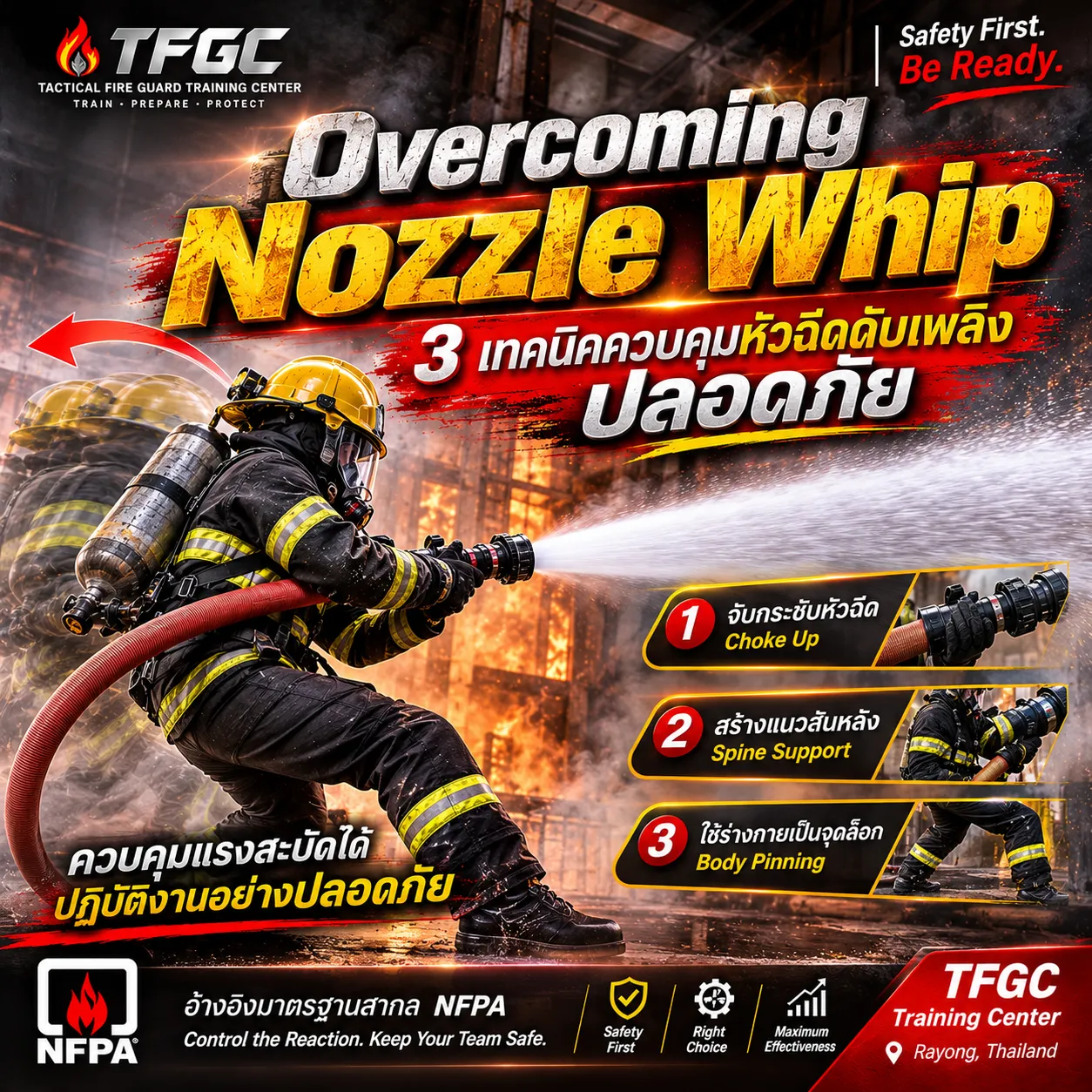
- การสร้างแนวสันหลัง (Spine Support): การใช้มือและแขนทาบประคองไปตามแนวสายช่วยถ่ายเทแรงกระแทกสู่แกนกลางลำตัวและพื้นดิน
- การปรับประยุกต์หน้างาน: การฝึกฝนเทคนิคที่ถูกต้องช่วยลดความเสี่ยงจากอุบัติเหตุในทุกสภาพแวดล้อมการทำงาน
ทำความเข้าใจแก่นแท้ของ Overcoming Nozzle Whip ในการปฏิบัติงาน
เมื่อมวลน้ำมหาศาลไหลออกจากหัวฉีดภายใต้แรงดันสูง จะเกิดแรงปฏิกิริยา (Action and Reaction) ตามกฎของนิวตัน หัวฉีดและข้อต่อมีความแข็งเกร็ง ในขณะที่สายยางส่วนกลางมีความอ่อนตัว ทำให้จุดเชื่อมต่อระหว่างสายยางและหัวฉีดกลายเป็นจุดอ่อน (Weak Link) ที่ก่อให้เกิดแรงเหวี่ยงและอาการสะบัดรุนแรง หากปราศจากการทำ Overcoming Nozzle Whip ที่ถูกต้อง แรงสะบัดนี้อาจเหวี่ยงกระแทกใบหน้าหรือลำตัวของผู้ถือหัวฉีดได้ง่ายดาย
1. การปรับระยะจับและการสร้างแกนกระดูกสันหลัง
เพื่อให้บรรลุเป้าหมาย Overcoming Nozzle Whip นักดับเพลิงจำเป็นต้องขยับตำแหน่งมือให้กระชับขึ้น (Choke Up) และใช้นิ้วมือเหยียดไปด้านหน้าเพื่อสร้างแนวสันหลัง (Spine Support) เชื่อมโยงความแข็งเกร็งของหัวฉีดผ่านแขนเข้าสู่แกนกลางลำตัว การจัดวางร่างกายลักษณะนี้จะช่วยดูดซับแรงปฏิกิริยาและส่งผ่านลงสู่พื้นดินโดยตรง ป้องกันไม่ให้เกิดแรงเหวี่ยงสะบัดที่ไร้การควบคุม
2. การใช้ร่างกายเป็นจุดล็อก (Body Pinning & Clamping)
นอกจากเรื่องของการจับสายแล้ว การใช้ขาหรือเข่าทำหน้าที่เสมือนหมุดล็อก (Pin) จะช่วยตรึงตำแหน่งสายส่งน้ำขนาด 1.75 นิ้วให้มั่นคงยิ่งขึ้น การผสานเทคนิคเหล่านี้เข้าด้วยกันจะช่วยให้สายยางยังคงมีความยืดหยุ่นในการขยับตัว แต่ปลอดภัยจากอาการสะบัดกระชากที่เป็นอันตราย
หลักการทางวิทยาศาสตร์และชีวกลศาสตร์ (Biomechanics & Fluid Dynamics)
การอธิบายปรากฏการณ์นี้ด้วยหลักฟิสิกส์ช่วยให้เข้าใจการทำงานของร่างกายร่วมกับอุปกรณ์:
- กฎการเคลื่อนที่ข้อที่ 3 ของนิวตัน: แรงดันน้ำที่พุ่งออกไปสร้างแรงผลักกลับมายังหัวฉีด การสร้างแนวโครงสร้าง (Structural Alignment) ด้วยแขนและลำตัวช่วยสร้างเส้นทางส่งผ่านแรง (Force Vector) ลงสู่พื้นผิวโลก แทนที่จะปล่อยให้แรงกระแทกกระจายตัวเข้าสู่กล้ามเนื้อหัวไหล่และข้อต่อโดยตรง
- ชีวกลศาสตร์ของกล้ามเนื้อ (Muscle Synergy): การใช้มัดกล้ามเนื้อแกนกลางลำตัวและโครงกระดูกรองรับน้ำหนัก ช่วยลดความล้าของกล้ามเนื้อแขนและป้องกันอาการบาดเจ็บเรื้อรังจากการปฏิบัติงานซ้ำๆ
การปรับประยุกต์ใช้เพื่อความปลอดภัยในโรงงานอุตสาหกรรมและอาคารสูง
ในบริบทของโรงงานอุตสาหกรรม คลังสินค้าปิโตรเคมี หรืออาคารสูงในนิคมอุตสาหกรรมมาบตาพุด จังหวัดระยอง การประยุกต์ใช้แนวทาง Overcoming Nozzle Whip มีความสำคัญอย่างยิ่ง:
- การปฏิบัติงานในพื้นที่จำกัด (Confined Spaces): อาคารโรงงานหรือท่อส่งสารเคมีมักมีพื้นที่แคบ การเกิดอาการสะบัดของหัวฉีดอาจทำให้อุปกรณ์กระแทกโครงสร้างหรือถังเก็บสารเคมีเสียหาย การใช้เทคนิคประคองสายชิดลำตัวช่วยให้ควบคุมทิศทางน้ำได้อย่างแม่นยำ
- การฝึกอบรมจำลองสถานการณ์ (Simulation Training): สถานประกอบการควรนำหลักสูตรนี้ไปบรรจุในการฝึกอบรมประจำปี ร่วมกับการจำลองสถานการณ์ความดันน้ำสูง เพื่อให้พนักงานมีความคุ้นเคยและสามารถตอบสนองได้อย่างปลอดภัยตามมาตรฐานของสถาบัน IFSTA
คำถามเช็กความเข้าใจในการปฏิบัติงาน (Safety Check Quiz)
- สาเหตุหลักที่ทำให้เกิดอาการ Nozzle Whip ในสายส่งน้ำคือนอกจากแรงดันน้ำแล้วคืออะไร?
- การสร้างแนวสันหลัง (Spine Support) ด้วยแขนและมือมีประโยชน์อย่างไรในการควบคุมหัวฉีด?
- เพราะเหตุใดการขยับตำแหน่งมือให้กระชับขึ้น (Choke Up) จึงช่วยลดความเสี่ยงจากอาการสะบัดได้?
ข้อผิดพลาดที่พบบ่อยและวิธีแก้ไขในการปฏิบัติงาน
- ข้อผิดพลาดที่ 1: การยืนถือหัวฉีดโดยปล่อยระยะห่างจากข้อต่อมากเกินไป
- ผลกระทบ: เกิดจุดอ่อนในระบบสายส่งน้ำ ส่งผลให้แรงปฏิกิริยาเหวี่ยงสายสะบัดอย่างไร้การควบคุม เสี่ยงต่ออุบัติเหตุรุนแรง
- วิธีแก้ไขและฝึกฝน: ฝึกอบรมการจับกระชับ (Choke Up) และสร้างแนวรองรับน้ำหนักผ่านลำตัวตามหลักการของ Overcoming Nozzle Whip
- ข้อผิดพลาดที่ 2: การพึ่งพาแรงแขนเพียงอย่างเดียวในการต้านแรงดันน้ำ
- ผลกระทบ: กล้ามเนื้อแขนล้าอย่างรวดเร็ว สูญเสียการควบคุมทิศทางน้ำ และเพิ่มความเสี่ยงต่อการบาดเจ็บกล้ามเนื้อ
- วิธีแก้ไขและฝึกฝน: ฝึกถ่ายเทน้ำหนักตัวลงสู่พื้นดินและใช้แกนกลางลำตัวช่วยรับแรง ตามคำแนะนำของสถาบัน TOSH
เซกชัน FAQ: คำถามที่พบบ่อย
- Q1: Nozzle Whip คืออะไร?
- A: คืออาการสะบัดหรือสั่นรุนแรงของสายส่งน้ำและหัวฉีด ซึ่งเกิดจากแรงปฏิกิริยาของน้ำที่ไม่มีการสนับสนุนโครงสร้างสายที่เหมาะสม
- Q2: เราจะป้องกันอาการ Nozzle Whip ได้อย่างไร?
- A: ทำได้โดยการจับกระชับสายให้ใกล้หัวฉีดมากขึ้น (Choke Up) สร้างแนวรองรับด้วยแขนและลำตัวเพื่อส่งผ่านแรงลงสู่พื้นดิน
- Q3: เทคนิคนี้เหมาะสำหรับสายส่งน้ำขนาดใด?
- A: โดยเฉพาะสายส่งน้ำขนาด 1.75 นิ้ว ซึ่งเป็นขนาดมาตรฐานในการเข้าโจมตีเพลิงไหม้ภายในอาคารที่ต้องใช้ความคล่องตัวสูง
ศูนย์ฝึกอบรมความปลอดภัยและดับเพลิงมาตรฐานสากล TFGC
ศูนย์ฝึกอบรมความปลอดภัยและดับเพลิงมาตรฐานสากล TFGC (Tactical Fire Guard Training Center) ตั้งอยู่ในจังหวัดระยอง พร้อมให้บริการฝึกอบรมหลักสูตรความปลอดภัย อาชีวอนามัย และการระงับอัคคีภัยแก่ภาคอุตสาหกรรมในพื้นที่ภาคตะวันออก นิคมอุตสาหกรรมชลบุรี ระยอง และทั่วประเทศ
- จุดเด่นของเรา: เน้นการฝึกปฏิบัติจริงด้วยการจำลองสถานการณ์ทับซ้อน เพื่อให้ผู้เข้าอบรมได้ใช้ศักยภาพเต็มรูปแบบ ปรับเนื้อหาตามหน้างานจริง รองรับโรงงานยาง, น้ำมัน, โรงพยาบาล อาคารสูง รวมถึงกลุ่มนิคมอุตสาหกรรม ครอบคลุมหลักสูตรอบรมดับเพลิงขั้นต้น, อบรมดับเพลิงขั้นสูง, Petro Fire, Chemical Fire, Electric Fire, Fire Solar, Fire EV, Fire Watch และอบรมดับเพลิงเฉพาะทาง
- ช่องทางการติดต่อ:
- Website: https://tfgc-safety.com/
- LINE Official: https://lin.ee/VJZXUjD
- Facebook: TFGC Training Center
- TikTok: @tfgc.training_center
- เบอร์โทรติดต่อ: 099 939 5416
แหล่งอ้างอิงสากล: สถาบันส่งเสริมความปลอดภัย อาชีวอนามัย และสภาพแวดล้อมในการทำงาน (TOSH)
English Content Translation
Overcoming Nozzle Whip: 3 Techniques to Control Firefighting Nozzles Safely
In fire suppression and firefighting missions, mastering terminal equipment control is vital to determine operational success and safety. One common challenge firefighters face is the severe whipping or vibration of hose lines known as Nozzle Whip. Without proper gripping techniques, reaction forces from high-pressure water can cause severe operator injuries. This article explores strategies for Overcoming Nozzle Whip according to international NFPA (National Fire Protection Association) standards to enhance safety and improve operational effectiveness on site.
Key Takeaways
- Causes of Whipping: Nozzle Whip results from unsupported nozzle reaction forces lacking proper hose line structural integration.
- Spine Support Creation: Aligning arms and hands along the hose line channels impact forces into the core body and ground.
- Worksite Adaptation: Practicing correct techniques minimizes accident risks across all working environments.
Understanding the Core of Overcoming Nozzle Whip in Operations
When massive volumes of water exit a nozzle under high pressure, action and reaction forces occur according to Newton’s laws. Nozzles and couplings are rigid, whereas intermediate hose sections are pliable, making the connection point a weak link that generates violent whipping forces. Without proper <a href=”Overcoming Nozzle Whip protocols, these reaction forces can strike or overpower nozzle operators.
1. Hand Positioning and Spine Support
To achieve Overcoming Nozzle Whip, firefighters must choke up on their grip and extend fingers forward to create a spine support. This connects nozzle rigidity through arms into the body’s core. Such body positioning absorbs reaction forces and channels them directly into the ground, preventing uncontrolled whipping motions.
2. Body Pinning and Clamping Techniques
In addition to grip mechanics, utilizing legs or knees as pins secures 1.75-inch hose lines firmly. Combining these techniques maintains line dynamism while eliminating dangerous uncontrolled reactions.
Scientific Principles and Biomechanics
Explaining this phenomenon through basic physics aids physiological and equipment coordination:
- Newton’s Third Law of Motion: Water discharging forward generates backward reaction forces. Structural alignment via arms and torso establishes a force vector straight into the earth rather than dispersing impact into shoulders and joints.
- Muscle Synergy: Utilizing core muscle groups and skeletal structures to support loads reduces arm fatigue and prevents chronic injury from repetitive tasks.
Adapting for Industrial Safety and High-Rises
Within industrial plants, petrochemical warehouses, or high-rise buildings in industrial estates like Map Ta Phut, Rayong Province, applying Overcoming Nozzle Whip principles is crucial:
- Confined Space Operations: Industrial plants feature restricted spaces where nozzle whipping can damage structural elements or chemical storage. Arm-supported gripping ensures precise water stream control.
- Simulation Training: Facilities should incorporate this into annual training alongside high-pressure water simulations to ensure personnel respond safely per IFSTA standards.
Safety Check Quiz
- Aside from water pressure, what is the primary cause of Nozzle Whip in hose lines?
- What are the benefits of creating spine support with arms and hands when controlling nozzles?
- Why does choking up on the hose grip reduce whipping accident risks?
Common Operational Errors and Corrective Actions
- Error 1: Maintaining excessive distance between grip and coupling.
- Impact: Creates weak links in hose lines, causing uncontrolled reaction whipping and severe accident risks.
- Corrective Action: Practice choking up and establishing weight-support structures through the torso following Overcoming Nozzle Whip principles.
- Error 2: Relying solely on arm strength to resist water pressure.
- Impact: Rapid arm fatigue, loss of stream direction control, and increased muscular injury risks.
- Corrective Action: Practice weight transfer to the ground and core body engagement per TOSH guidelines.
FAQ: Frequently Asked Questions
- Q1: What is Nozzle Whip?
- A: Severe whipping or vibration of hose lines and nozzles caused by unsupported water reaction forces.
- Q2: How can Nozzle Whip be prevented?
- A: By choking up on the grip closer to the nozzle and establishing arm-torso support structures to channel forces into the ground.
- Q3: What hose size is this technique suited for?
- A: Especially 1.75-inch hose lines, which are standard for indoor fire attacks requiring high mobility.
Tactical Fire Guard Training Center (TFGC)
Tactical Fire Guard Training Center (TFGC), located in Rayong Province, provides professional safety, occupational health, and fire suppression training for industries across the Eastern region, Chonburi, Rayong, and nationwide.
- Our Strengths: Emphasis on practical hands-on training through multi-layered simulation technologies, adhering to international NFPA standards and customized to real workplace conditions—supporting rubber plants, oil facilities, hospitals, high-rise buildings, and industrial estates. Covering Basic Firefighting, Advanced Firefighting, Petro Fire, Chemical Fire, Electric Fire, Solar Fire, EV Fire, Fire Watch, and specialized firefighting courses.
- Contact Channels:
- Website: https://tfgc-safety.com/
- LINE Official: https://lin.ee/VJZXUjD
- Facebook: TFGC Training Center
- TikTok: @tfgc.training_center
- Phone: 099 939 5416
International Reference: Thailand Institute of Occupational Safety and Health (TOSH)